




-
- PCB TYPE
- PRINTED CIRCUIT BOARD PROTOTYPE ALUMINUM PRINTED CIRCUIT BOARD R&F PCB FPC HIGH FREQUENCY PCB HIGH-TG PCB HEAVY COPPER PCB HDI PCB PCB FOR LIGHTING METAL CORE PCB


time:Apr 13. 2026, 09:47:23
The electronics industry moves fast. At the heart of this movement is the fr4 printed circuit board. While it may seem like a standard component, the reality of pcb production is far more complex.
Modern devices require higher speeds and smaller footprints. This demand pushes the limits of multi-layer pcb fabrication. At ApolloPCB, we do more than just build boards. We master the science of precision. This guide explores how a top-tier FR4 PCB manufacturer handles the challenges of complex circuitry.
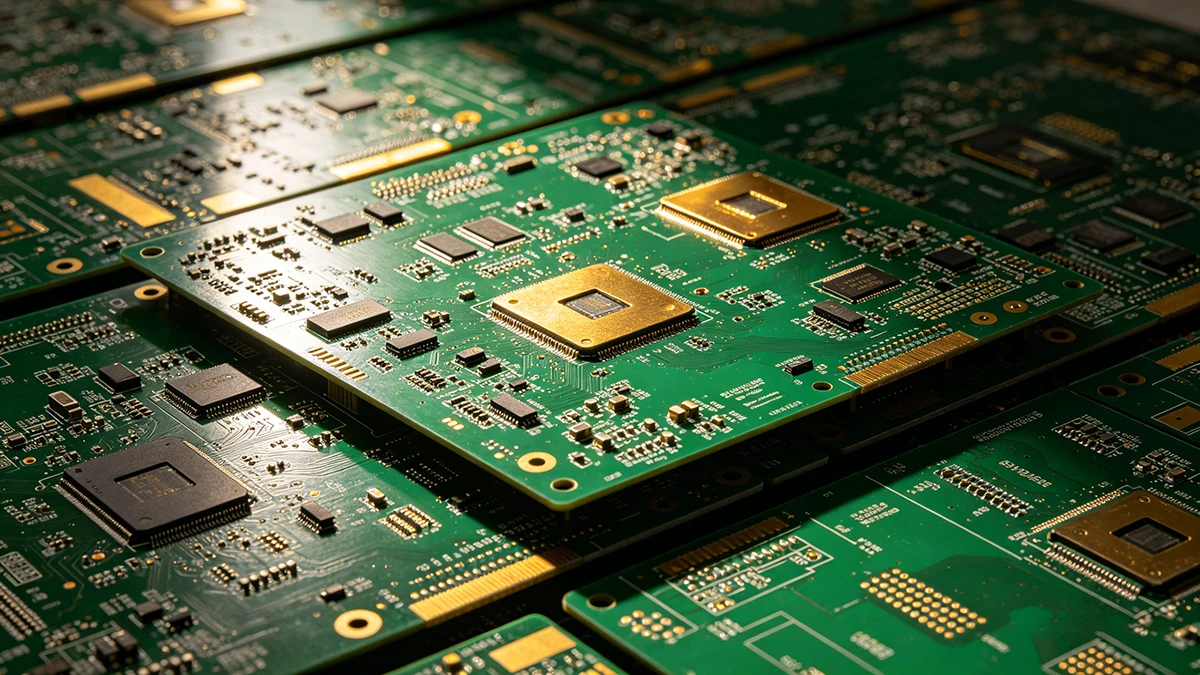
Every successful project starts in the engineering room. Before we touch any fr4 pcb material, our team performs a deep CAM (Computer-Aided Manufacturing) review. We analyze your Gerber files to optimize the panel layout.
This stage is vital for high reliability. We check for trace-to-edge clearances and ensure the copper distribution is balanced. By catching design flaws early, we prevent issues during the etching and lamination phases. This proactive approach sets the foundation for a flawless pcb manufacturing process.
When we discuss multi-layer pcb fabrication, we focus on vertical integration. In a basic 2-layer board, registration is simple. However, when you move to 12, 24, or even 32 layers, the margin for error disappears.
Our engineers align every layer of fr4 pcb material with micron-level accuracy. Even a shift of 0.05mm can ruin an entire production batch. To solve this, ApolloPCB uses Laser Direct Imaging (LDI).
LDI technology scans the internal layers in real-time. It then adjusts the circuit pattern to match the actual position of the material. This ensures that every via connects exactly where the design intends.
The lamination process bonds layers of copper and prepreg together. We use a high-pressure, high-heat cycle to create a solid board.
Vacuum Lamination: We use specialized vacuum presses to remove all air bubbles. This prevents internal delamination.
Thermal Profiles: Our team follows the fr4 pcb datasheet for every material batch. If the heat rises too quickly, the resin flows unevenly.
Controlled Cooling: We use a gradual cooling phase. This prevents internal stress and ensures the board stays perfectly flat.
A drilled hole is the lifeblood of a multi-layer board. It creates the electrical path between different levels. In pcb production, drilling is the most critical mechanical stage.
For modern, compact designs, standard through-holes take up too much surface area. We utilize blind and buried vias FR4 PCB to overcome this.
Blind Vias: These connect an outer layer to an inner layer without passing through the whole board.
Buried Vias: These connect two or more inner layers and remain hidden inside the board. These features require multiple drilling and plating steps. While they increase complexity, they allow for the advanced designs found in AI hardware and medical sensors.
Industrial applications often need specific physical features. Our factory specializes in:
Countersink Holes in fr4 PCB: Conical holes that allow screw heads to sit flush.
Counterbore holes in fr4 PCB: Cylindrical recesses for socket head caps. We use diamond-coated drill bits and CNC depth control. This ensures we maintain the mechanical strength of the rigid fr4 pcb while meeting your mechanical needs.
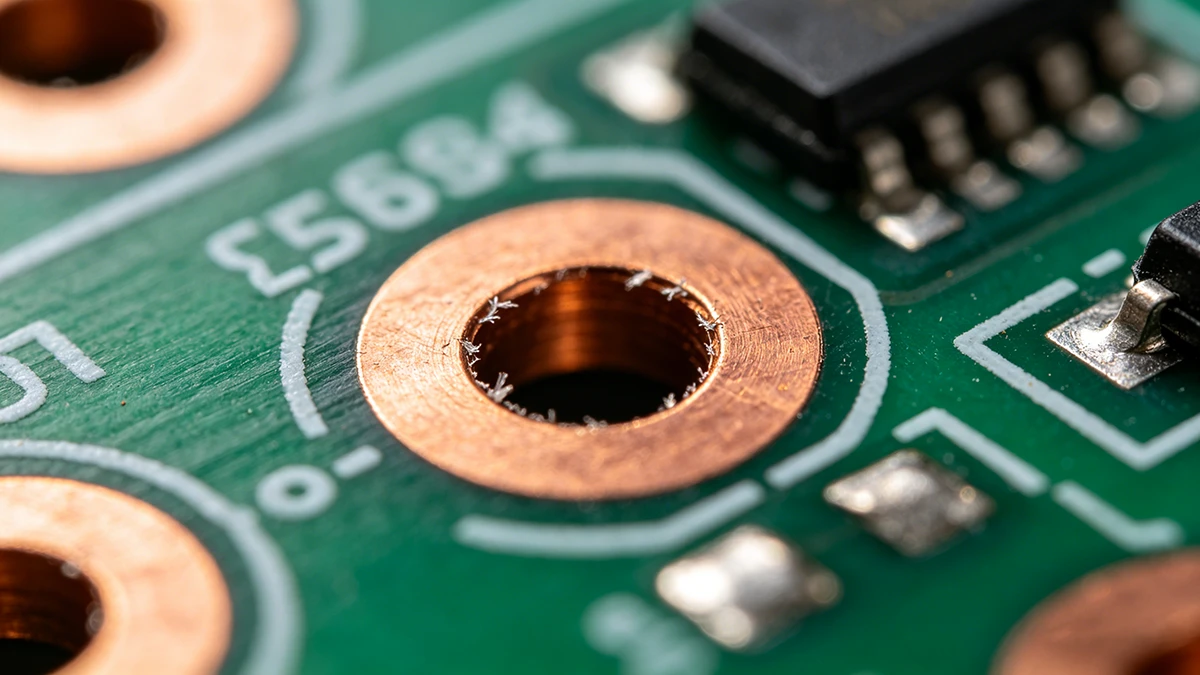
Once we finish the drilled hole process, we must make those holes conductive. This is called metallization. We deposit a thin layer of copper inside the holes using a chemical process.
This step is essential for high reliability. We monitor the chemistry of our plating tanks every hour. We ensure the copper thickness is consistent across the entire board. This prevents "barrel cracking" when the board expands during soldering.
Protection and identification are the final steps of board fabrication. We apply a Liquid Photoimageable (LPI) solder mask to protect the copper circuits.
At ApolloPCB, we use LDI for solder mask registration as well. This allows us to handle ultra-fine pitch components with ease. We ensure the solder mask bridge between pads is stable and accurate. Finally, we print clear, durable silkscreen legends. This helps your assembly team place components without errors, maintaining a high-performance standard.
Selecting the right surface finish is critical for long-term storage and assembly. Your choice impacts how the board interacts with solder.
HASL (Lead-Free): A cost-effective choice for general-purpose boards.
ENIG (Electroless Nickel Immersion Gold): Offers a flat surface and excellent oxidation resistance. It is the preferred choice for BGA components and fine-pitch pads.
Immersion Silver or Tin: Excellent for high-speed signal integrity by reducing signal loss.
We help you choose the finish that matches your fr4 pcb material specification and assembly requirements.
Heat management is a top priority for ApolloPCB. The FR4 PCB temperature rating determines how your product will perform in the field.
Standard boards use a Glass Transition (Tg) temperature of 130°C. For automotive or industrial power use, we recommend HIGH TG FR4 PCB. These materials (170°C or higher) maintain their structural integrity under extreme thermal stress.
The fr4 pcb thermal conductivity impacts how heat moves away from your active components. We also track the Coefficient of Thermal Expansion (CTE).
If the material expands too much in the "Z-axis," it can damage the copper plating. Using low CTE fr4 is a key part of our manufacturing process. It ensures your device survives thousands of thermal cycles.
Reliability is not an accident. It is the result of a rigorous testing "gauntlet." Every fr4 printed circuit board we make undergoes multiple inspections.
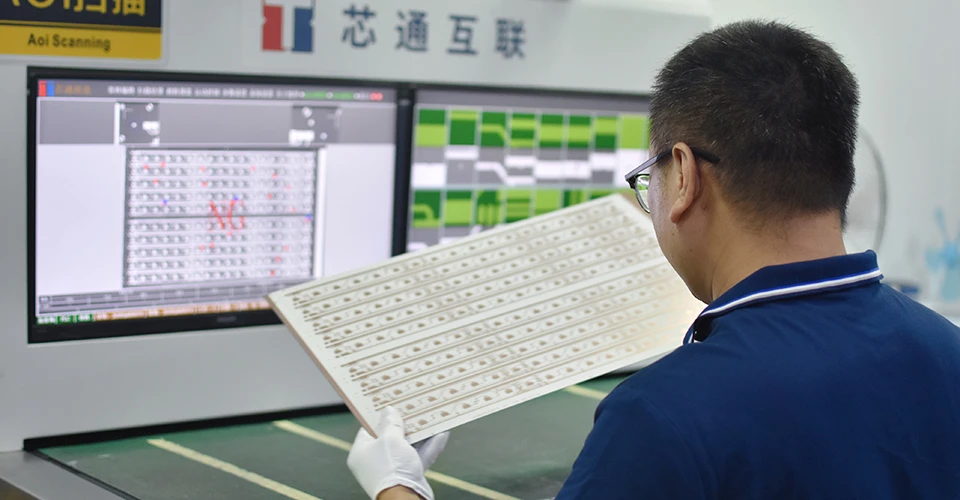
Automated Optical Inspection (AOI): Our machines compare your board to the original Gerber files to find tiny defects.
Electrical Testing: We verify every electrical path. We ensure there are no "opens" or "shorts" in the circuit.
X-Ray Analysis: For boards with blind and buried vias FR4 PCB, we use X-rays to inspect the internal registration.
Impedance Control Testing: For high-frequency boards, we verify that the trace impedance matches your target values exactly.
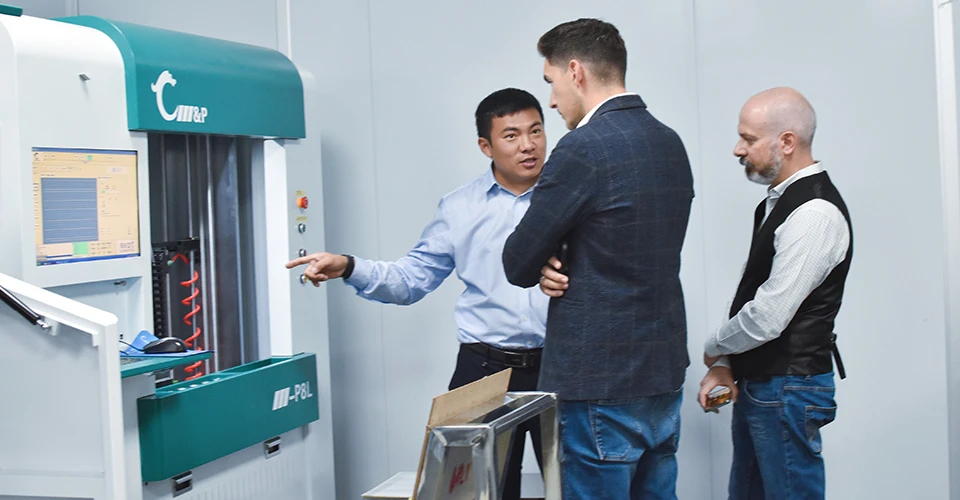
In the competitive world of electronics, the details define your success. Our engineering team reviews your fr4 pcb material specification before production starts.
We look for ways to make your custom FR4 PCB solutions more reliable and cost-effective. We understand the global market's needs. Whether you need an LED Lighting FR4 PCB or a high-speed telecommunications board, we provide the expertise to make it happen.
Mastering multi-layer pcb fabrication requires the right mix of technology and experience. From the first CAM review to the final quality report, ApolloPCB optimizes every step. When you choose us as your FR4 PCB manufacturer, you gain a partner dedicated to your product's success.

Got project ready to assembly? Contact us: info@apollopcb.com



 Whatsapp 0086 755 29438407
 Mail info@apollopcb.com
 Tel 0086 755 29438407


ABOUT US

PRODUCTS
TECHNOLOGY
KNOWLEDGE CENTRE
CULTURE
NEWS
We're not around but we still want to hear from you! Leave us a note:

Leave Message to APOLLOPCB
