




-
- PCB TYPE
- PRINTED CIRCUIT BOARD PROTOTYPE ALUMINUM PRINTED CIRCUIT BOARD R&F PCB FPC HIGH FREQUENCY PCB HIGH-TG PCB HEAVY COPPER PCB HDI PCB PCB FOR LIGHTING METAL CORE PCB


time:Apr 03. 2026, 16:03:10
In the world of modern power electronics, heat is the ultimate enemy of reliability. As components become smaller and power densities soar, traditional FR4 substrates often fail to meet the rigorous thermal demands of today’s high-stakes environments. This has led to the rise of the aluminum pcb, a high-performance solution designed specifically to bridge the gap between electrical functionality and thermal management.
Whether you are designing advanced LED Lighting aluminum pcb modules or mission-critical pcb for automotive systems, understanding the performance characteristics of your substrate is vital. At ApolloPCB, we have spent years optimizing the thermal efficiency of our boards to ensure that "overheating" is never a bottleneck for our clients' innovations.
The primary reason for selecting an aluminum substrate pcb over standard fiberglass (FR4) is its vastly superior thermal conductivity. Standard FR4 boards typically offer a thermal conductivity of around 0.25 W/m·K. In contrast, even a standard aluminum base pcb from ApolloPCB starts at 1.0 W/m·K and can reach as high as 8.0 W/m·K with our specialized HA80 ALUMINUM PCB materials.
In an aluminum pcb structure, heat is pulled away from the component through the copper trace and the dielectric layer, and finally dissipated through the aluminum base. This metal core acts as a massive heat sink, spreading the thermal load across the entire surface area of the board. This efficiency allows engineers to run components at higher power levels without exceeding their maximum junction temperature.
For those interested in the technical nuances of how these layers are bonded during the factory phase, see our detailed guide on Aluminum PCB Manufacturing: Precision Engineering for High-Power Electronics
The LED industry was the first to adopt the led light aluminum PCB on a massive scale. High-intensity LEDs convert a significant portion of electrical energy into heat rather than light. If this heat is not removed, the LED will suffer from color shifting, reduced brightness, and a shortened lifespan.
By using a Single Layer aluminum pcb or Double Sided aluminum pcb, designers can drastically reduce the temperature at the LED chip. Lower temperatures lead to better "Lumen Maintenance" (the ability of the LED to stay bright over time).
At ApolloPCB, we enhance this performance by utilizing high reflective soldermask. This specialized white mask reflects up to 90% of light, ensuring that the aluminum pcb led model light stays cool while maximizing light output.
For outdoor light PCB applications, such as streetlights or stadium floodlights, durability is just as important as cooling. These boards must withstand extreme thermal cycling—hot days and cold nights—without the dielectric layer cracking. We utilize premium Ventec Aluminum material PCB substrates to ensure that our outdoor solutions remain stable for decades, not just years.
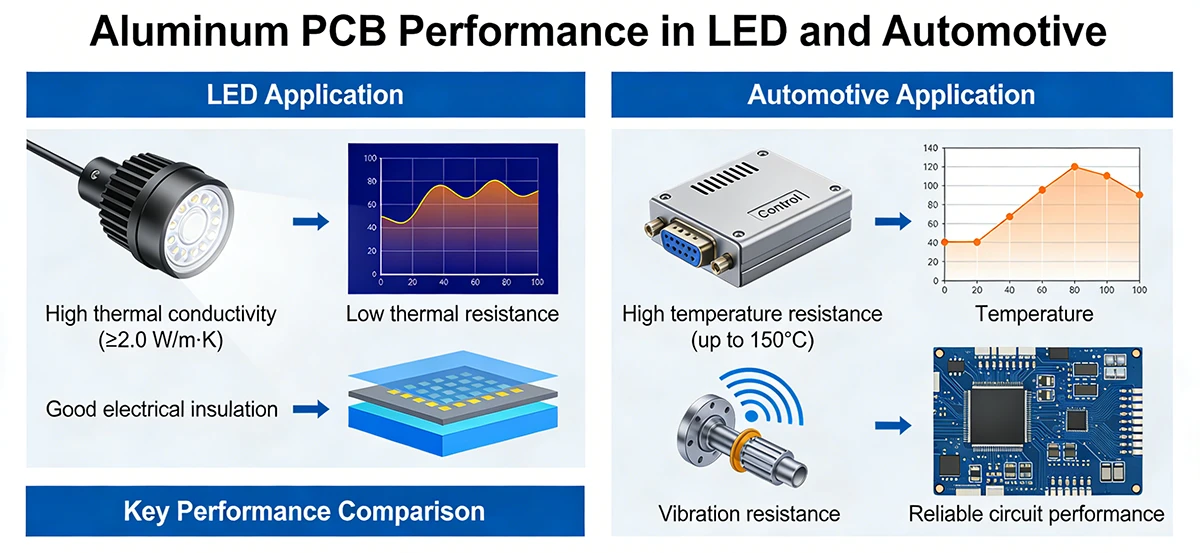
The automotive sector is currently the fastest-growing market for the aluminum substrate pcb. From EV powertrain controllers to sophisticated LED headlamps, the pcb for automotive must be virtually indestructible.
EVs require massive amounts of power conversion. High-voltage inverters and DC-DC converters generate intense heat. A Multi-Layer aluminum pcb or a double layer aluminum pcb is often used here to manage complex signals while providing a massive thermal path to the vehicle's chassis.
Unlike brittle FR4, the aluminum base pcb offers superior mechanical strength. This is critical for engine-mounted electronics or lighting modules that face constant vibration. At ApolloPCB, we further enhance reliability by using aluminium-based CCL from trusted brands like GDM and Ventec, which are specifically rated for automotive-grade thermal shock testing.
To learn more about the raw materials we use to achieve these standards, visit our overview page: Aluminum PCB Manufacturer – High Thermal Conductivity MC PCB Boards
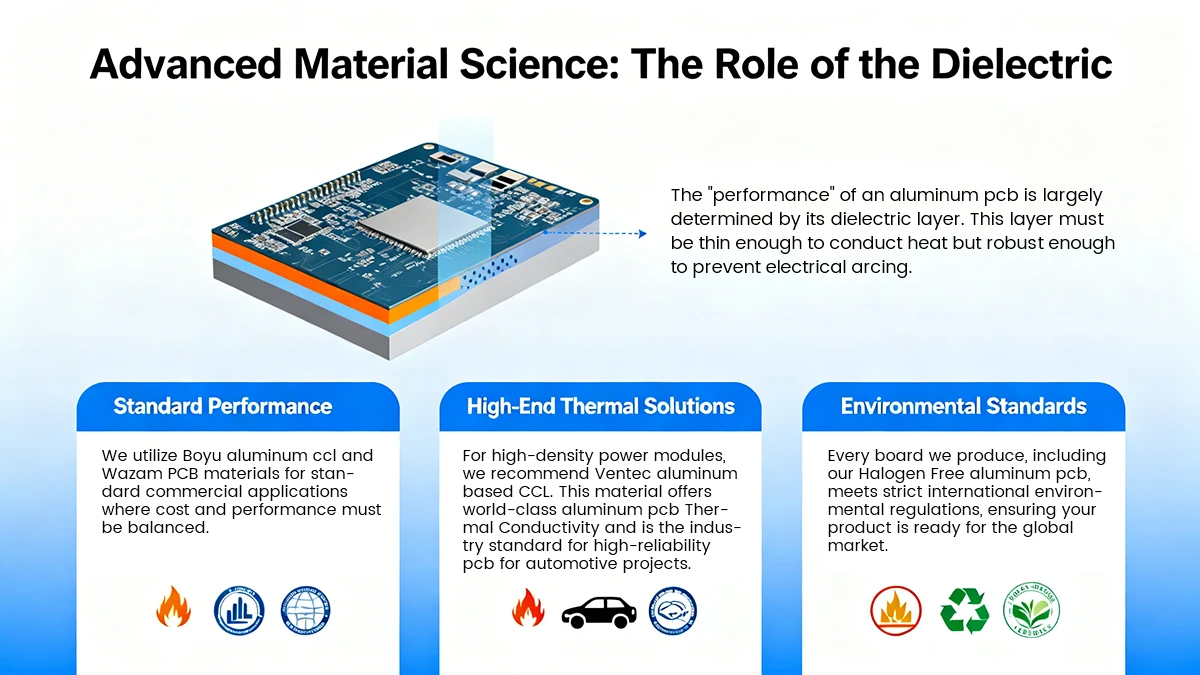
The "performance" of an aluminum pcb is largely determined by its dielectric layer. This layer must be thin enough to conduct heat but robust enough to prevent electrical arcing.
Standard Performance: We utilize Boyu aluminum ccl and Wazam PCB materials for standard commercial applications where cost and performance must be balanced.
High-End Thermal Solutions: For high-density power modules, we recommend Ventec aluminum based CCL. This material offers world-class aluminum pcb Thermal Conductivity and is the industry standard for high-reliability pcb for automotive projects.
Environmental Standards: Every board we produce, including our Halogen Free aluminum pcb, meets strict international environmental regulations, ensuring your product is ready for the global market.
A common misconception is that an aluminum pcb is limited to simple, flat designs. Modern engineering at ApolloPCB has changed that.
In complex Multi-Layer aluminum pcb designs, we can implement blind and buried vias aluminum pcb technology. This allows for high-density component placement on the top layer while keeping the bottom layer as a solid thermal interface.
Thermal management often requires mechanical integration. We offer precision machining for:
Countersink Holes in aluminum PCB: For flush-mounting components or screws.
Counterbore holes in aluminum PCB: To allow for recessed hardware that doesn't interfere with the thermal contact between the board and its external heat sink.
The bendable aluminum pcb is a game-changer for the automotive industry. By using specialized thinned aluminum and flexible dielectrics, we can create boards that conform to the curved surfaces of modern car headlamps. This eliminates the need for complex internal mounting brackets and reduces the overall weight of the vehicle.
Performance is nothing without verification. Every aluminum substrate pcb produced at ApolloPCB undergoes a rigorous testing phase to ensure it can handle the "Performance and Application" demands of the real world.
Thermal Stress Test: We expose the aluminum base pcb to repeated 288 degree Celsius solder floats to ensure zero delamination.
High-Pot Testing: We test the dielectric layer at 2000V to 4000V to ensure that your LED Lighting aluminum pcb won't short-circuit under high voltage.
Reflectivity Testing: For our led circuits board clients, we measure the white solder mask to ensure it meets the 90% reflection threshold.
For clients who need these high-performance boards on a tight schedule without sacrificing quality, please refer to our guide on Custom Aluminum PCB Solutions: Balancing Cost, Quality, and Quick Turnaround
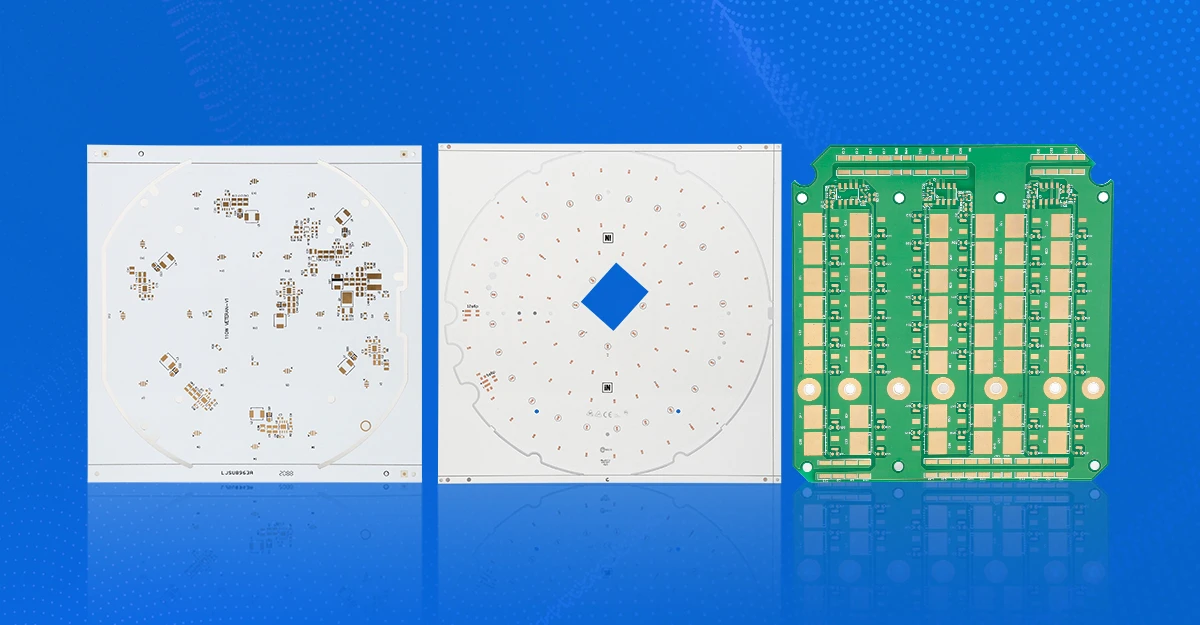
As we look toward 2026 and beyond, the aluminum pcb will continue to be the cornerstone of high-power design. Whether it is a simple aluminum pcb led model light or a complex, multi-layered pcb for automotive systems, the goal remains the same: move heat faster, run components cooler, and build products that last.
At ApolloPCB, we don’t just manufacture boards; we partner with you to solve your thermal challenges. By utilizing the best aluminium-based CCL and the most advanced aluminum pcb stackup designs, we ensure that your product’s performance is limited only by your imagination, not by its temperature.
Ready to power up your next project?

Got project ready to assembly? Contact us: info@apollopcb.com



 Whatsapp 0086 755 29438407
 Mail info@apollopcb.com
 Tel 0086 755 29438407


ABOUT US

PRODUCTS
TECHNOLOGY
KNOWLEDGE CENTRE
CULTURE
NEWS
We're not around but we still want to hear from you! Leave us a note:

Leave Message to APOLLOPCB
