




-
- PCB TYPE
- PRINTED CIRCUIT BOARD PROTOTYPE ALUMINUM PRINTED CIRCUIT BOARD R&F PCB FPC HIGH FREQUENCY PCB HIGH-TG PCB HEAVY COPPER PCB HDI PCB PCB FOR LIGHTING METAL CORE PCB


time:Apr 01. 2026, 16:25:33
The rapid evolution of high-power electronics—driven by the automotive revolution, the proliferation of high-brightness LEDs, and the miniaturization of power converters—has pushed traditional FR4 substrates to their thermal limits. Enter the aluminum pcb (also known as Metal Clad PCB or MCPCB). Unlike standard boards, the aluminum substrate PCB serves as a structural component and a dedicated heat sink, providing a direct thermal path away from heat-generating components.
However, manufacturing an aluminum pcb is not merely an extension of standard PCB fabrication. It requires specialized mechanical processing, unique chemical etching parameters, and a deep understanding of material science. At ApolloPCB, our manufacturing philosophy centers on precision engineering to ensure that every aluminum base pcb meets the rigorous demands of high-reliability industries.
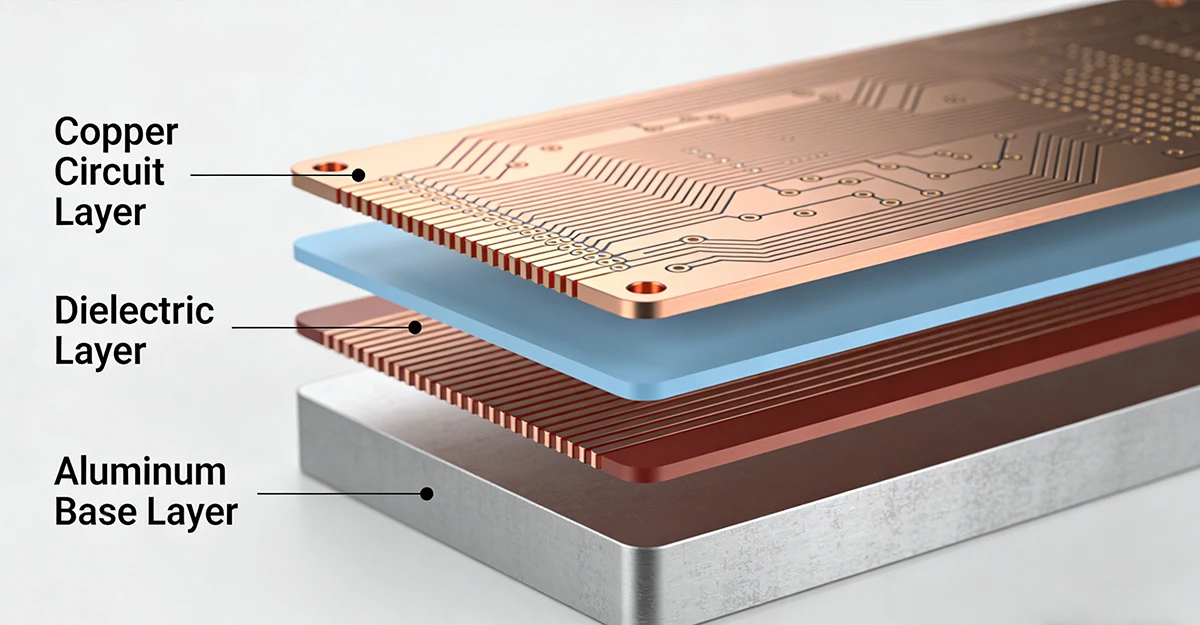
To understand the manufacturing process, one must first understand the specialized aluminum pcb structure. A high-quality board typically consists of four distinct layers:
Circuit Layer (Copper Foil): Usually 1oz to 10oz. For high-power applications, thicker copper is preferred to handle higher currents without excessive temperature rise.
Dielectric Layer (Insulating Layer): This is the heart of the aluminum pcb. It must provide high aluminum pcb thermal conductivity while maintaining excellent electrical insulation. This layer is usually a ceramic-filled polymer.
Aluminum Base Layer: Typically made of 5052 or 6061 aluminum alloy. This layer provides mechanical support and high thermal mass.
Aluminum Base Membrane (Optional): A protective film used during the manufacturing process to protect the aluminum surface from etching solutions and scratches.
For those looking for a broader overview of why these materials are chosen, you can refer to our guide on Aluminum PCB Manufacturer – High Thermal Conductivity MC PCB Boards.
Manufacturing excellence starts with the aluminium-based CCL (Copper Clad Laminate). At ApolloPCB, we don’t compromise on raw materials. We utilize industry-leading substrates to ensure long-term reliability.
Premium CCL Brands: We frequently work with Ventec aluminum based CCL and GDM aluminum based CCL. For specialized high-end projects, Ventec Aluminum material PCB options offer world-class thermal performance and dielectric stability.
Cost-Effective Reliability: For consumer-grade led circuits board projects, we utilize Boyu aluminum ccl and Wazam PCB materials, which offer an excellent balance of performance and price.
Thermal Conductivity Grades: Depending on the application, we offer dielectric layers ranging from 1.0 W/m·K to 8.0 W/m·K (such as the HA80 ALUMINUM PCB). Selecting the right grade is essential for balancing heat dissipation with project budget.
Manufacturing an aluminum substrate pcb requires significant departures from standard FR4 lines.
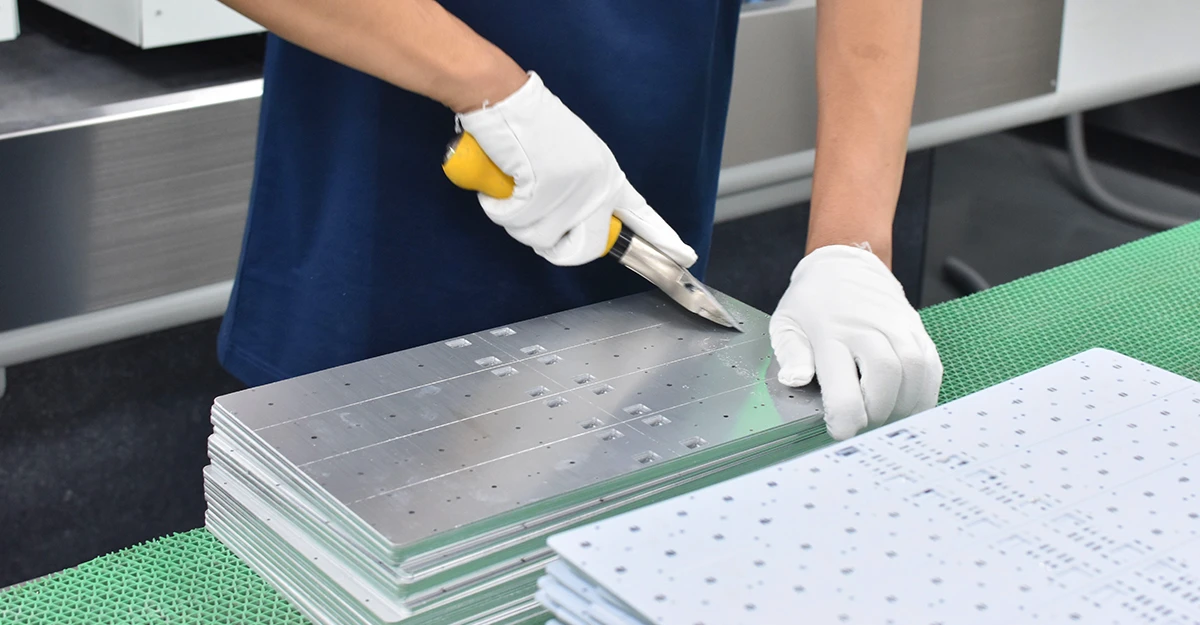
The process begins with the aluminum base pcb panels being cut to size. Precision is critical here; any burrs on the edge of the aluminum can cause electrical shorts or mechanical interference during final assembly. We use specialized diamond-cutting tools to ensure a smooth edge finish.
Unlike FR4, aluminum is a ductile metal. Standard drilling speeds and feeds will lead to "gumming" of the drill bit, which can ruin the dielectric layer's integrity.
Specialized Tooling: We use carbide-tipped bits designed for non-ferrous metals to ensure clean holes.
Mechanical Features: High-power modules often require Countersink Holes in aluminum PCB or Counterbore holes in aluminum PCB for flush mounting to external heat sinks. Achieving the correct depth and smoothness in these holes is a hallmark of ApolloPCB’s precision engineering.
The copper foil is laminated with a photoresist and exposed to UV light. In aluminum pcb china manufacturing hubs like ours, the etching chemistry must be tightly controlled. The etchant must remove the unwanted copper without attacking the aluminum base. This is where our proprietary chemical monitoring systems ensure that the aluminum substrate pcb remains intact while the circuit layer is perfectly defined.
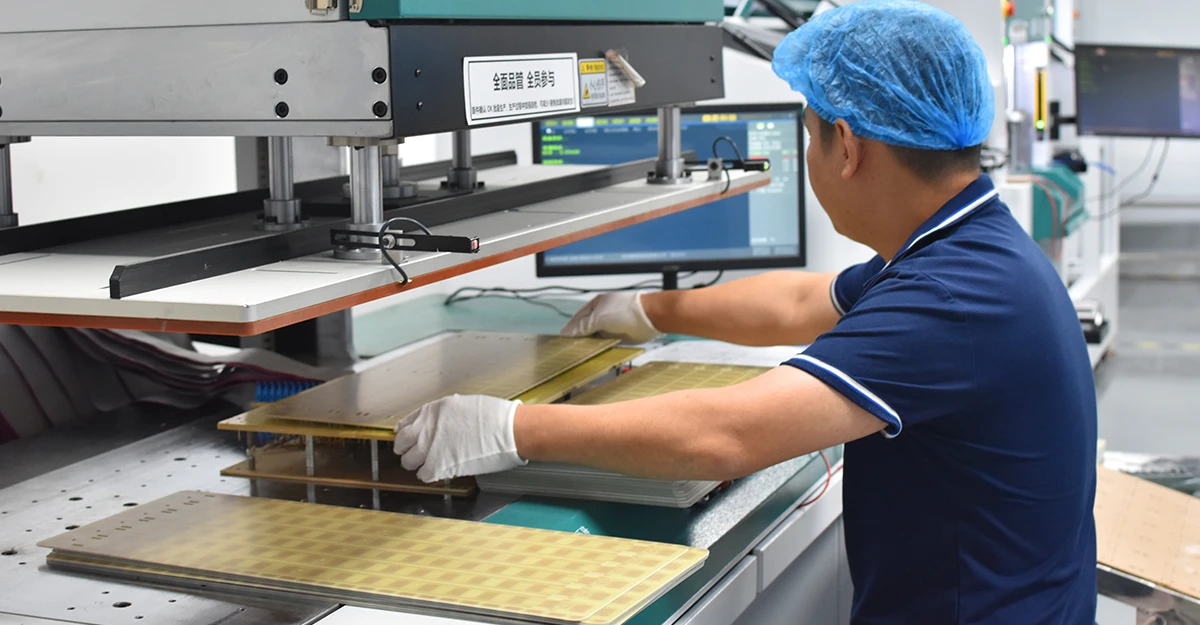
For a Single Layer aluminum pcb, this is straightforward. However, for a Double Sided aluminum pcb or a Double layer aluminum pcb, the lamination process becomes significantly more complex. We must ensure that the dielectric layer is uniform and free of micro-voids, which could lead to dielectric breakdown at high voltages.
While most LED Lighting aluminum pcb applications use single-layer boards, high-power electronics often require more complex structures.
Multi-Layer aluminum pcb: These are used in complex power supplies where signal integrity and power density are both required.
Blind and Buried Vias aluminum pcb: Implementing blind and buried vias aluminum pcb technology allows for higher component density on the top layer while maintaining the thermal path to the bottom. This requires specialized laser drilling and sequential lamination.
Bendable aluminum pcb: By using specialized flexible dielectrics and thinned aluminum bases, we can create boards that conform to curved surfaces, perfect for automotive headlamps and specialized outdoor light PCB designs.
To see how these different configurations impact real-world usage, see our analysis on Maximizing Heat Dissipation – Aluminum PCB Performance in LED and Automotive Systems.
The final stages are crucial for both solderability and thermal radiation.
Solder Mask: For led light aluminum PCB applications, we utilize high reflective soldermask. This mask reflects up to 90% of the light, significantly increasing the luminous efficiency of the LED module.
Surface Finish: Options include Lead-Free HASL, ENIG (Electroless Nickel Immersion Gold), and OSP. For automotive applications, ENIG is often preferred for its flat surface and excellent oxidation resistance.
Halogen Free aluminum pcb: As global environmental standards tighten, many of our clients now specify Halogen Free aluminum pcb to comply with "Green" initiatives.
The aluminum pcb led model light market is the largest consumer of MCPCBs. Whether it is a simple led circuits board for a household bulb or a complex LED Lighting aluminum pcb for stadium lighting, the manufacturing requirements are distinct.
Thermal Management: The board must act as the primary high thermal solution pcb.
Durability: For outdoor light PCB, the board must withstand extreme thermal cycling (expansion and contraction) without the dielectric layer cracking.
Automotive Grade: When producing pcb for automotive, every board undergoes rigorous inspection to ensure it can handle the vibration and temperature fluctuations of an engine bay.
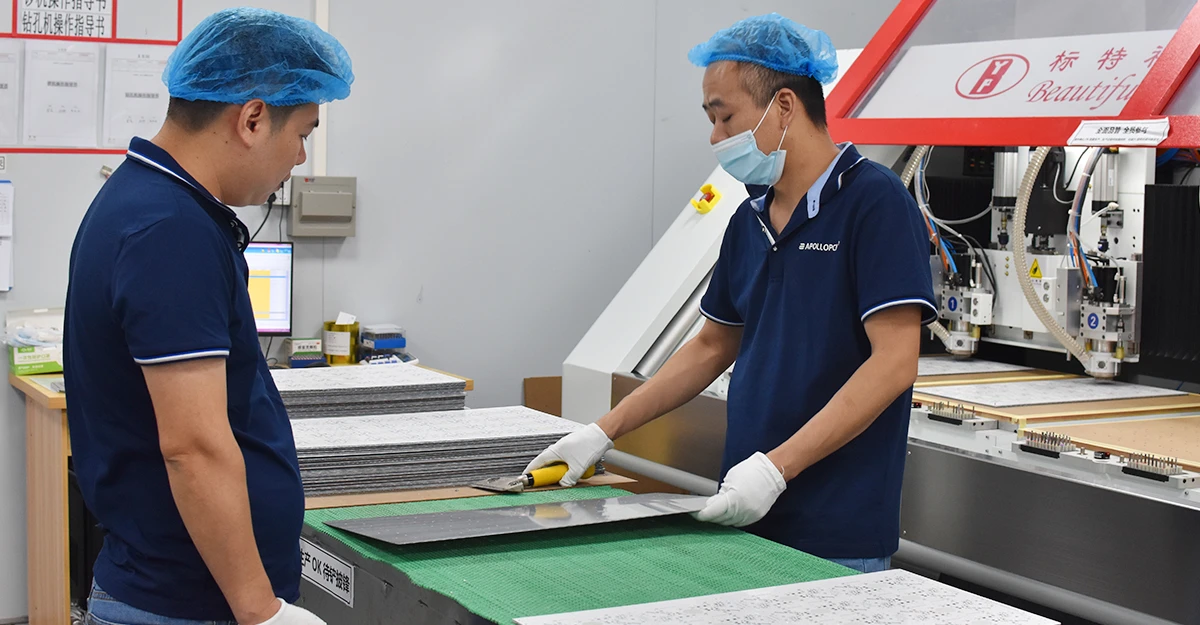
When dealing with high-power electronics, a manufacturing defect isn't just an inconvenience; it's a safety risk. As a leading aluminum pcb manufacturer, our facility is IATF 16949 certified.
Our quality control process includes:
Strict AOI (Automated Optical Inspection): Checking for trace widths and spacing with micron-level accuracy.
High-Pot Testing: Every board is tested at high voltage to ensure the dielectric layer can withstand 2000V to 4000V without leakage.
Thermal Stress Testing: Simulating harsh environments to ensure zero delamination.
The balance of these technical factors is what allows us to offer Custom Aluminum PCB Solutions – Balancing Cost, Quality, and Quick Turnaround.
Choosing an aluminum pcb china partner requires more than looking at a price list. It requires a partner who understands the nuance of aluminum pcb thermal conductivity, the mechanics of Countersink Holes, and the reliability of world-class brands like Ventec.
Whether you are designing a high-performance aluminum base pcb for a motor controller or a cost-effective aluminum pcb led model light, ApolloPCB provides the engineering depth to bring your project to life. We don't just manufacture boards; we engineer thermal solutions for the future of power electronics.
An aluminium PCB, also known as a Metal Clad PCB (MCPCB), is a high-performance thermal solution used in power electronics. Unlike standard boards, it features a specialized aluminum pcb structure consisting of a circuit layer, a high-conductivity dielectric layer, and an aluminum base. At ApolloPCB, we specialize in manufacturing these boards using premium materials like Ventec to ensure maximum heat dissipation for high-brightness LEDs and automotive modules.
The primary difference is thermal conductivity. Standard FR-4 has very low thermal conductivity (approx. 0.25 W/m·K), which acts as a heat insulator. In contrast, an aluminum substrate pcb from ApolloPCB can offer thermal conductivity ranging from 1.0 W/m·K to 8.0 W/m·K. While FR-4 is suitable for low-power logic boards, aluminum is the industry standard for high-power applications where temperature management is critical to component lifespan.
Standard PCBs (FR-4, CEM-3) do not contain aluminum. However, aluminum base PCBs are a specific category designed for thermal management. These boards utilize a 5052 or 6061 aluminum alloy plate as the core substrate. ApolloPCB provides specialized aluminum pcb china manufacturing services, incorporating advanced features like Countersink Holes and blind and buried vias within the metal structure.
The manufacturing process at ApolloPCB involves several precision-engineered steps:
Cutting & Preparation: Precision cutting of the aluminum alloy base.
Drilling: Using specialized carbide tools to prevent metal burrs.
Imaging & Etching: Defining the circuit layer while protecting the aluminum base from chemical corrosion.
Lamination: Bonding the copper foil to the aluminum plate using a high-conductivity dielectric.
Testing: Every board undergoes 2000V-4000V High-Pot testing to ensure zero dielectric breakdown.
ApolloPCB is an IATF 16949 certified manufacturer with a decade of experience in high-power thermal solutions. We differentiate ourselves by offering high reflective soldermask (up to 90%) for LED lighting and the ability to process complex Multi-Layer aluminum PCBs. Our strategic partnerships with material giants like Ventec and GDM ensure that our clients receive the most reliable, factory-direct aluminum pcb solutions from China.
Ready to power up your next project?

Got project ready to assembly? Contact us: info@apollopcb.com



 Whatsapp 0086 755 29438407
 Mail info@apollopcb.com
 Tel 0086 755 29438407


ABOUT US

PRODUCTS
TECHNOLOGY
KNOWLEDGE CENTRE
CULTURE
NEWS
We're not around but we still want to hear from you! Leave us a note:

Leave Message to APOLLOPCB
