




-
- PCB TYPE
- PRINTED CIRCUIT BOARD PROTOTYPE ALUMINUM PRINTED CIRCUIT BOARD R&F PCB FPC HIGH FREQUENCY PCB HIGH-TG PCB HEAVY COPPER PCB HDI PCB PCB FOR LIGHTING METAL CORE PCB


time:Jul 07. 2021, 08:58:52
In the global industrial electronics sector, solid-state lighting and optoelectronic integration require strict material standardization. As original equipment manufacturers (OEMs) and engineering teams design advanced electronic systems—ranging from industrial control interfaces and automotive diagnostic panels to high-lumen commercial lighting fixtures—selecting the correct component housing footprint is critical. Surface Mount Technology (SMT) has largely replaced traditional through-hole configurations, allowing factories to achieve higher component density, faster assembly throughput, and lower production costs.
However, managing an efficient manufacturing process requires a thorough understanding of the technical specifications outlined in a standardized Common SMD LED package size specification table
One of the most frequent points of confusion for international procurement departments and hardware designers is the dual-system naming convention used for Surface Mount Device (SMD) components.
Understanding this mathematical distinction is essential to prevent costly layout errors before releasing design files to production:
Small, low-power components used primarily for circuit status display, background illumination, and compact consumer interfaces generally follow the imperial system.
High-brightness illumination arrays, architectural strips, and heavy-duty industrial fixtures use metric package codes.
To help engineering teams navigate these overlapping classifications, ApolloPCB provides a comprehensive, cross-referenced
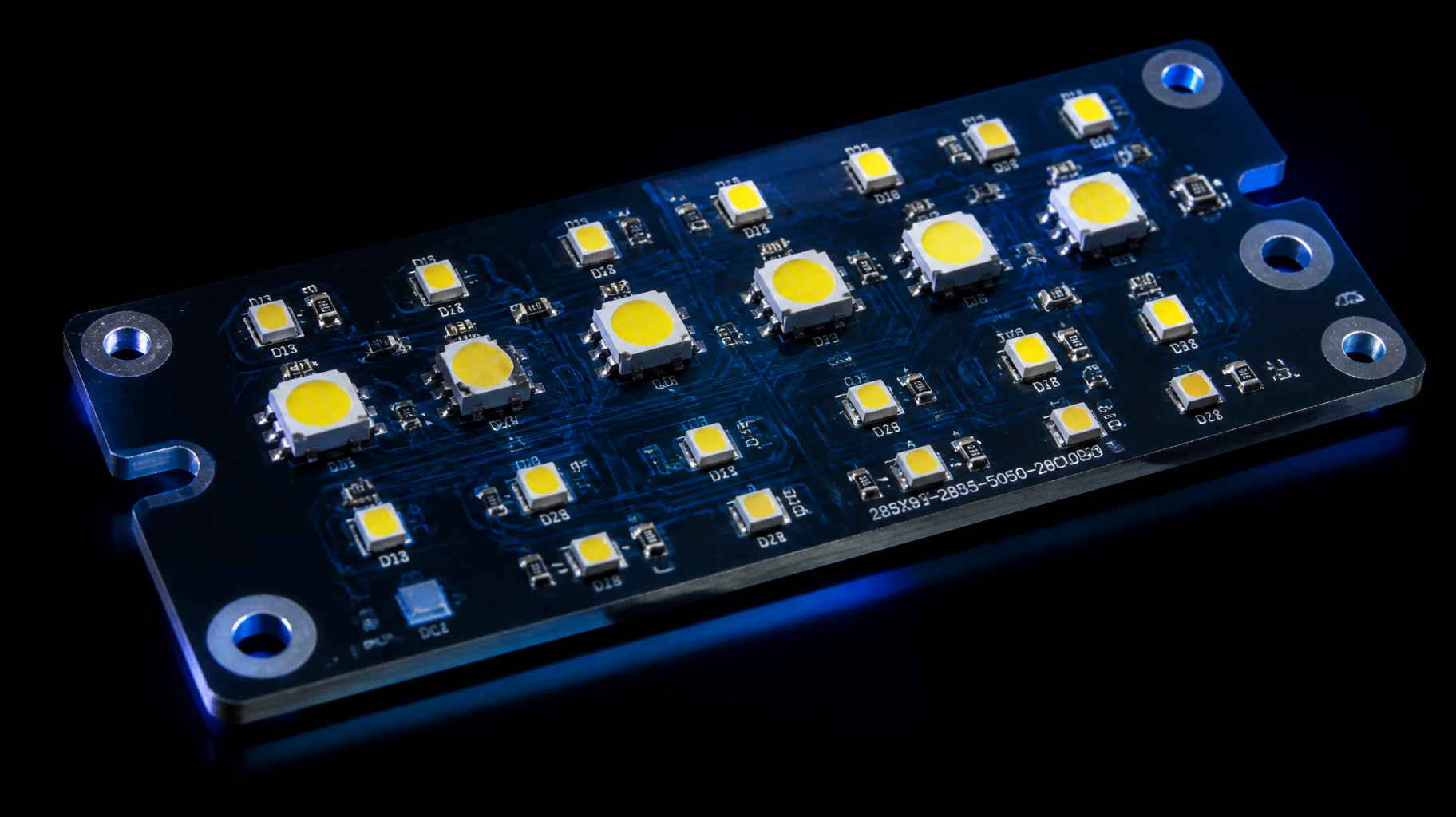
The following technical reference table lists common imperial and metric package footprints, physical boundaries, typical power handling capacities, and standard industrial applications.
| Package Code (Industry Metric / Imperial) | Physical Footprint Dimensions (Length by Width in mm) | Typical Power Rating (Watts) | Standard Solder Pad Height Profile (mm) | Primary Industrial Application Targets |
| 0402 / 1005 | 1.0 mm by 0.5 mm | 0.03 W to 0.05 W | 0.35 mm | High-density mobile computing, compact medical diagnostics |
| 0603 / 1608 | 1.6 mm by 0.8 mm | 0.05 W to 0.08 W | 0.45 mm | Industrial controller panels, networking status arrays |
| 0805 / 2012 | 2.0 mm by 1.25 mm | 0.08 W to 0.12 W | 0.55 mm | Automotive instrument clusters, marine navigation modules |
| 1206 / 3216 | 3.2 mm by 1.6 mm | 0.12 W to 0.25 W | 0.65 mm | Power line failure monitors, railway switching equipment |
| 2835 Metric | 2.8 mm by 3.5 mm | 0.20 W to 0.50 W | 0.70 mm | High-efficacy commercial T8 tubes, retail accent strips |
| 3528 Metric | 3.5 mm by 2.8 mm | 0.06 W to 0.15 W | 1.90 mm | Aviation interior cabin lighting, channel letter signage |
| 5050 Metric | 5.0 mm by 5.0 mm | 0.20 W to 1.50 W | 1.60 mm | Multi-color RGB decorative lighting, intelligent display systems |
| 5630 / 5730 | 5.6 mm by 3.0 mm | 0.50 W to 1.00 W | 0.90 mm | High-lumen warehouse fixtures, exterior architectural floodlights |
Analyzing this reference table shows that as package dimensions grow, current handling capability and heat dissipation capacity increase.
Selecting a component footprint involves more than fitting components onto a circuit board; it requires managing the heat density generated at the semiconductor junction.
To prevent early light output decay and color shifts, engineers must implement specific Design for Manufacturability (DFM) layouts based on component power ratings:
Low-Power Indicator Layouts (0402 to 1206): These low-current components generate minimal localized heat.
Mid-Power Illumination Layouts (2835 and 5050): These mid-range lighting packages require optimized copper pours directly beneath their central thermal pads.
High-Power Industrial Layouts (5630, 5730, and 3030): High-power packages operate at higher currents and generate significant heat density.
From an industrial production standpoint, component package selection directly affects assembly throughput and manufacturing cost efficiency.
Using standardized components optimizes assembly across several key stages:
Feeder and Nozzle Standardization: Mainstream packages like 2835 and 5050 are fully compatible with standard high-speed pick-and-place equipment.
Predictable Solder Fillet Formation: Standardized components exhibit predictable wetting and solder fillet behavior during multi-zone reflow cycles.
Mitigating Fine-Pitch Assembly Defects: Ultra-compact packages like 0402 require tight stencil tolerances and precise solder paste placement.
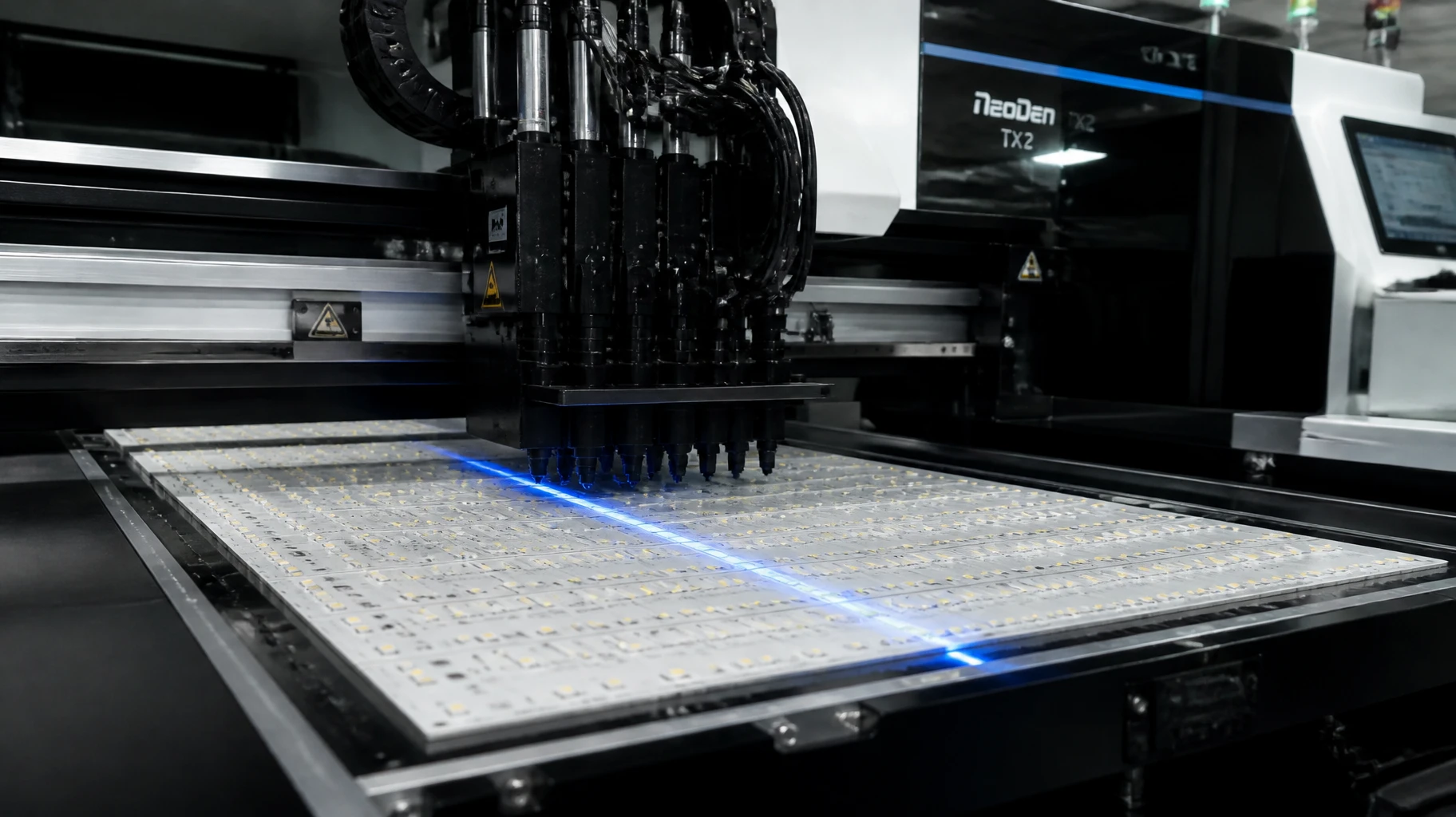
In critical sectors like automotive instrumentation, medical displays, and industrial automation networks, component failure can lead to severe system downtime and warranty liabilities.
ApolloPCB executes all optoelectronic and SMT manufacturing workflows under strict adherence to IPC Class 3 (Advanced High-Reliability Electronic Products) and IATF 16949 (Automotive Quality Management Systems) guidelines:
Automated Solder Paste Inspection (SPI): Inline 3D scanners measure paste deposition heights and volumes down to the micron level before component placement, preventing solder bridging or voiding under large thermal pads.
Multi-Angle Automated Optical Inspection (AOI): High-resolution multi-camera inspection arrays verify component presence, proper orientation, and correct polarity markings across high-density component arrays.
Full In-Circuit and Functional Testing (FCT): Automated functional testing cells check the electrical response and current draw of every board circuit under simulated operational loads, ensuring perfect reliability prior to final shipment.
Certain numerical codes overlap between systems, meaning the same numbers designate different physical footprints depending on whether the metric or imperial system is applied.
When your layout incorporates high-power component packages (such as 3030, 5630, or 5730) operating at higher current densities, the heat density can exceed the thermal capacity of standard FR4.
Yes. Our automated assembly cells utilize programmable pick-and-place systems fitted with precision vision alignment systems and soft-tipped vacuum nozzles, ensuring accurate placement and high yields for compact 0402 and 0603 indicator components without risking component damage.
As modern industrial hardware demands higher optoelectronic density and more compact enclosures, choosing an experienced manufacturing partner is essential to project success. Securing a reliable supply chain requires moving past transactional brokers and aligning with an integrated partner capable of handling advanced material science, complex circuit design, and high-precision automated assembly under one roof.
ApolloPCB combines deep process engineering, advanced cleanroom assets, and strict quality controls to streamline your sourcing pipeline and protect your hardware investment from early prototype validation through large-scale automated delivery.
Ready to optimize your component layout, improve thermal performance, and compress your manufacturing timeline?

Got project ready to assembly? Contact us: info@apollopcb.com



 Whatsapp 0086 755 29438407
 Mail info@apollopcb.com
 Tel 0086 755 29438407


ABOUT US

PRODUCTS
TECHNOLOGY
KNOWLEDGE CENTRE
CULTURE
NEWS
We're not around but we still want to hear from you! Leave us a note:

Leave Message to APOLLOPCB
