




-
- PCB TYPE
- PRINTED CIRCUIT BOARD PROTOTYPE ALUMINUM PRINTED CIRCUIT BOARD R&F PCB FPC HIGH FREQUENCY PCB HIGH-TG PCB HEAVY COPPER PCB HDI PCB PCB FOR LIGHTING METAL CORE PCB


time:Mar 15. 2026, 19:44:36
In the era of ultra-thin smartphones, foldable wearables, and high-performance electric vehicles, the demand for space-saving circuitry has reached an all-time high. For industrial procurement managers and hardware engineers, finding a high-tier FPC manufacturer is no longer just about sourcing a component—it is about securing a partner capable of navigating the complex world of flexible electronics.
As a leading customize FPC manufacturer, ApolloPCB specializes in bridging the gap between ambitious design and mass-market manufacturability. Whether you are looking for an HDI FPC manufacturer for complex signal routing or a reliable partner for FPC High Density Component Assembly, this guide explores why the right manufacturing choice defines your product's success.
Before diving into the intricate world of material science and signal integrity, one must address the foundational question: What is a PCB manufacturer? In the broadest sense, a PCB manufacturer is a specialized industrial entity that serves as the bridge between a designer’s digital schematic (Gerber files) and a tangible, functional electronic component. This transformation involves a highly complex sequence of chemical etching, precision mechanical or laser drilling, and multi-stage lamination.
However, for industrial procurement teams and tech innovators, the term "PCB" is no longer a monolith. A high-tier FPC manufacturer specializes in a sophisticated niche subset: Flexible Printed Circuits. While both rigid and flexible boards share the goal of electrical connectivity, the engineering philosophy and factory infrastructure required for each are worlds apart.
Unlike traditional rigid boards, which utilize an epoxy-reinforced fiberglass substrate (FR4) to maintain a stiff, planar structure, FPCs are engineered to bend, fold, and twist. This physical versatility allows for 3D wiring, enabling the circuitry to follow the internal contours of an enclosure rather than being restricted to a flat surface. For tech leaders, this means:
Volumetric Optimization: Reducing the total assembly volume by up to 60% to 90% compared to rigid-board-plus-wire-harness configurations.
Weight Reduction: FPCs are inherently thinner and lighter, which is a non-negotiable requirement for drones, satellite systems, and medical wearables.
Integrated Interconnects: By acting as both a circuit board and a connector cable, FPCs eliminate the need for bulky headers and manual wiring, which are frequent points of failure in high-vibration environments.
For factory-level clients, understanding the distinction between a standard shop and a dedicated fpc manufacturing facility is crucial for risk management. A standard rigid PCB shop often lacks the specialized tension-control machinery required to handle ultra-thin Polyimide films.
In a rigid facility, the boards are sturdy and easy to transport; in an FPC facility, the materials are as thin as tissue paper. Without advanced environmental stability controls—specifically regarding humidity and temperature—flexible substrates can stretch or shrink by several microns during the etching process. As a premier customize FPC manufacturer, ApolloPCB utilizes specialized vacuum lamination and clean-room environments to ensure that even with the most complex designs, the registration between layers remains perfect. Choosing a generalist for a flexible project often leads to "dimensional instability" issues, whereas a specialist FPC partner ensures a seamless transition from prototype to mass production.
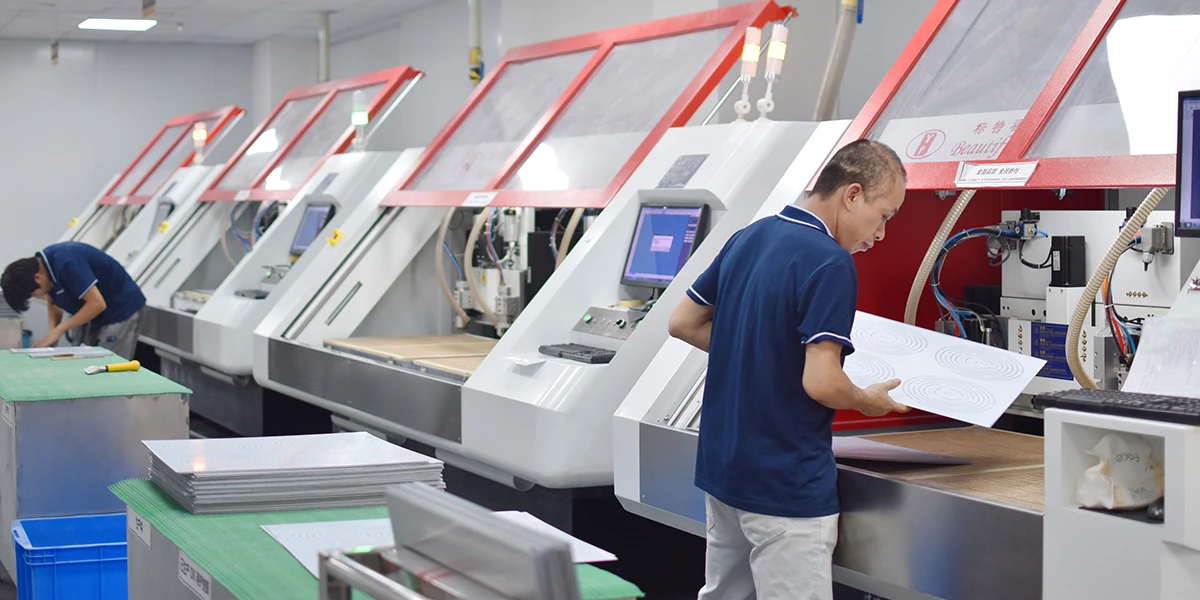
To appreciate the engineering rigor behind fpc manufacturing, one must first understand the molecular foundation of the board itself. If the manufacturing process is the "how," the material science is the "why." To answer the question, What is FPC material?, we must look beyond traditional fiberglass and into the world of high-performance polymers.
The primary substrate for flexible circuits is Polyimide (PI). Unlike the FR4 glass-reinforced epoxy used in rigid boards—which is designed to be brittle and unyielding—Polyimide is a "super polymer" that offers a unique trifecta of properties: extreme thermal stability, excellent dielectric strength, and incredible mechanical toughness. PI can withstand the intense heat of lead-free reflow soldering (often exceeding 260°C) without losing its structural integrity, yet it remains supple enough to be folded thousands of times without fracturing.
As a specialized customize FPC manufacturer, ApolloPCB does not believe in a "one-size-fits-all" approach. We curate specific material grades to match the mechanical and electrical demands of your project:
In traditional FPC construction, a layer of acrylic or epoxy adhesive is used to bond the copper foil to the PI base. However, for a high-tier HDI FPC manufacturer, this adhesive is a bottleneck—it increases board thickness and reduces thermal reliability. ApolloPCB utilizes adhesiveless laminates, where copper is deposited directly onto the Polyimide. This results in a thinner profile, better signal integrity for high-speed data, and superior heat resistance, making it the ideal choice for smartphone FPC manufacturer requirements.
The type of copper foil used is what determines if a board can survive a "dynamic flex" application. While standard Electro-Deposited (ED) copper is fine for static bends, it has a vertical grain structure that cracks easily under repeated stress. We utilize Rolled Annealed (RA) Copper, which undergoes a specialized rolling process to create a horizontal, elongated grain structure. This allows the copper to stretch and compress like a spring, which is why we are the preferred partner for foldable phones and high-cycle robotics.
In rigid PCB design, a liquid solder mask is used to protect the circuits. However, liquid masks are brittle and will crack when the board is bent. As a professional customize FPC manufacturer, we use Coverlay—a solid sheet of Polyimide pre-coated with a thin layer of adhesive. This is laminated over the circuit traces under vacuum. The result is a unified, flexible "skin" that provides superior electrical insulation and mechanical protection while maintaining the board's ability to bend without the protective layer flaking off.
By mastering these material nuances, ApolloPCB ensures that your flexible solution is not just flexible on day one, but remains reliable throughout the entire lifecycle of your product, regardless of how many times it is twisted or turned.
The fpc manufacturing process is an exercise in extreme precision and environmental control. Unlike rigid board fabrication, which deals with sturdy laminates, flex manufacturing involves working with materials that are "dimensionally unstable." Because the base Polyimide (PI) films are ultra-thin—often ranging from 25μm down to a staggering 12.5μm—they act more like fabric than hardware. During chemical etching and thermal pressing, these films are highly prone to stretching, shrinking, or wrinkling.
As a premier customize FPC manufacturer, ApolloPCB has mastered the "art of tension" and chemical balance required to maintain 100% registration accuracy across every layer. Here is a deep dive into the critical stages that define our high-yield production:
Before a single trace is formed, the PI film must be "tamed." We subject the raw material to a controlled baking and stabilization cycle. This process removes residual moisture and pre-shrinks the film, ensuring that it doesn't move unpredictably during subsequent high-temperature steps. This foundational step is what separates a world-class HDI FPC manufacturer from a standard workshop.
Traditional film-masking is insufficient for modern high-density designs. ApolloPCB utilizes Laser Direct Imaging (LDI) technology. By using a high-precision laser to "write" the circuit pattern directly onto the photoresist, we eliminate the distortion associated with physical film tools. This is a must-have capability for any smartphone FPC manufacturer, as it allows us to achieve ultra-fine line widths and spaces (down to 2 mil) with absolute repeatability.
Etching on a flexible substrate requires a delicate balance of chemistry and speed. We utilize specialized horizontal etching lines equipped with high-precision tension rollers. This prevents the thin PI film from being torn or "swallowed" by the machinery. Following etching, a multi-stage ultrasonic cleaning process ensures that no chemical residue remains, which is vital for the long-term reliability of a Batteries FPC manufacturer's output.
Unlike the liquid solder mask used on rigid boards, we apply a Coverlay—a solid Polyimide sheet. This is laminated over the etched copper circuits under high vacuum and intense pressure. The vacuum environment is critical; it ensures that no air bubbles are trapped around the copper traces, which could otherwise lead to delamination or oxidation during FPC High Density Component Assembly.
To ensure that components bond perfectly to the flex circuit, we offer premium surface finishes. ENIG (Immersion Gold) is our most popular choice for Display FPC manufacturer projects because it provides a perfectly flat surface for fine-pitch SMT and excellent oxidation resistance. For cost-sensitive or short-lifecycle projects, we also provide OSP (Organic Solderability Preservatives).
The final "secret ingredient" in the fpc manufacturing process is the application of stiffeners. Flexible circuits are often too supple to support the weight of heavy components or the force of a connector insertion. We selectively bond materials like FR4, PI, or even Stainless Steel to specific zones of the board. This creates a "hybrid" structure—rigid where you need to mount components, and flexible where you need to bend. This precision is why we are a top-choice KeyPads FPC manufacturer, as it allows for a tactile, rigid button area integrated into a fully flexible tail.
By meticulously controlling these six steps, ApolloPCB transforms unstable films into high-reliability interconnects that power the world's most advanced technology.
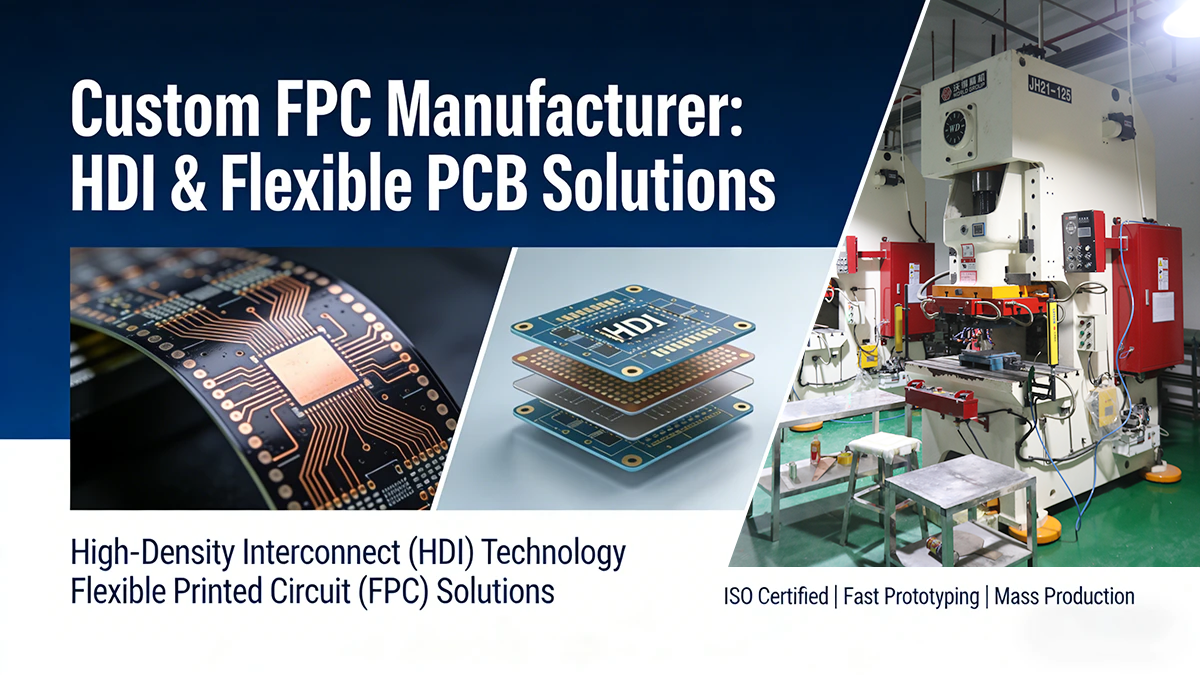
In the electronics industry, the hardware inside an iPhone is often regarded as the pinnacle of manufacturing achievement. A common question among engineers and procurement professionals is: Who manufactures iPhone 15 FPC? The answer reveals a "Who's Who" of the global electronics elite. The Apple supply chain for flexible circuits is notoriously exclusive, dominated by industry giants such as Nippon Mektron, Zhen Ding Technology (ZDT), and Dongshan Precision (DSBJ).
These smartphone FPC manufacturer titans have set the "Gold Standard" for what a flexible circuit can achieve. The FPC inside an iPhone 15 is not just a simple connector; it is a marvel of high-density engineering, often featuring 10+ layers of ultra-thin flex circuitry packed into a space thinner than a human fingernail.
What makes these boards so revolutionary is the aggressive use of High-Density Interconnect (HDI) technology. To save every fraction of a millimeter and maximize battery space, these manufacturers operate as the world's most advanced blind and buried vias FPC manufacturer entities.
By utilizing Any-Layer HDI structures, where microvias are stacked and staggered across multiple flexible layers, they eliminate the need for traditional through-holes that would otherwise waste valuable routing space. This allows for the seamless integration of the A17 Pro chip's massive I/O requirements with the device’s cameras, sensors, and display modules.
While the primary Apple suppliers focus on handling astronomical volumes—often producing millions of units per week—ApolloPCB provides that same "Apple-grade" precision for industrial leaders who require high reliability in smaller or medium-scale production runs. We understand that you don't have to be a trillion-dollar company to deserve world-class signal integrity and miniaturization.
As a specialized HDI FPC manufacturer, we have invested in the exact same technological ecosystem used by the smartphone giants:
State-of-the-Art LDI (Laser Direct Imaging): Ensuring trace registration accuracy that meets the sub-25μm requirements of modern sensors.
Vacuum Lamination Systems: Preventing the microscopic air voids that can lead to catastrophic failure in high-performance Display FPC manufacturer applications.
Advanced Via Filling: Using conductive silver or copper paste to fill blind and buried vias, ensuring robust electrical paths for FPC High Density Component Assembly.
Whether you are developing a next-generation medical imaging sensor or a high-frequency satellite communication module, ApolloPCB translates the rigorous standards of the smartphone world into a scalable pcb solution for your specific industry. We bridge the gap between "concept" and "elite reality," proving that high-density flexibility is no longer exclusive to the world's largest consumer brands.
The true versatility of an FPC manufacturer is not just measured by the machines on their factory floor, but by the diversity of the industries they empower. Flexible circuits are no longer "one-size-fits-all" components; they are highly engineered solutions tailored to specific mechanical and electrical ecosystems.
ApolloPCB has strategically optimized its production lines to meet the rigorous, often extreme, demands of today’s highest-growth sectors. We don't just manufacture boards; we engineer industry-specific pcb solutions.
The transition to electric mobility has created a massive demand for specialized Batteries FPC manufacturer expertise. Modern EV Battery Management Systems (BMS) require ultra-thin, heat-resistant sensing circuits that can snake through the narrow gaps between battery cells.
The Mission: Monitoring real-time cell voltage and temperature to ensure safety and longevity.
The Apollo Edge: We utilize high-Tg Polyimide and specialized flame-retardant adhesives that can withstand the high-temperature environment of a power pack. By replacing bulky wire harnesses with our thin-film FPCs, manufacturers can significantly increase the energy density of their battery modules while reducing overall weight.
In the world of architectural and automotive lighting, flexibility is the key to creativity. As a leading LED Lighting FPC manufacturer, we produce long, continuous flexible strips that can follow the aerodynamic curves of a vehicle’s headlight or the complex geometry of a modern building's facade.
The Mission: Providing a stable electrical path for high-brightness LEDs over long distances.
The Apollo Edge: Our production lines are capable of manufacturing extra-long FPCs (up to several meters) without seams. We incorporate high-thermal-conductivity materials to manage the heat generated by LEDs, ensuring that the lighting remains bright and consistent for years of operation.
The connection between a high-resolution OLED/LCD screen and the main logic board is perhaps the most signal-sensitive area of any device. As a Display FPC manufacturer, we specialize in the ultra-high-density interconnects required for modern 4K and 8K displays.
The Mission: Transmitting massive amounts of data at high speeds without signal loss or EMI interference.
The Apollo Edge: We utilize HDI FPC manufacturer techniques to achieve ultra-fine pitch traces (down to 0.05mm). By integrating specialized EMI shielding films (like Black Film or Silver Paste), we ensure that the display signals remain pure, even in electromagnetically "noisy" environments like smartphones or medical monitors.
For industrial control panels and medical equipment, the user interface must be both intuitive and indestructible. As a specialized KeyPads FPC manufacturer, we integrate tactile switches, LED backlighting, and environmental seals into a single, unified flexible unit.
The Mission: Creating a durable interface that can withstand millions of actuations and exposure to cleaning chemicals.
The Apollo Edge: We utilize specialized "dome" switch integration and thick-film printing techniques. Our keypad FPCs are tested for extreme fatigue resistance, ensuring they remain functional even after five million presses, making them the gold standard for high-reliability medical and industrial hardware.
By deeply understanding the unique pain points of these sectors, ApolloPCB does more than fill orders—we provide the specialized technical foundation that allows tech leaders to push the boundaries of what their products can achieve.
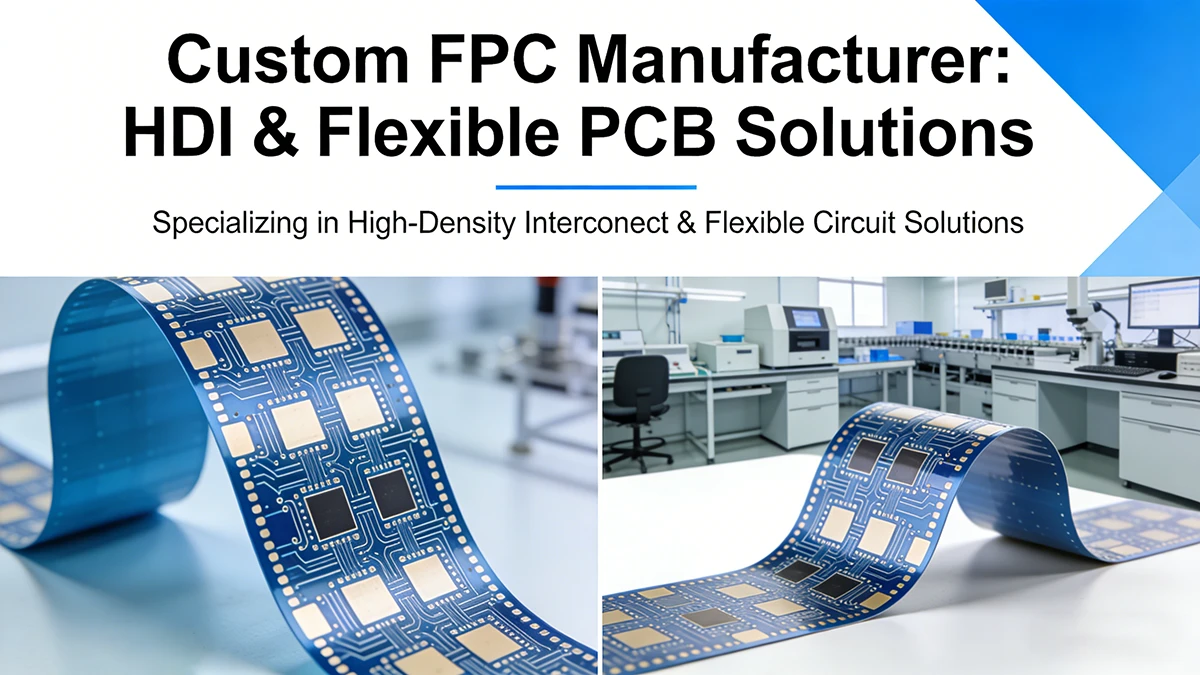
In the competitive landscape of modern electronics, surface area is the most expensive commodity. To compete as a top-tier HDI FPC manufacturer, a company must move beyond simple two-layer circuits and master the sophisticated art of vertical interconnects. ApolloPCB has established itself as a specialized blind and buried vias FPC manufacturer, pushing the boundaries of what is possible in high-density flexible design.
While standard through-hole technology drills completely through the board—effectively "killing" routing space on every single layer—our advanced via technologies allow for surgical precision in electrical connectivity.
As a leading HDI FPC manufacturer, we utilize laser-drilled microvias to create complex 3D routing paths that traditional manufacturers simply cannot replicate.
Blind Vias: These are laser-drilled holes that connect an outer layer to one or more inner layers but do not penetrate the entire board. For a smartphone FPC manufacturer, this is essential; it allows components to be mounted on the top layer while leaving the bottom layer directly underneath them completely free for other traces or components.
Buried Vias: These interconnects are the "hidden ghosts" of the circuit. They connect internal layers to one another and are completely enclosed within the board's structure, with no visibility on either external surface. As a blind and buried vias FPC manufacturer, we use these to create dense "inner-city" routing zones that don't interfere with surface-mounted pads.
Stacked and Staggered Vias: For extreme density, we can stack blind vias directly on top of buried vias. This "vertical elevator" approach is the hallmark of a true HDI FPC manufacturer, allowing for the complex BGA (Ball Grid Array) breakouts required by the latest high-speed processors.
The integration of High-Density Interconnect (HDI) technology transforms the fundamental architecture of a flexible circuit. By replacing bulky through-holes with microvias (often as small as 0.075mm), we can increase circuit density by 40% to 50% without increasing the board's physical footprint.
For our B2B clients, this technical capability translates into direct market advantages:
Miniaturization: Fit more sensors and processing power into smaller wearables or medical implants.
Signal Integrity: Shorter via paths reduce parasitic capacitance and inductance, which is critical for high-frequency FPC applications like 5G and satellite communications.
Reliability: By reducing the total number of through-holes, we improve the mechanical flexibility of the board, as large holes often act as "stress concentrators" where cracks can start.
At ApolloPCB, our mastery of blind and buried vias is backed by 10+ years of industrial experience. We don't just drill holes; we engineer the vertical highways that allow your most ambitious innovations to thrive in the tightest spaces.
In the global electronics procurement landscape, transparency and regional expertise are the foundations of trust. A frequent inquiry from our global B2B clients—ranging from European automotive startups to North American medical device giants—is: Is APOLLOPCB a Chinese company? The answer is a definitive yes. ApolloPCB is a premier china-based pcb giant strategically located in the Greater Bay Area, the undisputed heart of the world’s electronics manufacturing and innovation hub. Far from being "just another factory," our location provides us with a critical competitive edge. Being situated at the epicenter of the global supply chain allows us to source premium raw materials—such as high-grade Polyimide from top-tier suppliers—within hours, and export finished high-tech solutions to Europe, North America, and Southeast Asia with unmatched speed and logistical efficiency.
Choosing a top chinese pcb manufacturer like ApolloPCB means you are tapping into a decade of concentrated industrial intelligence. We combine the cost-efficiencies of the Chinese manufacturing machine with an "Engineering First" mindset. For the tech leader, this means you get a partner who can scale with you—from the first 10-unit high-density prototype to a 100,000-unit monthly mass production run—all while maintaining the strict tolerances and signal integrity your brand stands for.
In the complex architecture of modern hardware, the board is only half of the story. The true challenge lies in how that board communicates with the rest of the system. Beyond the fabrication of standalone circuits, ApolloPCB has evolved into one of the industry's leading fpc cable manufacturers. We have moved past the traditional role of a "print shop" to become a comprehensive interconnect architect.
We recognize a significant pain point for industrial engineers: the "compatibility gap." Often, fpc connector manufacturers produce high-quality sockets, but when a third-party cable is inserted, issues like thickness mismatches, misalignment, or contact fatigue arise. ApolloPCB eliminates this friction by offering a fully integrated, turn-key interconnect service.
As a specialized customize FPC manufacturer, we design the cable and the interface as a single unified system. This holistic approach ensures that your signal travels from point A to point B with zero degradation.
Integrated ZIF and LIF Ends: We engineer custom FPC cables with precision-tapered ends designed specifically for Zero Insertion Force (ZIF) or Low Insertion Force (LIF) connectors. By controlling the exact thickness of the stiffener at the contact point (typically +/- 0.03mm), we guarantee a perfect mechanical "click" and stable electrical contact every time.
Advanced EMI/RFI Shielding: In high-speed data applications, a flexible cable acts like an antenna for interference. To combat this, we apply specialized EMI shielding films (such as silver paste, copper foil, or black electromagnetic films). This allows our cables to operate in "noisy" environments—like near a drone's motors or a smartphone's power management IC—without signal corruption.
Precision FPC High Density Component Assembly (FPCA): We go far beyond the bare cable. Our facility features dedicated FPCA lines where we mount high-density connectors, sensors, and micro-ICs directly onto the flexible substrate. By handling the assembly in-house, we prevent the "handling damage" that often occurs when thin flex cables are shipped between different vendors for soldering.
For tech leaders, partnering with a combined fpc cable manufacturer and assembly house like ApolloPCB provides a massive strategic advantage. It consolidates your supply chain, reduces lead times, and—most importantly—places the responsibility for the entire interconnect's performance on a single, expert partner. Whether it's a simple jumper cable or a complex, multi-branch smartphone FPC harness, we ensure the connection is as flexible as your imagination and as reliable as your most critical mission.
Finding a FPC manufacturer is easy; finding one that understands the nuances of HDI fpc manufacturing and can scale from prototype to mass production is the challenge. ApolloPCB provides the engineering depth of a top chinese pcb manufacturer with the localized service of a global partner.
Whether you need a smartphone FPC manufacturer for a new consumer device or a Batteries FPC manufacturer for an EV project, our 10+ years of technical expertise ensures your project is delivered on time, within budget, and at the highest quality standards.
[Contact ApolloPCB Today for a Technical Consultation on Your Project]
Related Articles
LED Lighting FPC Manufacturer: Powering Versatile & Sustainable Lighting Innovations
Smartphone FPC Manufacturer: Driving Technology Evolution for Next-Gen Mobile Devices
HDI FPC Manufacturer: Delivering Reliable High-Density Flexible Circuits for Advanced Electronics
Durable Keypad FPC Manufacturer: Enhancing Long-Term Performance for High-Cycle Keypad Applications

Got project ready to assembly? Contact us: info@apollopcb.com



 Whatsapp 0086 755 29438407
 Mail info@apollopcb.com
 Tel 0086 755 29438407


ABOUT US

PRODUCTS
TECHNOLOGY
KNOWLEDGE CENTRE
CULTURE
NEWS
We're not around but we still want to hear from you! Leave us a note:

Leave Message to APOLLOPCB
