




-
- PCB TYPE
- PRINTED CIRCUIT BOARD PROTOTYPE ALUMINUM PRINTED CIRCUIT BOARD R&F PCB FPC HIGH FREQUENCY PCB HIGH-TG PCB HEAVY COPPER PCB HDI PCB PCB FOR LIGHTING METAL CORE PCB


time:Jun 18. 2026, 09:16:53
The global industrial electronics manufacturing landscape is built on a foundation of rigorous material standardization. As original equipment manufacturers (OEMs), hardware product architects, and industrial electronics procurement directors scale up their product lines, selecting the correct substrate is a critical step in ensuring long-term field reliability. Among the various core insulation substrates used across the electronics spectrum, Flame Retardant 4 (FR4) glass-epoxy laminates remain the primary baseline choice for mass electronic assembly lines. However, moving an advanced multi-layer circuit design from a digital computer-aided design (CAD) setup into a highly reproducible physical product requires an accurate, comprehensive analysis of the official fr4 data sheet.
For high-volume factories and enterprise buyers, an fr4 datasheet is not just a standard product brochure; it serves as a legally binding engineering blueprint that outlines the exact physical, electrical, and thermal boundaries of the raw laminate material. Misinterpreting or overlooking a key metric on an fr4 material data sheet can introduce severe process errors during automated assembly, including board warping, internal trace delamination, circuit shorting, and early field failures. To help procurement heads and engineering leads minimize risks and optimize production return on investment (ROI), this guide provides an in-depth review of the mechanical, electrical, and thermal metrics found within a standard fr4 pcb material datasheet.
The most critical classification found within any fr4 material datasheet is the glass transition temperature, commonly abbreviated as Tg. The Tg rating defines the exact thermal boundary where the rigid glass-epoxy matrix undergoes a physical state change, transitioning from a hard, glassy matrix into a softer, more flexible polymer state. When a laminate is heated past its native glass transition temperature, its structural expansion rate increases along all axes, significantly reducing its mechanical strength.
When analyzing a standard mid-range substrate via a tg130 fr4 pcb material datasheet, the glass transition threshold hovers between 130°C and 140°C. While this material class is cost-effective for simple consumer applications, low-stress power systems, or traditional lead-based soldering setups, it introduces clear operational risks when subjected to modern manufacturing environments. Lead-free surface mount technology (SMT) reflow lines routinely run peak temperatures reaching 260°C. If a standard mid-range Tg panel passes through this intense thermal profile multiple times, the prolonged heat stress can crack via barrels and split internal laminations.
To insulate industrial systems from thermal damage, modern hardware teams specify premium substrates by reviewing a dedicated fr4 tg170 datasheet or an advanced fr4 high tg datasheet. High-Tg materials maintain structural stiffness up to 170°C or 180°C. This extra thermal margin prevents board warping and trace lifting during multi-stage assembly runs. For a complete review of these high-performance material profiles, design teams can access our engineering spectrum review on the
Choosing a reliable partner like ApolloPCB, known as a premier china best fr4 pcb manufacturer, ensures your high-Tg boards are processed with tight quality controls to withstand extreme thermal conditions.
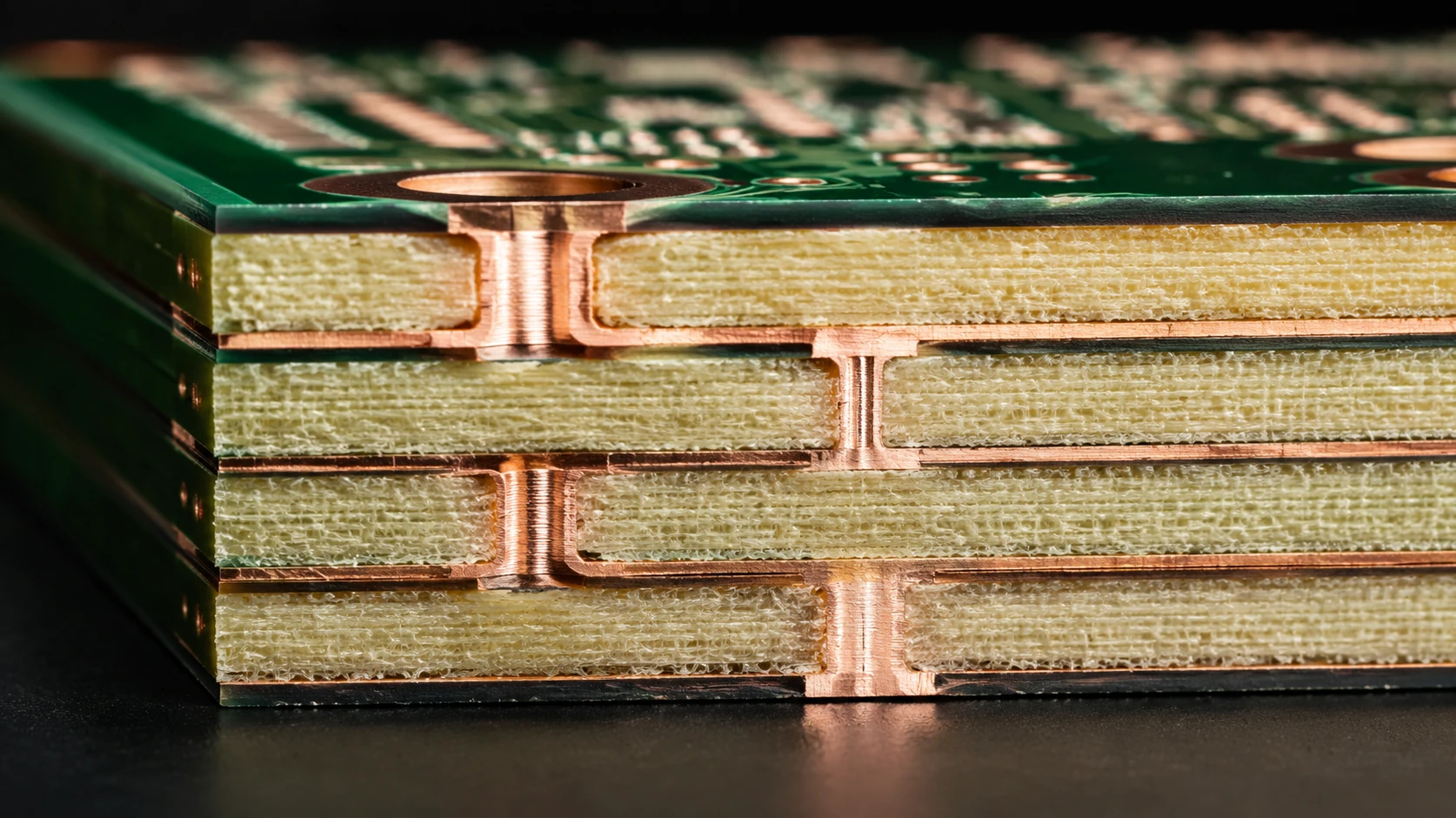
Beyond physical survivability, a circuit board substrate acts as the primary insulation matrix separating dense, multi-layered trace networks. As clock speeds climb and data communication buses move into multi-gigabit routing fields, analyzing the electrical properties listed on an fr4 pcb datasheet is essential to prevent signal loss and crosstalk.
To evaluate these performance characteristics, engineers analyze two main metrics:
The dielectric constant, or relative permittivity (Dk), measures a material's capacity to store electrical energy within an isolating field. On a standard fr4 pcb datesheet, the default Dk rating typically spans between 4.2 and 4.7 under low-frequency baseline conditions. However, a material's Dk value shifts across different operating frequencies and humidity levels.
In high-speed data systems, a shifting dielectric constant can alter the characteristic impedance of a transmission line, introducing trace reflections, timing jitter, and signal attenuation. For an exhaustive analysis of these dielectric performance bounds, hardware design teams can review our deep-dive documentation on
The dissipation factor (Df), also called the loss tangent, measures the percentage of signal energy absorbed by the surrounding glass-epoxy matrix as an electromagnetic wave travels along a copper trace. Standard FR4 laminates exhibit a Df value of approximately 0.015 to 0.020. For high-frequency or long-range communication lines, this loss index can cause significant signal drop-off, making it critical to review the electrical parameters on an official fr4 datasheet pdf to verify your design's signal margins before committing to volume production.
A multi-layer board is a structural element that must withstand continuous mechanical vibration, mechanical drop impacts, and uneven thermal expansion stresses throughout its operational life. An international procurement specialist must audit the following physical parameters on any prospective fr4 material data sheet:
The Coefficient of Thermal Expansion (CTE) measures a material's dimensional change per degree of temperature shift, expressed in parts per million per degree Celsius (ppm/°C). This parameter is tracked across three independent spatial directions:
X and Y Axis CTE Matrix: In high-quality substrates, the horizontal X and Y axis expansion matches the copper traces closely, hovering between 12 and 16 ppm/°C. This precise alignment prevents inner-layer traces from shearing or buckling.
Z-Axis Expansion Boundaries: Because the glass cloth provides no reinforcement along the vertical Z-axis, vertical thermal expansion climbs significantly, spanning from 50 to 70 ppm/°C below the glass transition point. If a low-quality material expands too aggressively along the Z-axis, it can crack plated through-holes (PTH) and break microvia junctions.
The decomposition temperature (Td) marks the thermal limit where the epoxy resin undergoes irreversible chemical breakdown, losing 5% of its total weight. To maintain safe manufacturing processing limits, the Td value on an official fr4 datasheet must sit well above peak soldering temperatures, typically exceeding 340°C.
Concurrently, as highlighted in the corrected text segment shown in image_19b589.png, engineers will thoroughly review the time-to-delamination parameters of the material, specifically the T260 and T288 metrics. These values precisely define the safe operational minutes a multi-layer panel can survive continuous exposure to extreme temperatures of 260°C or 288°C before its internal interlayer structures begin to separate. For comprehensive access to these engineering standards, procurement leads can download our
Navigating a successful product rollout requires an integrated manufacturing pipeline that transitions smoothly from early engineering validation runs to high-volume automated assembly. When a design team validates an initial layout, the focus is on quick iterations and basic functionality. However, as production scales to tens of thousands of units, procurement managers must align their files with the physical processing limits of the factory floor.
ApolloPCB helps global factories optimize this scale-up process by utilizing identical engineering parameters and material stocks across both our quick-turn prototyping and volume production systems. By offering vertically integrated capabilities through our
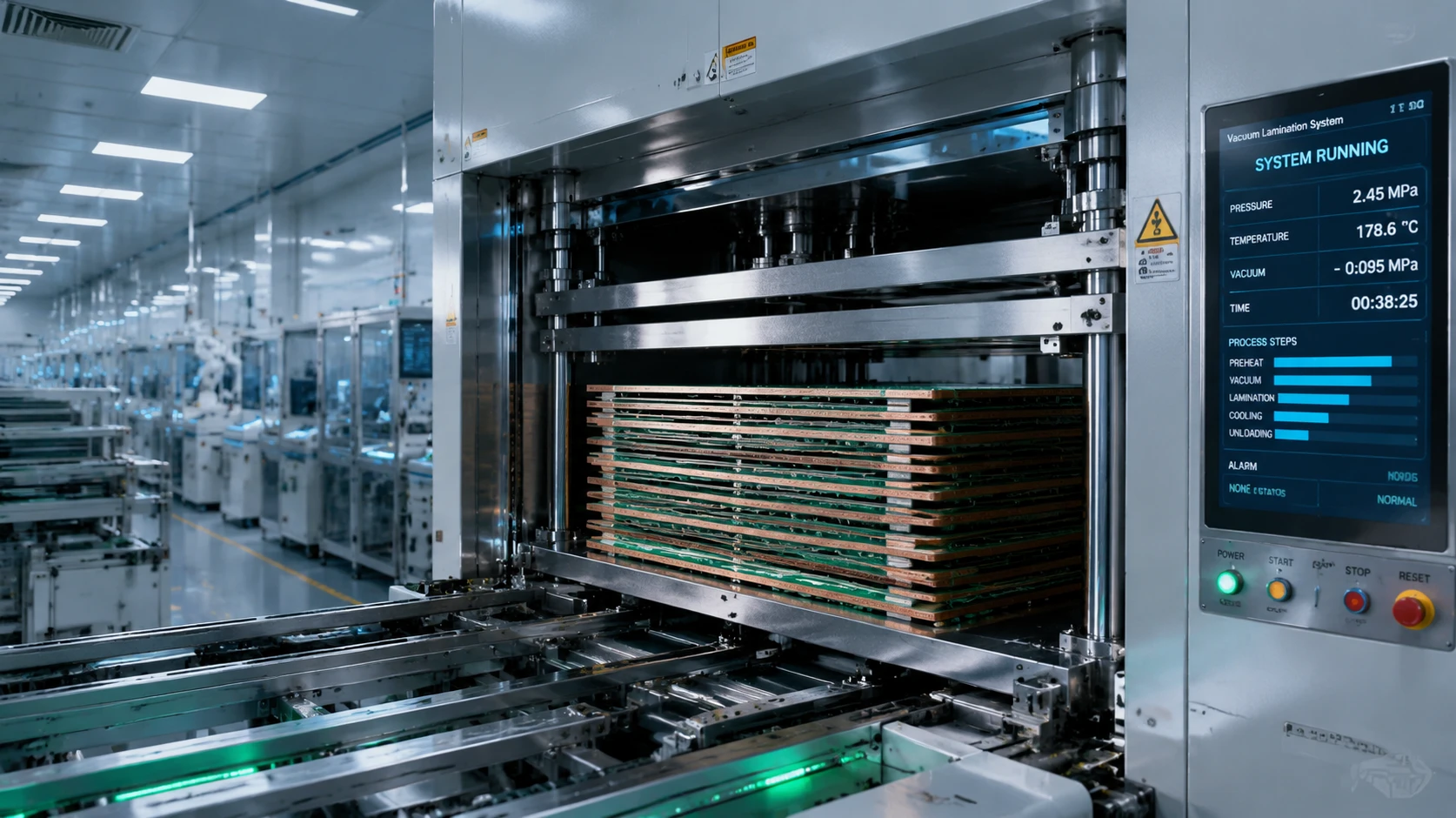
In high-reliability industrial applications, component failure can compromise user safety, disrupt factory infrastructure, or cause significant warranty liabilities. Therefore, a premier global manufacturing partner must back its production runs with verifiable quality metrics. ApolloPCB processes all manufacturing runs under strict adherence to IPC Class 3 (Advanced High-Reliability Electronic Products) and IATF 16949 (Automotive Quality Management Systems) guidelines.
Our quality validation cells subject every production batch to a rigorous testing workflow before final shipment:
Automated Optical Inspection (AOI) Tracking: Advanced scanners check trace patterns against the original CAD files to catch any trace defects or spacing narrowings before final lamination.
Micro-Sectioning Coupon Analysis: Quality assurance technicians cut, polish, and analyze sample coupons processed alongside every production panel. High-magnification microscopes confirm that internal copper plating thicknesses within via walls match or exceed industry baselines.
Flying Probe Netlist Testing: Automated testing fixtures check every circuit net against the original layout files, guaranteeing that zero open circuits, micro-shorts, or insulation defects exist within your multi-layer assemblies.
This thorough quality control framework provides international procurement departments and quality managers with an authoritative layer of operational confidence, ensuring every delivered batch perfectly matches the specifications established in the design files.
A high-Tg substrate maintains its structural stiffness up to higher temperatures, meaning its vertical Z-axis thermal expansion rate remains low and stable during high-temperature lead-free SMT reflow cycles. This stability prevents the board from expanding excessively and tearing internal copper traces away from the surrounding glass-epoxy matrix.
The decomposition temperature (Td) defines the exact thermal threshold where the epoxy resin undergoes irreversible chemical breakdown. Selecting a substrate with a high Td value ensures the board can survive multiple high-temperature assembly cycles without experiencing internal structural degradation or outgassing.
Yes. ApolloPCB subjects 100% of manufactured boards to mandatory high-voltage flying probe or custom bed-of-nails electrical validation checks, ensuring zero open-and-short defects are present before final vacuum packaging and shipping.

As industrial electronics integrate more complex sub-systems and tighter spatial layouts, choosing a reliable manufacturing partner is critical to long-term project success. Securing a stable market position requires moving past transactional brokers and partnering with an integrated manufacturer capable of executing advanced material science, complex multi-layer fabrication, and automated SMT assembly.
ApolloPCB combines deep process engineering, advanced cleanroom assets, and strict quality controls to streamline your sourcing pipeline and protect your hardware investment from early prototype validation to large-scale automated delivery.
Ready to eliminate field failures, reduce hidden logistical overhead, and compress your product development timeline?

Got project ready to assembly? Contact us: info@apollopcb.com



 Whatsapp 0086 755 29438407
 Mail info@apollopcb.com
 Tel 0086 755 29438407


ABOUT US

PRODUCTS
TECHNOLOGY
KNOWLEDGE CENTRE
CULTURE
NEWS
We're not around but we still want to hear from you! Leave us a note:

Leave Message to APOLLOPCB
