




-
- PCB TYPE
- PRINTED CIRCUIT BOARD PROTOTYPE ALUMINUM PRINTED CIRCUIT BOARD R&F PCB FPC HIGH FREQUENCY PCB HIGH-TG PCB HEAVY COPPER PCB HDI PCB PCB FOR LIGHTING METAL CORE PCB


time:Jun 14. 2026, 20:21:46
The global industrial electronics landscape is undergoing a massive transformation driven by extreme data transmission rates and expanding operating bandwidths. As original equipment manufacturers (OEMs), product architects, and hardware engineers design next-generation communication networks, traditional glass-epoxy FR4 substrate materials are hitting their absolute physical and electrical limitations. When operating at frequencies extending past 3 GHz into the millimeter-wave (mmWave) spectrum, standard circuit boards exhibit unacceptable signal attenuation, severe impedance fluctuations, and excessive thermal dissipation.
To resolve these critical high-speed processing bottlenecks, modern hardware architectures are transitioning to the specialized High-frequency PCB. By using advanced base substrates with highly stable dielectric properties, global technology factories can deploy circuitry that preserves signal integrity, minimizes insertion losses, and maintains tight performance tolerances across highly volatile operating temperatures.
Successfully fabricating these complex, high-bandwidth layers requires partnering with an experienced high frequency PCB manufacturer capable of executing precision mechanical routing, advanced laser direct imaging, and strict impedance control verification.
The electrical performance of a microwave or high-speed digital circuit is directly tied to the molecular structure of its base substrate. At elevated operating frequencies, high-frequency signals do not travel solely through the copper traces; instead, electromagnetic waves propagate through the dielectric material surrounding the tracks.
Consequently, choosing a specialized high frequency PCB manufacturer requires a comprehensive audit of the factory's raw material supply chain and engineering experience with tier-1 substrate suppliers.
Different industrial applications require distinct substrate chemistry profiles to balance thermal, electrical, and mechanical return on investment (ROI):
Rogers High-frequency PCB Substrates: Widely recognized as the industry benchmark for high-reliability aerospace, defense, and automotive radar systems. Rogers formulations include woven-glass reinforced hydrocarbon/ceramic laminates (such as the RO4000 series) which process similarly to standard FR4, and ultra-low-loss polytetrafluoroethylene (PTFE) ceramic laminates (like the RO3000 series) optimized for 77 GHz autonomous driving radar systems.
Taconic High-frequency PCB Materials: Specializing in PTFE-coated woven glass substrates, a Taconic High-frequency PCB delivers exceptional mechanical stability, high chemical resistance, and very low electrical loss. These profiles are heavily deployed in satellite communication arrays and power amplifiers.
Isola High-frequency PCB Materials: For high-speed digital infrastructure, an Isola High-frequency PCB utilizing advanced thermoset resin matrices (such as Astra MT77 or Tachyon 100G) provides an excellent balance of low dielectric loss and high multi-layer lamination reliability, making them a staple for cloud computing server backplanes.
Arlon High-frequency PCB Substrates: Heavily focused on military and extreme-environment electronics, an Arlon High-frequency PCB uses specialized fluoropolymer and polyimide formulations that deliver structural durability under severe continuous operating temperatures.
Panasonic High-frequency PCB Material Profiles: The Megtron series (including Megtron 6 and Megtron 7) uses advanced polyphenylene ether (PPE) resins. A Panasonic High-frequency PCB is optimized for high-layer-count, high-density interconnect (HDI) server boards, supplying low dielectric constants and dissipation factors while maintaining excellent manufacturing yield margins.
DuPont High-frequency PCB Interconnects: DuPont Pyralux flexible polyimide films are heavily used in high-frequency flexible and rigid-flex designs, allowing multi-gigabit data channels to bend smoothly through tight physical hinges without trace delamination or signal distortion.
| Base Substrate Classification | Dielectric Constant (Dk at 10 GHz) | Dissipation Factor (Df at 10 GHz) | Thermal Conductivity (W/mK) | Thermal Expansion (CTE ppm/C) |
| Standard FR4 Substrate | 4.20 to 4.50 | 0.0150 to 0.0200 | 0.25 to 0.40 | 14 to 17 (XY-Axis) |
| Rogers RO4350B (Ceramic) | 3.48 | 0.0037 | 0.69 | 14 to 16 (XY-Axis) |
| Rogers RO3003 (Pure PTFE) | 3.00 | 0.0010 | 0.50 | 17 to 19 (XY-Axis) |
| Taconic RF-35 (PTFE Glass) | 3.50 | 0.0018 | 0.50 | 9 to 12 (XY-Axis) |
| Isola Astra MT77 (Thermoset) | 3.00 | 0.0017 | 0.45 | 15 to 18 (XY-Axis) |
| Panasonic Megtron 6 (PPE) | 3.70 | 0.0020 | 0.43 | 12 to 14 (XY-Axis) |
For specific non-critical or intermediate control loops operating at moderate frequencies, factories can also evaluate high-frequency CEM-3 alternatives to optimize bill of materials (BOM) spend without sacrificing structural durability.
Building high-performance telecom or data center hardware entirely out of pure, high-tier PTFE substrates can introduce significant manufacturing challenges and high material costs. Pure PTFE laminates are naturally soft, exhibit a high coefficient of thermal expansion, and are prone to mechanical deformation under multi-stage lamination cycles.
To overcome these structural and financial limitations, advanced electronics production environments use hybrid layer stackups.
In a hybrid configuration, premium low-loss substrates are selectively placed only on the outer layers where high-speed RF microwave or multi-gigabit digital signals travel. The internal layers use standard, structurally rigid FR4 glass-epoxy cores. This material blending approach balances electrical performance with mechanical stiffness, control-plane integration, and cost optimization.
Successfully processing these mixed-material configurations requires strict engineering control over lamination parameters. Mismatched materials expand and contract at different rates during thermal cycles, which can induce panel warping, internal pad misregistration, and microvia shear stress if left unmanaged.
ApolloPCB addresses these challenges by using specialized low-flow prepregs and custom-calibrated press cycles to distribute pressure evenly across hybrid boundaries, as detailed in our technical blueprint on hybrid high-frequency material system models.
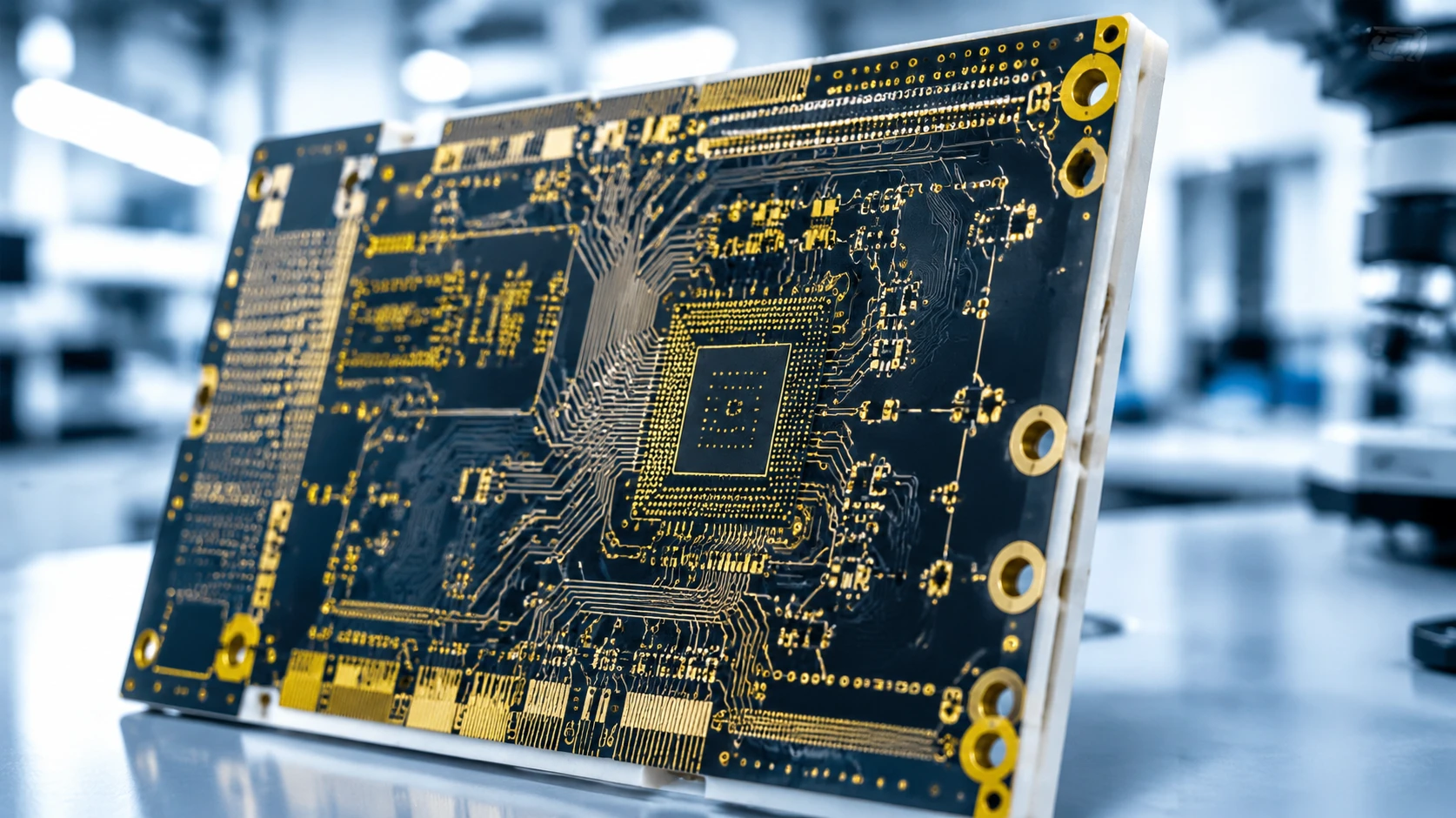
Fabricating a high-precision High-frequency PCB requires specialized production lines and deep process engineering control. Because subtle material changes can significantly alter high-frequency performance, environmental factors like ambient humidity, chemical bath concentrations, and mechanical tracking tension must be continuously monitored across the factory floor.
Mechanical or laser drilling through resin matrices can leave a thin layer of melted resin residue, known as smear, on the internal copper contact pads. In standard boards, this is removed using chemical permanganate wet baths.
However, high-frequency PTFE and hydrocarbon materials feature high chemical resistance, making traditional wet baths ineffective. ApolloPCB uses gas plasma desmear chambers filled with a precise mixture of tetrafluoromethane (CF4) and oxygen to clean out microvias and modify track wall chemistry on a molecular level, ensuring clean electrical connections for subsequent plating steps.
Skin effect dictates that at high operating frequencies (such as 24 GHz or 77 GHz), electrical currents cease traveling through the center of a copper conductor and move exclusively along the outer skin of the trace. Consequently, any micro-scale roughness on the copper surface acts as a physical obstacle, extending the signal path and increasing insertion losses.
To maintain clear signal pathways, our production lines process ultra-smooth, Very Low Profile (VLP) and Hyper Very Low Profile (HVLP) copper foils. Our chemical etching lines maintain strict fluid-dynamics and spray-pressure control, allowing us to cleanly execute ultra-fine line-and-space tolerances down to 25 microns without undercutting traces or damaging surface profiles.
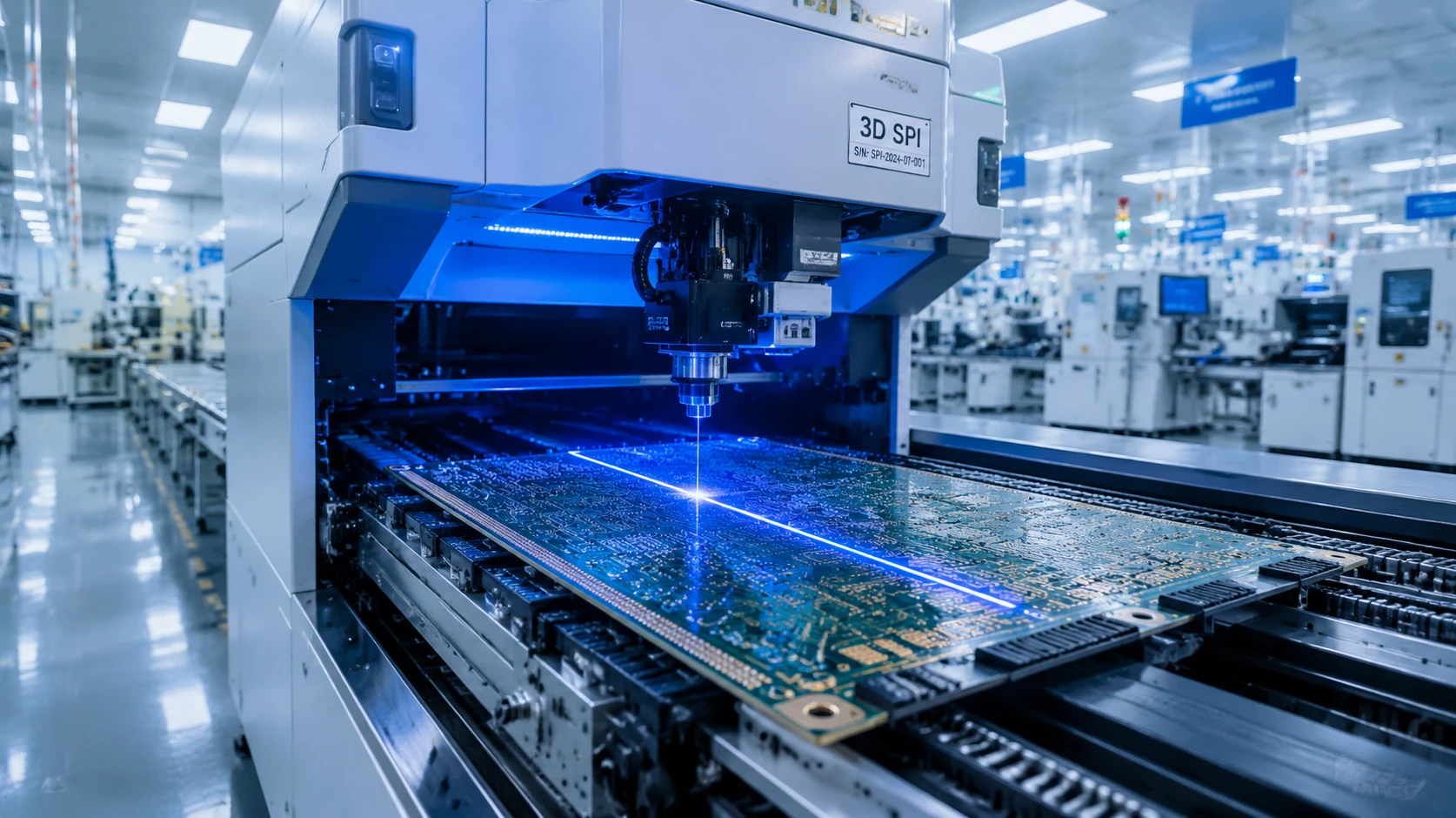
Following trace formation, panels pass through advanced 3D Automated Optical Inspection (AOI) systems to check track widths and spacing tolerances against the original CAD design.
Additionally, we integrate specialized Time Domain Reflectometry (TDR) test coupons on every manufacturing panel. High-speed electrical pulses are sent through these test tracks to measure impedance profiles in real time, verifying that the delivered boards match your exact characteristic impedance requirements (e.g., 50-ohm or 100-ohm differential lines) with zero internal variance.
High-frequency circuitry forms the structural foundation for modern high-bandwidth telecommunication systems, data centers, and radar processing architectures.
The global rollout of 5G and early 6G research relies heavily on advanced telecommunications High-frequency PCB designs. These boards operate across complex sub-6 GHz and mmWave frequencies, processing massive multi-input multi-output (MIMO) antenna arrays and remote radio heads.
Maintaining low insertion losses and high phase stability across thousands of operating hours is essential to preserve network coverage and minimize data packet drop rates on the communication floor.
Modern cloud data centers process massive quantities of data, pushing network routing speeds past 112 Gbps toward 224 Gbps per channel. Managing these multi-gigabit data streams requires advanced high speed communications High-frequency PCB systems.
These high-layer count backplanes use ultra-low-loss PPE or advanced thermoset materials to eliminate jitter, reduce crosstalk, and prevent data distortion across dense multi-layer routing paths, ensuring stable performance for high-speed switch fabrics and enterprise server nodes.
From autonomous vehicle driver-assistance systems (ADAS) to satellite tracking arrays and defense radar modules, the demand for high-reliability RF microwave High-frequency PCB platforms is expanding rapidly. These designs operate at frequencies reaching 77 GHz and beyond, requiring tight dielectric tolerances to ensure accurate radar range resolution and precise angle detection.
To review our complete list of manufacturing parameters, material stackups, and thickness options, view our engineering directory for custom high-frequency PCB configurations as well as our advanced RF circuit platforms.
A perfectly fabricated bare board requires specialized process engineering and precise thermal management during component population. Because high-frequency substrates use advanced material formulations, they cannot pass through standard high-speed Surface Mount Technology (SMT) lines without custom profiling and calibrated process control.
To ensure uniform solder joint formation and prevent substrate warping, our automated assembly divisions operate advanced lines optimized for high-yield turnkey high-speed SMT assembly and component placement.
Our assembly cells apply rigorous process controls across every stage of the high-speed integration pipeline:
Mandatory Pre-Assembly Dehydration: All high-frequency panels undergo a mandatory 4-to-6 hour vacuum bake at 120°C immediately before entering the solder printing line. This process completely drives out moisture from the material matrix, preventing outgassing, internal delamination, or micro-blistering when the boards encounter lead-free reflow temperatures peaking at 260°C.
Precision Reflow Temperature Profiling: Hybrid and pure PTFE stackups absorb and transfer heat differently than standard FR4 boards. If an assembly enters a standard reflow oven without modification, uneven heating can induce thermal shock, warping the panel or causing component misalignments. Our reflow ovens utilize extended pre-heating zones to warm the board gradually, followed by a controlled peak zone and a slow-cooling extraction ramp to prevent thermal stress fractures.
Capillary Underfill and Tooling Controls: For fine-pitch high-frequency chip packages and array-type components, we deploy low-viscosity capillary underfills to redistribute mechanical stresses away from fragile solder joints. Additionally, we design and machine custom aluminum or titanium carrier fixtures to hold flexible or thin core panels completely flat throughout the entire paste printing and automated mounting pipeline.
In high-reliability industrial sectors, component failure is not just an inconvenience—it can compromise passenger safety, disrupt production infrastructure, or cause millions of dollars in warranty liability. Therefore, an elite global manufacturer must back its hardware with transparent, data-driven quality metrics. ApolloPCB executes all manufacturing workflows under strict adherence to IPC-6013 Class 3 (Advanced High-Reliability Electronic Products) and IATF 16949 (Automotive Quality Management Systems) guidelines.
Our quality assurance department subjects every production batch to a strict non-destructive and destructive testing regimen prior to final shipment:
Micro-Sectioning and Visual Core Analysis: Destructive cross-sectional analysis of manufacturing coupons processed alongside every production panel. High-magnification optical microscopes measure exact copper plating thicknesses inside microvias and verify the total absence of internal cracks, resin recession, or layer-to-layer misregistration.
Time Domain Reflectometry (TDR) Impedance Validation: Automated TDR testing systems verify characteristic trace impedance profiles along designated signal pathways, ensuring compliance within tight tolerances (typically ±5% or better) to eliminate signal reflections.
100% Netlist Electrical Testing: Automated flying probe systems or custom bed-of-nails fixtures test every independent net on every board against the original ECAD digital netlist. This process ensures that zero micro-shorts, latent open circuits, or insulation breakdowns exist within complex multi-layer designs.
This comprehensive quality control infrastructure provides international procurement departments, quality directors, and hardware teams with an authoritative layer of operational confidence. By maintaining clear material lot traceability, automated optical inspection records, and environmental test documentation for every production run, ApolloPCB delivers reliable pipelines that easily pass the most stringent corporate supplier audits.
Adhesiveless laminates eliminate the acrylic or epoxy adhesive layer used in traditional multi-layer stackups. This structural elimination lowers the Z-axis thermal expansion profile, eliminates microvia plating fractures during 260°C lead-free SMT reflow, and provides significantly lower dielectric losses for high-frequency signal transmission.
ApolloPCB controls the glass-weave effect by utilizing premium "spread glass" or "flat glass" fabric substrates, which offer a highly uniform dielectric constant across the entire panel. Additionally, our CAM engineering teams can apply a specialized angular layout rotation to traces relative to the substrate weave path to eliminate phase skew and timing jitter.
Our dedicated NPI prototyping division can deliver fully functional, 100% netlist-tested high-frequency engineering prototypes within 3 to 5 business days, ensuring your hardware design transitions quickly through early verification stages.
As high-power industrial sub-systems demand higher thermal performance and greater spatial efficiency, selecting an experienced manufacturing partner is critical to project success. Securing a stable market position requires moving past general brokers and aligning with an integrated fabricator capable of executing advanced material science, complex metallization chemistry, and automated SMT assembly.
ApolloPCB combines deep process engineering, advanced cleanroom assets, and strict quality controls to streamline your sourcing pipeline and protect your hardware investment from early prototype validation to large-scale automated delivery.
Ready to eliminate signal attenuation, streamline your bill of materials, and compress your product development timeline? Request an instant technical quote from the ApolloPCB engineering division today, and discover how our integrated high-speed processing cells can drive value for your business platform.

Got project ready to assembly? Contact us: info@apollopcb.com



 Whatsapp 0086 755 29438407
 Mail info@apollopcb.com
 Tel 0086 755 29438407


ABOUT US

PRODUCTS
TECHNOLOGY
KNOWLEDGE CENTRE
CULTURE
NEWS
We're not around but we still want to hear from you! Leave us a note:

Leave Message to APOLLOPCB
