




-
- PCB TYPE
- PRINTED CIRCUIT BOARD PROTOTYPE ALUMINUM PRINTED CIRCUIT BOARD R&F PCB FPC HIGH FREQUENCY PCB HIGH-TG PCB HEAVY COPPER PCB HDI PCB PCB FOR LIGHTING METAL CORE PCB


time:Jun 02. 2026, 18:08:05
The global industrial manufacturing landscape is undergoing an unprecedented architectural transformation. As electronic hardware product designers, electrical engineers, and original equipment manufacturers (OEMs) push the boundaries of spatial contraction, traditional rigid circuit boards are encountering absolute physical and mechanical barriers. Modern hardware systems—ranging from autonomous vehicular driver-assistance systems (ADAS) and medical diagnostic imaging arrays to high-frequency aerospace telemetry and complex industrial robotics—demand a robust, lightweight electrical interconnect that can twist, fold, bend, and fit into non-linear, ultra-thin enclosures without compromising signal transmission velocity or long-term operational lifespan.
This micro-spatial revolution has shifted the advanced flexible circuit from a specialized spacing alternative into a core baseline requirement for global technology factories. However, translating an intricate, high-density flexible layout from a digital CAD schematic into a highly reproducible, high-yielding physical product introduces immense manufacturing complexity. Dealing with ultra-thin polyimide films requires an exceptionally high level of process control due to the material's hygroscopic nature and inherent dimensional instability under thermal and chemical loads.
To mitigate latent field failures, eliminate assembly line bottlenecks, and optimize manufacturing yields, industrial procurement departments and engineering leads must partner with a technologically advanced, vertically integrated fabrication partner. A true tier-1 production expert must provide proactive Design for Manufacturability (DFM) support during early validation phases while operating the high-capacity, automated fabrication assets required to execute large-scale, zero-defect production runs.
A flexible circuit board is fundamentally an active mechanical component that must simultaneously function as a high-frequency electrical conduit. Because an FPC is engineered to experience repetitive bending, twisting, and structural vibrations throughout its operational life, its performance depends entirely on the physical and chemical integrity of its base material stack-up. Selecting a partner that understands the nuances of raw substrate behavior is a key step when choosing a competent flexible printed circuit board fabrication partner.
Traditional flexible printed circuit manufacturing historically relied on 3-layer Flexible Copper Clad Laminates (FCCL), which use an organic adhesive layer (typically an acrylic or butyral epoxy) to bond the conductive copper foil to the structural polyimide (PI) core film. While cost-effective for simple, static "bend-and-stay" configurations, these adhesive layers represent a significant point of failure in high-reliability industrial applications:
Z-Axis Thermal Stress: Acrylic adhesives exhibit an exceptionally high Coefficient of Thermal Expansion (CTE). During multi-stage lead-free SMT reflow cycles (which routinely peak at 260°C), the adhesive expands aggressively along the Z-axis, placing severe mechanical stress on plated through-holes (PTH) and microvias, frequently leading to latent, field-induced open-circuit failures.
Mechanical Degradation: The inclusion of an adhesive layer increases the total profile thickness of the circuit stack-up. This extra thickness increases the overall stiffness of the board and degrades its minimum allowable bend radius, causing accelerated fatigue cracking under dynamic flexing conditions.
Signal Attenuation: Acrylic adhesives possess significantly higher dielectric constants and dissipation factors than pure polyimide. This material limitation introduces unacceptable insertion losses, signal distortion, and impedance mismatches in high-frequency, multi-gigabit data transmission lines.
To eliminate these performance bottlenecks, ApolloPCB specializes in the processing of 2-layer adhesiveless FCCL substrates for advanced flexible printed circuits. By utilizing advanced cast or cast-on-copper lamination techniques, the copper foil is bonded directly to the polyimide core on a molecular level without any structural adhesive. This advanced material configuration delivers an ultra-thin board profile, doubles the dynamic flex cycling life, lowers the dielectric breakdown risk, and provides a uniform, low-loss medium optimized for high-speed digital routing.
The metallurgical classification of the copper foil specified in the design files dictates how well the FPC will tolerate structural bending strain. High-volume manufacturing facilities handle two distinct copper classifications:
| Copper Foil Type | Manufacturing Mechanism | Crystal Grain Structure | Primary Application |
| Electro-Deposited (ED) | Electrolytic plating deposition | Vertical, columnar matrix | Static, bend-and-stay installations; low-stress routing. |
| Rolled Annealed (RA) | Mechanical high-pressure rolling | Elongated, horizontal rows | Dynamic flexing fields; continuous structural torsion. |
While ED copper is acceptable for static configurations, dynamic application environments demand high-ductility RA copper. When oriented properly relative to the primary bend axis, RA copper can withstand millions of severe dynamic flexing cycles without experiencing work-hardening or structural micro-fractures along trace pathways.
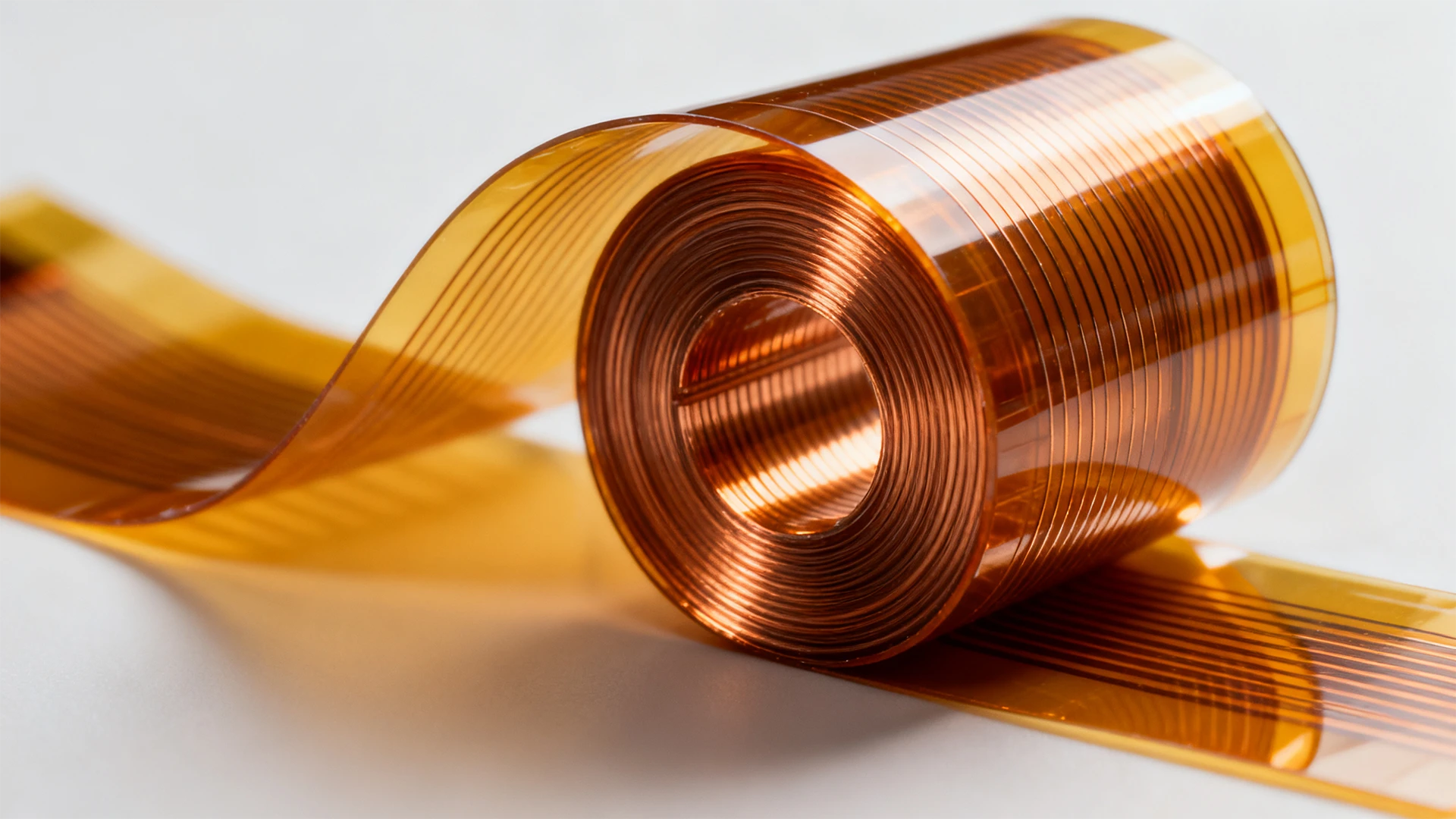
Executing multi-layer high-density interconnect (HDI) routing within a complex layout requires an advanced layout architecture. By utilizing stacked blind and buried microvias, engineers can compress trace layouts, eliminate parasitic capacitance, and secure high-frequency signal propagation.
For a comprehensive engineering analysis of these microvia topologies, refer to the industry study on blind and buried vias in flexible PCBs for next-gen electronics as well as our technical deployment manual on HDI blind and buried vias flexible PCB high-density integration.
To achieve precise interlayer registration across multi-layer designs, automated optical alignment systems read fiducial markers directly on the polyimide surfaces. This capability allows high-precision laser systems to ablate clean microvias down to 50μm in diameter.
The drilled panels then pass through a specialized low-temperature gas plasma desmear chamber to modify the inner-wall chemistry on a molecular level, removing any carbonaceous resin smear and ensuring uniform copper binding during subsequent periodic-reverse pulse electroplating. This rigorous process enables via-in-pad configurations that save critical surface area on dense board layouts.
Fabricating a multi-layer, high-density flexible circuit requires specialized engineering care and specialized equipment setups that differ dramatically from standard rigid PCB production lines. Because unreinforced polyimide film is highly hygroscopic and dimensionally unstable, environmental factors such as ambient humidity, chemical bath temperatures, and mechanical transport tension must be continuously controlled throughout the factory floor.
Understanding the internal metrics of the assembly pipeline is critical for procurement leads evaluating top-tier flexible printed circuit manufacturers:
Vacuum Pre-Baking: Raw polyimide panels naturally absorb moisture from the surrounding atmosphere due to their open molecular structure. Before entering the photolithography line, all material batches undergo a mandatory vacuum dehydration bake to stabilize the polymer matrix and minimize dimensional shrinkage or warping.
Laser Direct Imaging (LDI): Traditional physical film photomasks are highly prone to thermal stretching and misregistration errors when applied to flexible sheets. Advanced flexible circuit board manufacturers utilize LDI systems, writing the digital CAD circuit layout directly onto the photoresist-coated copper layer via a computer-controlled UV laser beam to automatically compensate for micro-scale material distortion.
Precision Fluid-Dynamic Etching: The exposed panel passes through a computerized chemical chamber where unexposed copper is removed. Strict fluid-dynamics and spray-pressure controls allow the chemical lines to cleanly execute ultra-fine line-and-space tolerances down to 25μm without causing trace undercutting or residual copper bridges.
Coverlay Vacuum Lamination: Rather than using a liquid photoimageable solder mask, flexible boards utilize a solid polyimide film coated with a thermosetting adhesive, known as a coverlay, to protect the delicate copper traces from oxidation, dust, and moisture ingress. Technicians align pre-cut coverlay sheets using high-magnification split-vision optical systems before loading panels into an automated vacuum hydraulic press. The press applies a carefully calibrated temperature-ramping profile under heavy pressure, forcing the adhesive to flow uniformly into the complex spaces between the copper traces without creating air pockets or voids.
Advanced Surface Finish Plating: To guarantee uniform solder joints during final SMT assembly, exposed copper pads must be plated with a protective surface finish. While early industry benchmarks were established by traditional frameworks like flexible circuit technologies inc, modern automated lines employ Electroless Nickel Electroless Palladium Immersion Gold (ENEPIG) to provide an ultra-flat surface profile, prevent brittle intermetallic failures, and form an exceptional platform for high-precision wire bonding.
Laser Profiling and Contour Excision: The finished multi-board panels are excised into their final independent shapes using precision UV laser routing systems. Laser profiling ensures completely clean, burr-free edges with zero mechanical stress or micro-tearing introduced to the outer polyimide border, preventing edge burrs from acting as stress-concentration points that crack under repetitive flexing.
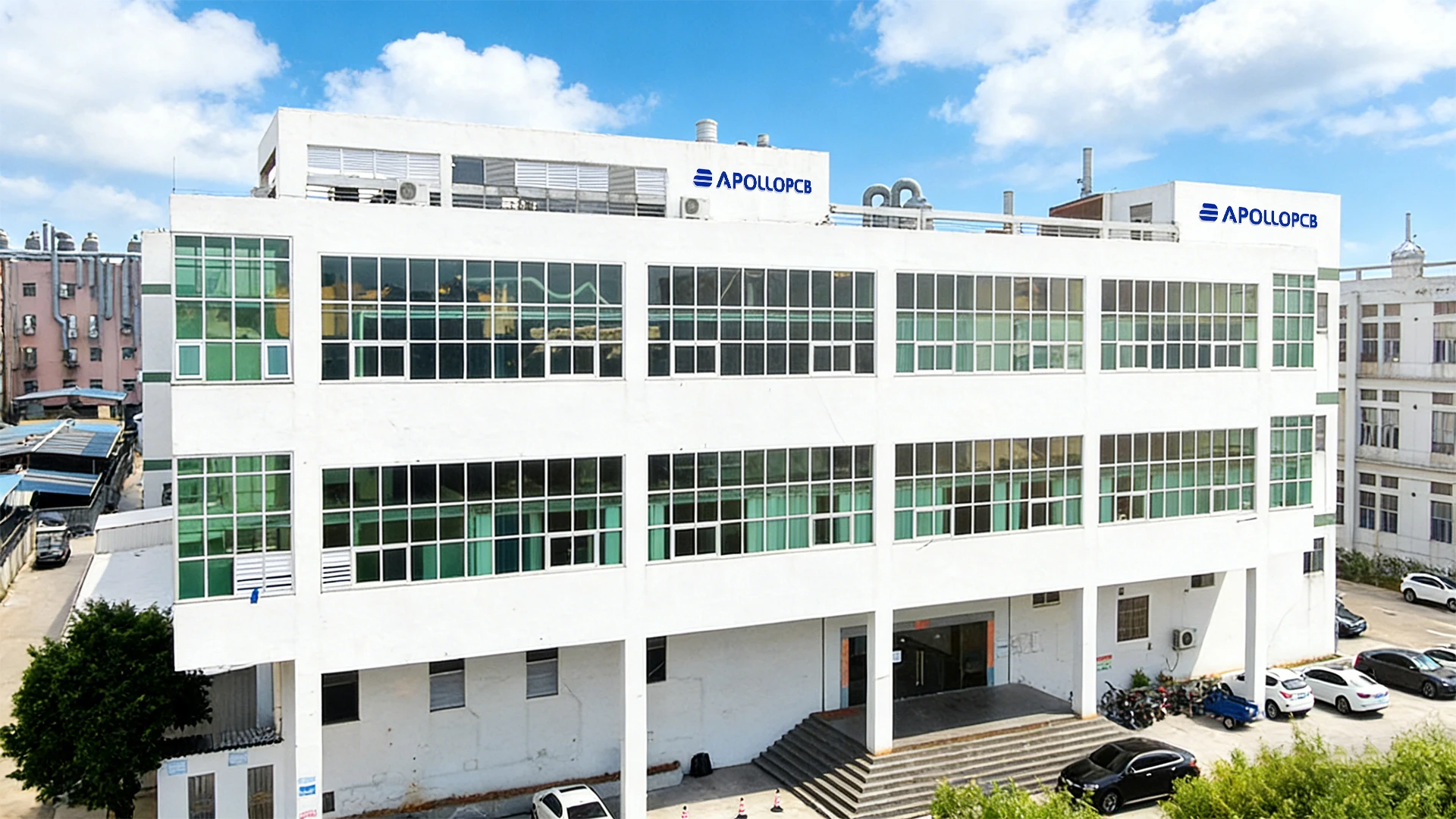
A perfectly fabricated bare board is only half of the hardware equation. Transforming a raw polyimide sheet into a functioning sub-assembly requires specialized component placement, custom tooling, and rigorous process discipline. If components are attached incorrectly, the thermal stress of assembly can destroy the substrate, or the mechanical strain of field deployment will crack the solder joints.
Because bare flexible circuits are pliable and thin, they cannot pass through standard high-speed Surface Mount Technology (SMT) pick-and-place conveyors or solder paste printers without warping, vibration, or shifting out of plane. To achieve precise component placement, ApolloPCB operates as a fully integrated flexible circuit assembly manufacturer. Our SMT lines utilize custom-machined aluminum or magnetic vacuum carrier fixtures to hold each flexible panel completely flat throughout the entire component attachment pipeline.
Populating passive components, high-pin-count connectors, and fine-pitch BGAs onto a pliable substrate demands completely different assembly parameters than rigid boards. To ensure stable process control, ApolloPCB deploys fully integrated SMT systems custom-tailored for advanced flexible printed circuit assembly services.
Furthermore, our engineering teams enforce strict quality controls across every assembly run:
Pre-Assembly Dehydration: All flexible panels undergo a mandatory 4-to-6 hour vacuum bake at 120°C immediately before entering the printing line to prevent outgassing, internal delamination, or micro-blistering when the board encounters lead-free reflow profiles peaking at 260°C.
Capillary Underfill Dispensing: For heavy microprocessors or fine-pitch Ball Grid Array (BGA) packages deployed in high-vibration environments, we apply low-viscosity, high-modulus epoxy underfills to redistribute mechanical bending and vibrational shear stresses away from fragile solder balls.
Selective Stiffener Thermocompression: Stiffeners must be placed with extreme spatial accuracy to prevent raw mechanical forces from loading adjacent surface-mount components. We employ automated alignment fixtures to bond FR4 or aluminum stiffeners using specialized thermosetting adhesives under controlled heat and pressure cycles.
This full-lifecycle integration eliminates communication gaps between separate bare-board shops and assembly facilities, providing clear traceability and higher assembly yields for complex hardware projects.
Navigating a successful product launch requires a manufacturing pipeline that can transition smoothly from fluid R&D iterations to highly structured, high-volume production. When engineering teams build a flexible circuit board prototype, the focus is primarily on speed and verification. However, an elite production partner must ensure that the prototype's design metrics line up perfectly with mass production constraints.
Whether coordinating global supply chains through localized fulfillment networks or setting up automated roll-to-roll operations directly at core Asian hubs, maintaining design continuity is essential to avoid expensive re-tooling delays. For systems that require a combination of rigid instrumentation control sections and multi-directional flexible routing arms, designers rely on hybrid rigid-flex PCB manufacturing solutions to eliminate standard plug-in wiring connectors entirely.
ApolloPCB optimizes this prototype-to-production lifecycle by using the exact same engineering data matrix, CAM software, and core chemical processing parameters for both our prototyping and mass-production lines. The DFM parameters verified during your initial sampling run are preserved, meaning your design can be scaled up to high-volume hard-tooling lines instantly without requiring a complete re-engineering phase, reducing your hidden logistical overhead and compressing your product development timeline.
In high-reliability industrial sectors, component failure is not just an inconvenience—it can compromise passenger safety, disrupt production infrastructure, or cause millions of dollars in warranty liability. Therefore, an elite global manufacturer must back its hardware with transparent, data-driven quality metrics. ApolloPCB executes all manufacturing workflows under strict adherence to IPC-6013 Class 3 (Advanced High-Reliability Electronic Products) and IATF 16949 (Automotive Quality Management Systems) guidelines.
Our quality assurance department subjects every production batch to a strict non-destructive and destructive testing regimen prior to final shipment:
Micro-Sectioning and Visual Core Analysis: Destructive cross-sectional analysis of manufacturing coupons processed alongside every production panel. High-magnification optical microscopes measure exact copper plating thicknesses inside microvias and verify the total absence of internal cracks, resin recession, or layer-to-layer misregistration.
Dynamic Flex Cycling Verification: Finished production samples are locked into motorized flexing rigs that cycle the board under specified bend radii and speeds. Computerized multi-meters monitor trace resistance in real time, proving that the RA copper grain structure survives the mechanical lifecycle demands established in the product definition.
100% Netlist Electrical Testing: Automated flying probe systems or custom bed-of-nails fixtures test every independent net on every board against the original ECAD digital netlist. This process ensures that zero micro-shorts, latent open circuits, or insulation breakdowns exist within complex multi-layer designs.
This comprehensive quality control infrastructure provides international procurement departments, quality directors, and hardware teams with an authoritative layer of operational confidence. By maintaining clear material lot traceability, automated optical inspection records, and environmental test documentation for every production run, ApolloPCB delivers reliable pipelines that easily pass the most stringent corporate supplier audits.
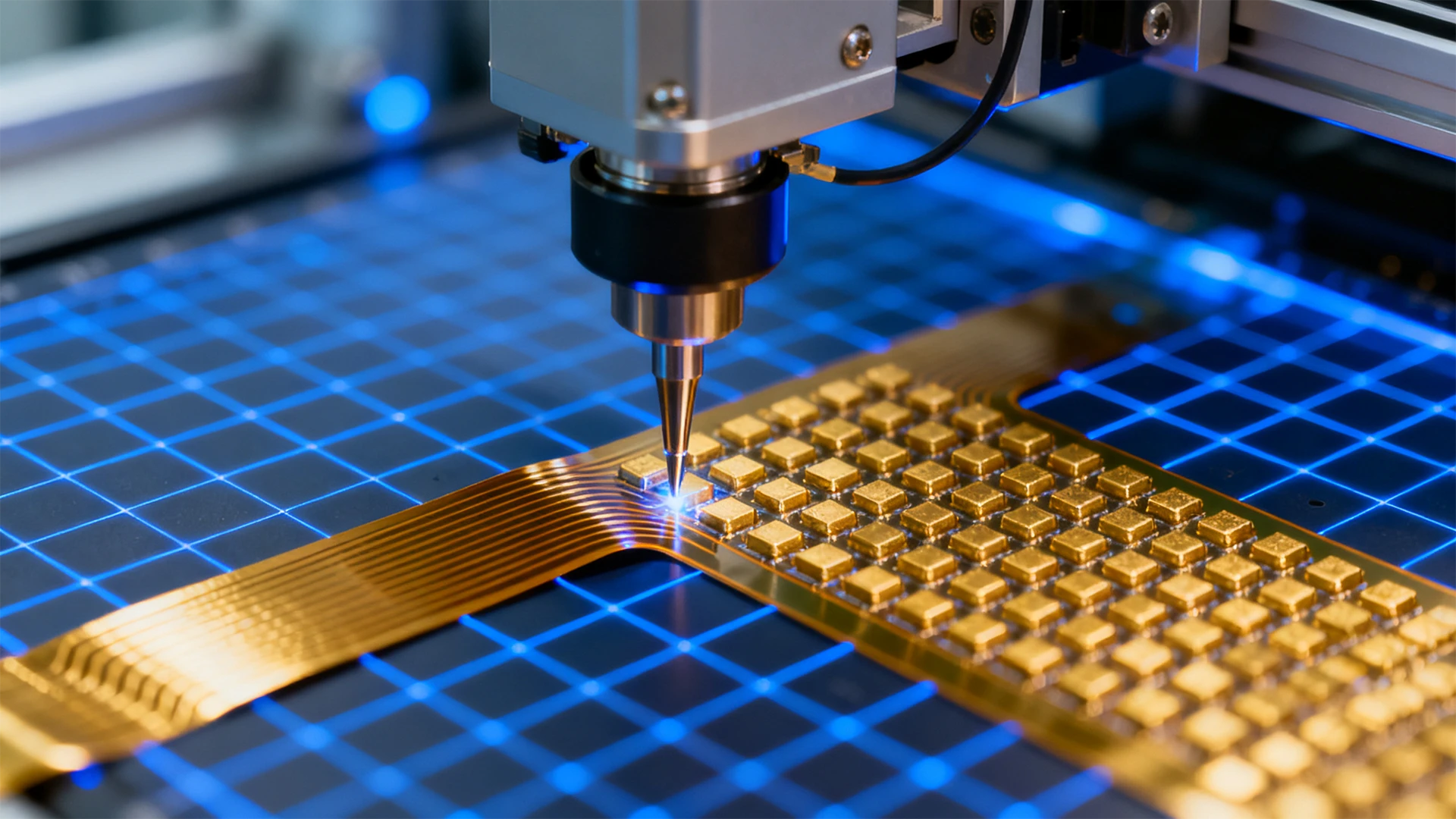
Yes. ApolloPCB specializes in engineering complex, custom multi-layer FPCs up to 8 layers using advanced adhesiveless polyimide substrates, precision laser microvias, and selective rigid stiffeners to meet tight mechanical and electrical constraints.
For initial NPI prototyping and engineering validation samples, ApolloPCB can deliver fully functional, 100% netlist-tested flexible PCB prototypes within 3 to 5 business days, ensuring your design moves quickly into the verification stage.
Yes. ApolloPCB operates fully integrated SMT placement lines using custom-milled carrier fixtures, automated paste inspection, and precise reflow profiling to deliver completely populated, defect-free flexible sub-assemblies directly to your factory floor.
As industrial electronics incorporate more advanced sensors, denser computing modules, and tighter mechanical enclosures, the demand for highly reliable flexible circuitry will continue to grow. Securing your market position requires moving past transactional part-brokers and partnering with an integrated manufacturer capable of executing advanced material science, complex multi-layer fabrication, and automated high-density SMT assembly.
ApolloPCB blends engineering expertise, advanced manufacturing infrastructure, and strict quality validation to eliminate supply chain fragmentation and protect your hardware investment from prototype to full-scale OEM deployment.
Ready to eliminate field failures, reduce hidden logistical overhead, and compress your product development timeline? Request an instant custom FPC technical quote from the ApolloPCB engineering team today, and discover how our integrated prototype-to-production solutions can drive value for your business platform.

Got project ready to assembly? Contact us: info@apollopcb.com



 Whatsapp 0086 755 29438407
 Mail info@apollopcb.com
 Tel 0086 755 29438407


ABOUT US

PRODUCTS
TECHNOLOGY
KNOWLEDGE CENTRE
CULTURE
NEWS
We're not around but we still want to hear from you! Leave us a note:

Leave Message to APOLLOPCB
