




-
- PCB TYPE
- PRINTED CIRCUIT BOARD PROTOTYPE ALUMINUM PRINTED CIRCUIT BOARD R&F PCB FPC HIGH FREQUENCY PCB HIGH-TG PCB HEAVY COPPER PCB HDI PCB PCB FOR LIGHTING METAL CORE PCB


time:Jun 12. 2026, 15:38:05
The global industrial electronics landscape is undergoing a massive transformation driven by extreme power density requirements. As hardware engineers, product architects, and original equipment manufacturers (OEMs) develop next-generation systems—such as high-power LED arrays, automotive power electronics, concentrated photovoltaic systems, and high-frequency RF modules—conventional substrate materials are reaching their ultimate operational limits. When operating under extreme thermal stress, high currents, or corrosive environments, standard glass-epoxy laminates suffer from severe performance drops, structural warping, and early circuit failures.
To address these critical thermal bottlenecks, advanced industrial hardware designs are transitioning to Ceramic Printed Circuit Boards. By replacing organic resin matrix layers with pure inorganic ceramic mineral substrates, technology factories can utilize an electronic foundation characterized by high thermal conductivity, exceptional dielectric insulation, and unmatched mechanical stability across highly volatile temperature ranges.
Partnering with a technically advanced, vertically integrated fabrication partner allows global enterprises to transform complex high-power schematics into durable, highly efficient industrial assets.
To understand the core engineering value of a high-performance ceramic pcb, product architects must analyze the physical limitations of traditional base materials. For decades, standard FR4 substrates served as the baseline for the global electronics industry. However, as power requirements scale upward, the low thermal performance of standard epoxy-glass substrates creates severe engineering challenges.
For instance, when evaluating a standard base material through engineering assets like the Tg130 FR4 PCB material datasheet, the thermal conductivity hovers around a mere 0.25 W/mK. This extremely low dissipation index forces heat to accumulate directly around component junctions, leading to thermal throttling and compromised system life.
While alternative choices like insulated metal substrates provide a step up in thermal performance, as explored in our directory of advanced metal core PCB solutions, they remain constrained by the thin organic dielectric polymer layer situated between the copper trace and the metal base sheet. This polymer layer acts as a structural thermal barrier and breaks down under continuous exposure to operating temperatures exceeding 150 degrees Celsius. Ceramic substrates eliminate this weak point entirely by utilizing a solid, completely inorganic mineral sheet that serves as both the electrical insulation layer and the primary thermal dissipation pathway.
| Material Property Classification | Standard FR4 Substrate | Alumina Ceramic PCB (Al2O3) | Aluminum Nitride PCB (AlN) |
| Thermal Conductivity (W/mK) | 0.25 to 0.40 | 24 to 30 | 170 to 230 |
| Coefficient of Thermal Expansion (CTE) (ppm/C) | 14 to 17 (XY-Axis) | 6.8 to 7.2 | 4.3 to 4.6 |
| Dielectric Strength (KV/mm) | 15 to 20 | 15 to 25 | greater than 20 |
| Maximum Operating Temperature (C) | 130 to 170 | up to 800 | up to 1000 |
| Flexural Strength (MPa) | 400 to 500 | 300 to 400 | 300 to 350 |
By matching the Coefficient of Thermal Expansion (CTE) of ceramic substrates closely with fragile silicon semiconductor dies (which hover between 3.5 and 4.5 ppm/C), custom ceramic modules eliminate mechanical shear stress on surface-mount solder joints during cyclic thermal expansion. This precise structural alignment prevents solder joint fracturing and trace delamination, making ceramics the ideal choice for high-reliability aerospace, automotive, and industrial power applications.
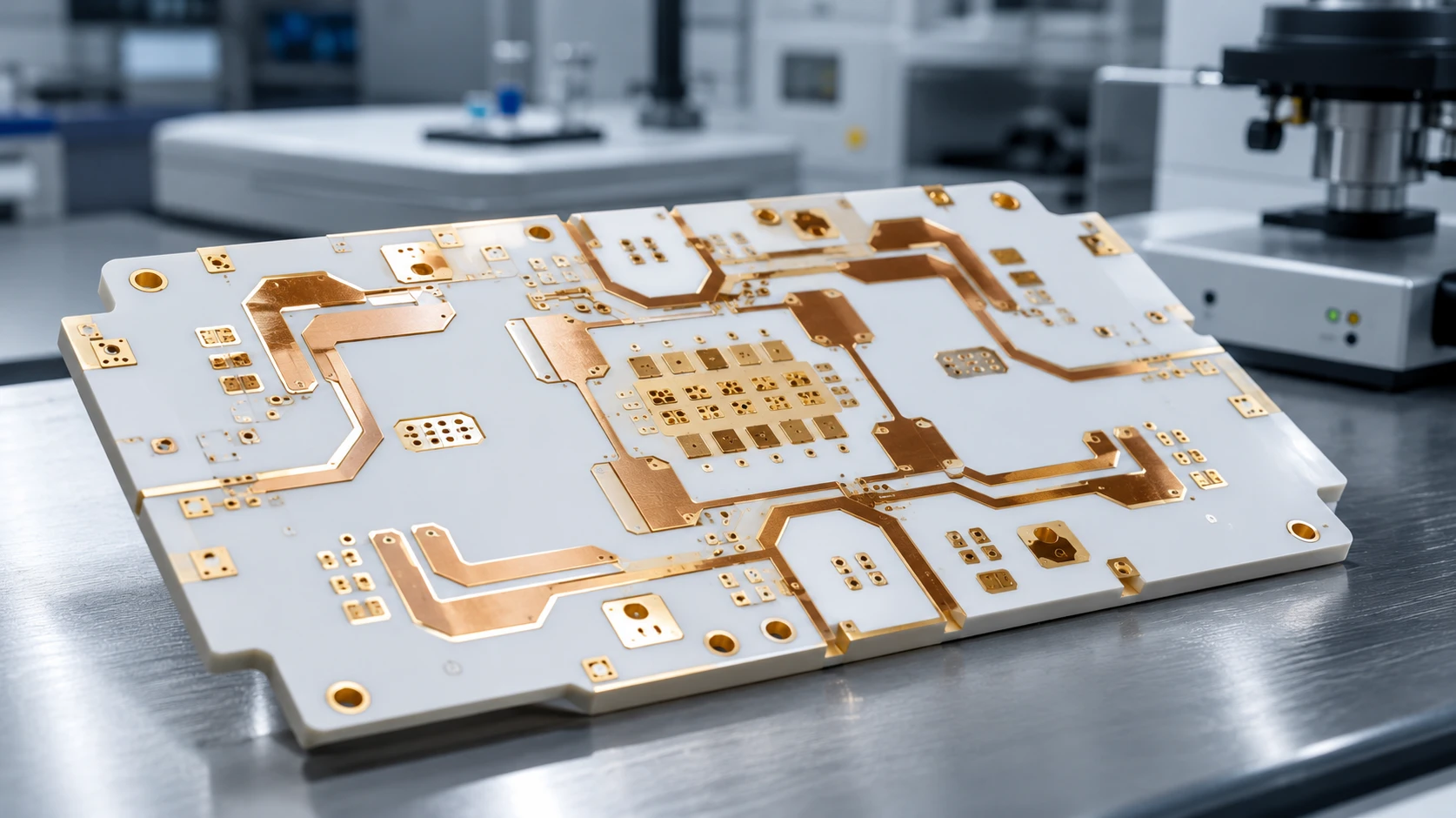
Fabricating a custom ceramic pcb requires advanced chemical processing methods and laser machining setups that differ completely from standard rigid multi-layer production lines. Because ceramic panels are exceptionally hard and brittle, traditional mechanical drilling bits and routers would crack the substrate.
Industrial fabricators deploy specialized manufacturing processes to handle various structural configurations and cost metrics:
The DPC Ceramic PCB process represents the cutting edge of high-precision, high-density flex-circuit alternative manufacturing. This technology combines vacuum thin-film deposition techniques with automated copper electroplating lines:
Substrate Pre-Treatment: A raw ceramic panel is precision pre-polished and cleaned using gas plasma to remove surface impurities.
Sputtering Deposition: Inside a high-vacuum chamber, a thin seed layer of titanium (acting as a bonding agent) followed by a thin copper coating is sputtered onto the ceramic blank.
Photolithography & Plating: A liquid photoresist is applied and exposed via Laser Direct Imaging (LDI). The panel then passes through automated electroplating baths to build thick copper traces (up to 150 microns) within the pattern windows.
Stripping & Etching: The resist is stripped, and the thin background seed layer is chemically etched away to reveal ultra-sharp, fine-line circuit traces.
DPC technology supports exceptionally tight line-and-space tolerances (down to 20 microns) and handles filled copper microvias smoothly, making it the premier choice for high-density micro-packaging modules and high-power laser diodes.
The DCB Ceramic PCB method is optimized for heavy-current industrial applications, such as high-voltage IGBT modules and solid-state relays. This process relies on a precise, high-temperature eutectic melting phenomenon:
A pure copper foil sheet is placed in direct contact with the ceramic substrate. The assembly is passed through a specialized furnace filled with a tightly controlled oxygen atmosphere heated to exactly 1065 degrees Celsius. At this temperature, a trace eutectic liquid phase forms between the copper and the ceramic, creating a powerful molecular bond without requiring any intermediate adhesive layer.
DCB lines process very thick copper sheets (ranging from 100 to over 600 microns), providing high current-carrying capacity and excellent heat spreading underneath heavy industrial components.
As operating environments scale past the thermal limits of DCB structures, advanced industrial applications look to AMB Ceramic PCB configurations. AMB technology uses a specialized active metal brazing alloy paste (typically containing silver, copper, and active elements like titanium) to bond thick copper plates directly onto high-thermal aluminum nitride or silicon nitride ceramic sheets under a high vacuum at temperatures around 800 degrees Celsius.
The inclusion of active titanium chemically reacts with the ceramic matrix, forming a highly durable chemical bond. AMB processing supports thick metallization profiles and delivers exceptional thermal cycling reliability, making it the preferred manufacturing choice for electric vehicle (EV) traction inverters, wind turbine power modules, and aerospace engine control units.
For complex, high-frequency multi-layer RF architectures, the LTCC Ceramic PCB approach provides deep structural integration. The fabrication process begins with raw alumina green tapes mixed with glass binders. Technicians punch through-holes and print conductive trace patterns onto individual tape layers using high-conductivity silver or gold pastes.
The patterned tape layers are optically aligned, stacked, and laminated under intense hydraulic pressure. The green assembly is fired inside a multi-zone kiln at temperatures around 850 to 900 degrees Celsius. LTCC manufacturing creates dense, true multi-layer ceramic structures with fully integrated internal cavities, buried passives, and complex 3D internal routing networks optimized for military radar systems and satellite communication arrays.
Selecting the proper mineral compound is a critical step when qualifying a high-yield ceramic pcb supplier. The raw material composition dictates the absolute thermal dissipation ceiling, electrical dielectric insulation, and mechanical impact thresholds of the completed board assembly.
The Alumina Ceramic PCB family represents the primary high-volume asset for standard industrial thermal management applications. Fabricated predominantly using a high-purity Alumina (Al2O3) Ceramic PCB formulation (typically ranging from 96% to 99.6% purity), this material balances reliable mechanical flexural strength with solid thermal dissipation parameters.
Alumina substrates supply a thermal conductivity index of 24 to 30 W/mK—nearly a hundred times more efficient than standard FR4 options. This material configuration provides high electrical insulation resistance, low dielectric absorption, and exceptional cost-to-performance margins, making it a staple for high-power LED street lighting modules, commercial automotive sensors, and industrial power converters.
When managing extreme power setups where heat generation climbs past the dissipation thresholds of alumina, hardware teams step up to the Aluminum Nitride (AIN) Ceramic PCB board profile. Aluminum nitride is a premium engineering material that features a thermal conductivity index ranging from 170 to over 230 W/mK.
This performance allows AlN substrates to dissipate heat away from high-power components instantly, maintaining safe operational temperatures across dense component layouts.
Additionally, its native CTE matches perfectly with large-area silicon and gallium nitride (GaN) power transistors, preventing mechanical stress and joint failure under extreme power loads. AlN boards serve as the baseline foundation for critical high-stress subsystems, including high-power semiconductor laser submounts, electric vehicle motor drives, and defense-grade radar transmitters.
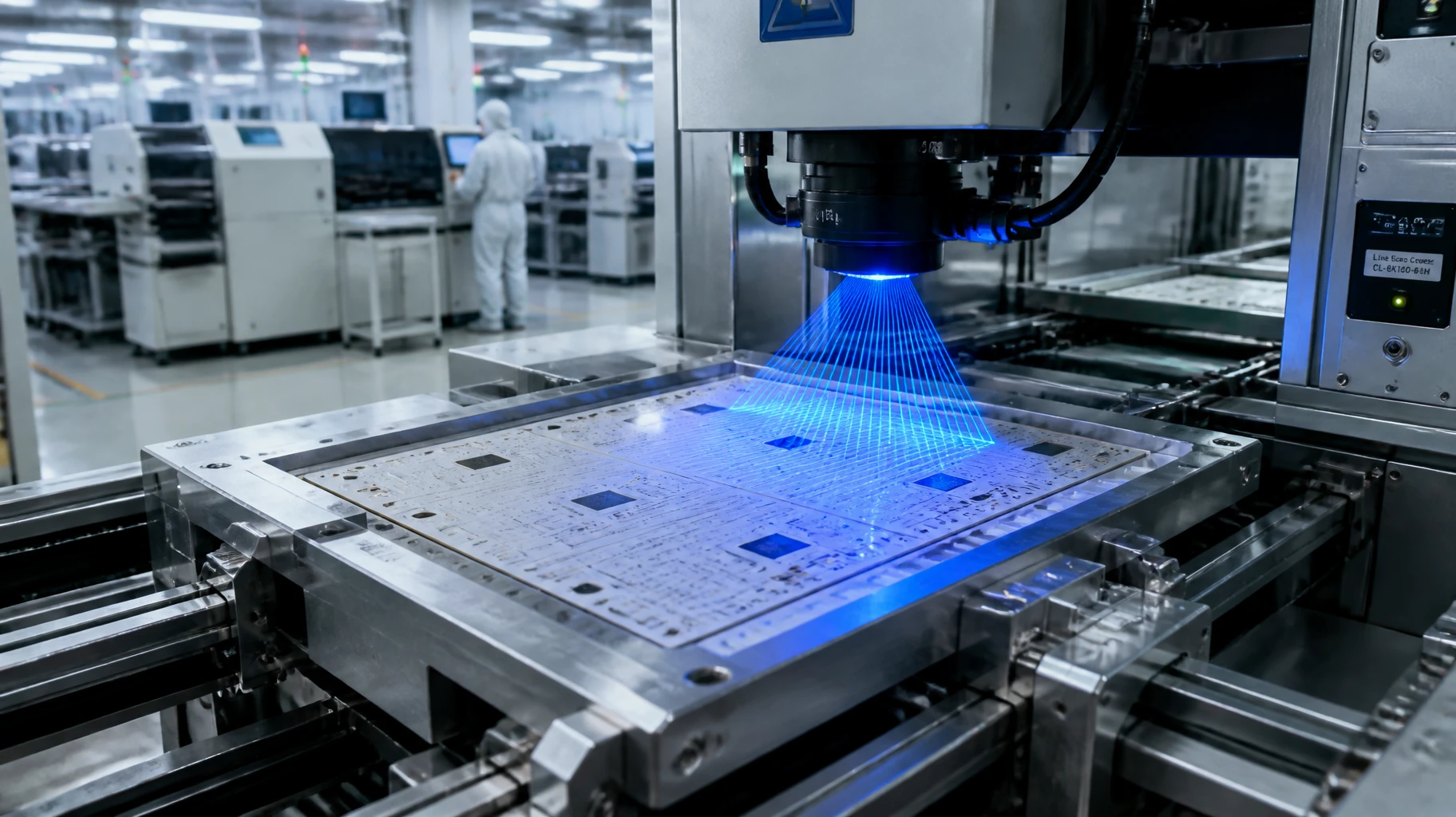
A perfectly fabricated bare ceramic board requires specialized handling and precise process engineering during component population. Because ceramic substrates possess a high thermal dissipation rate and an unyielding, rigid structure, they cannot pass through standard high-speed Surface Mount Technology (SMT) lines without custom profiling and calibrated thermal management.
To ensure uniform solder joint formation and prevent substrate cracking, our automated assembly divisions operate advanced lines optimized for high-yield turnkey PCB assembly and component population.
Our assembly cells apply rigorous process controls across every stage of the ceramic integration pipeline:
Custom Tooling Carrier Profiles: Because bare ceramic panels are thin and lack the natural flexural elasticity of FR4, they cannot be transported directly by standard high-speed pick-and-place conveyor rails. We design and machine custom-milled aluminum or titanium carrier fixtures to hold the ceramic substrates securely flat throughout the entire paste printing, component mounting, and reflow process.
Precision Multi-Zone Reflow Profiling: Ceramic's high thermal conductivity causes it to absorb and transfer heat rapidly. If a ceramic assembly enters a standard reflow oven without modification, the extreme thermal ramp-up can induce thermal shock, cracking the ceramic base or causing components to shift. Our reflow ovens utilize extended pre-heating zones to warm the board gradually, followed by a controlled peak zone and a slow-cooling extraction ramp to prevent thermal stress fractures.
Specialized Solder Paste Formulations: Standard brittle lead-free solder pastes can develop micro-fractures over time due to the strict rigidity of the ceramic substrate. We deploy advanced lead-free solder alloys infused with silver or bismuth options, providing enhanced joint ductility to handle structural vibration without trace lifting.
To review the automated machine configurations, screen printers, and multi-zone convection reflow ovens deployed on our factory floor, browse our comprehensive electronics manufacturing equipment guide.
Sourcing advanced industrial components requires close coordination between product engineers and procurement managers. For global factories and OEMs, transitioning a high-power design from a baseline FR4 architecture to an advanced ceramic printed circuit board platform requires balancing higher initial material costs against long-term operational advantages.
While the raw substrate cost of an alumina or aluminum nitride board is higher than conventional epoxy-glass materials, evaluating the sourcing pipeline through a comprehensive lifecycle framework reveal significant system-level cost benefits:
Elimination of Secondary Cooling Equipment: Ceramic's high thermal dissipation performance allows factories to downsize or completely remove bulky external aluminum heat sinks, cooling fans, thermal interface materials, and secondary fluid conduits. This structural consolidation slims down overall product dimensions and strips hidden weight out of the final bill of materials (BOM).
Compression of Assembly Steps: Integrating multi-board setups into a unified ceramic layout simplifies final manual assembly steps, reducing manufacturing labor hours and eliminating line defects.
Enhanced Field Reliability: Matching substrate CTE tightly with active silicon dies shields components from thermal cycling failures, driving down field warranty claims and lowering long-term support costs.
Our field service cells help procurement managers evaluate these financial metrics by providing an engineering blueprint for custom PCB manufacturing and supply chain ROI optimization.
By running automated Design for Manufacturability (DFM) reviews prior to lamination and maintaining a highly optimized manufacturing workflow, we help global factories compress development timelines, reduce waste, and achieve clear sourcing advantages from initial prototyping to high-volume production. To learn more about our manufacturing footprint and quality metrics, read our multylayer PCB manufacturing plant profile.
Yes. Through our specialized DPC and AMB production lines, ApolloPCB can process customized multi-thickness metallization layers on a single ceramic substrate, allowing fine-line high-density control tracks to run alongside thick, heavy-current power traces on the same board.
Our standard automated aluminum nitride (AlN) fabrication lines handle optimized production panel sizes up to 120mm by 120mm, maintaining excellent surface flatness and tight dimensional tolerances across high-volume production batches.
Yes. Every production batch processed inside our facilities undergoes mandatory 100% automated optical inspection (AOI) alongside high-voltage non-destructive electrical netlist validation to guarantee completely open-and-short-free delivery.
As high-power industrial sub-systems demand higher thermal performance and greater spatial efficiency, selecting an experienced manufacturing partner is critical to project success. Securing a stable market position requires moving past general brokers and aligning with an integrated fabricator capable of executing advanced material science, complex metallization chemistry, and automated SMT assembly.
ApolloPCB combines deep process engineering, advanced cleanroom assets, and strict quality controls to streamline your sourcing pipeline and protect your hardware investment from early prototype validation to large-scale automated delivery.
Ready to eliminate thermal failures, streamline your bill of materials, and compress your product development timeline? Request an instant custom ceramic PCB technical quote from the ApolloPCB engineering division today, and discover how our integrated high-thermal processing cells can drive value for your business platform.

Got project ready to assembly? Contact us: info@apollopcb.com



 Whatsapp 0086 755 29438407
 Mail info@apollopcb.com
 Tel 0086 755 29438407


ABOUT US

PRODUCTS
TECHNOLOGY
KNOWLEDGE CENTRE
CULTURE
NEWS
We're not around but we still want to hear from you! Leave us a note:

Leave Message to APOLLOPCB
