




-
- PCB TYPE
- PRINTED CIRCUIT BOARD PROTOTYPE ALUMINUM PRINTED CIRCUIT BOARD R&F PCB FPC HIGH FREQUENCY PCB HIGH-TG PCB HEAVY COPPER PCB HDI PCB PCB FOR LIGHTING METAL CORE PCB


time:Jul 09. 2026, 17:20:18
Electronics manufacturing services (EMS) sourcing leaders and supply chain managers look for predictable, scalable, and transparent pricing. For original equipment manufacturers (OEMs) and industrial factories, understanding every variable that influences the pcb assembly cost is critical to maintaining a healthy bottom line. Managing product development or scaling up to high-volume production requires a clear breakdown of printed circuit board assembly expenditures to prevent unexpected expenses from draining engineering budgets.
This comprehensive technical guide provides an exhaustive breakdown of pcb assembly costs, uncovers hidden factory charges, and offers actionable strategies for pcb assembly cost control—tailored specifically for manufacturing plants and hardware procurement professionals worldwide.
A transparent, factory-level quotation for printed circuit board assembly is never presented as a single, arbitrary figure. Instead, a professional electronics manufacturer itemizes the invoice into distinct, verifiable cost centers. For a detailed comparative analysis of structural pricing models, you can explore our engineering team's comprehensive
Generally, a professional pcb assembly cost estimate includes the following core segments:
Before a single component is populated onto a circuit board, the foundational substrate must be manufactured. The bare board cost depends heavily on:
Layer Count: Moving from a simple 2-layer board to a complex 8-layer or 12-layer stack-up increases fabrication costs exponentially due to extra lamination and drilling cycles.
Base Materials: Standard FR-4 suffices for general consumer electronics. However, high-frequency, high-speed, or high-temperature applications requiring Rogers, Polyimide, or aluminum-clad substrates will significantly drive up the initial material price.
The Bill of Materials represents the single largest variable in total manufacturing expenses. Components can be procured through two primary routes:
Turnkey Sourcing: The assembly factory utilizes its established relationship with authorized global distributors (like Arrow, Avnet, DigiKey, and Mouser) to source all parts. This minimizes logistical delays and transit costs.
Consigned/Kitted Sourcing: The customer ships all or a portion of the components directly to the assembly plant. While this allows for direct inventory management, it often introduces hidden handling and sorting fees at the factory level.
Processing costs cover the actual labor, machinery runtime, and engineering overhead required to assemble the boards. For standard Surface Mount Technology (SMT) and Through-Hole Technology (THT) lines, this includes:
SMT Stencil Fabrication: Laser-cut stainless steel stencils are required to apply solder paste accurately onto the bare PCB pads. This is a one-time non-recurring engineering (NRE) charge per revision.
Machine Setup and Programming: SMT pick-and-place lines must be programmed with component coordinates (Centroid data), and component feeders must be physically loaded.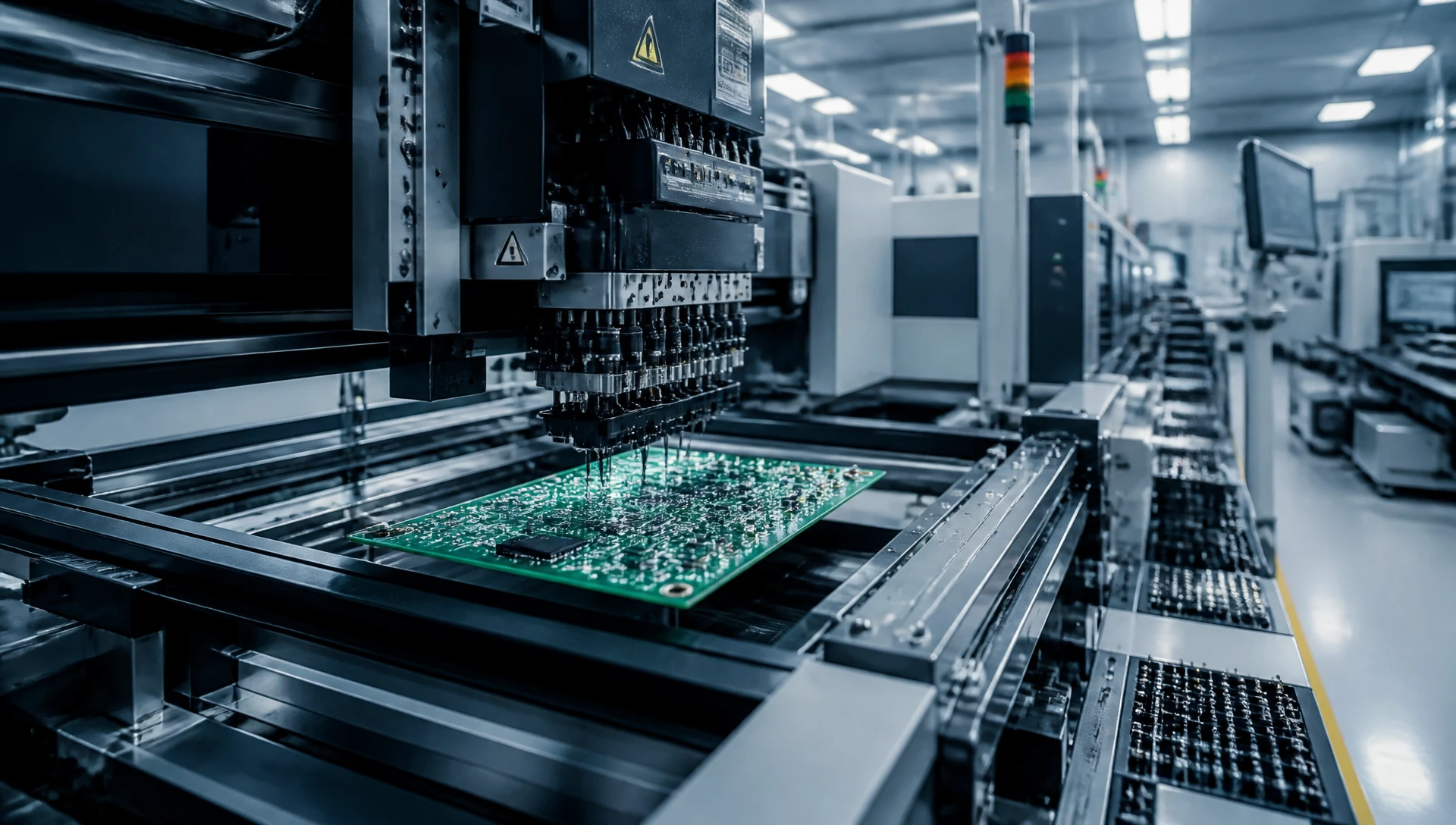
For supply chain executives analyzing high-volume assembly tenders, evaluating quotations on a macro level is insufficient. Modern procurement teams calculate expenses down to the pcb assembly cost per component to determine the exact efficiency of an SMT line layout. To view how automated machinery limits these point-by-point expenditures, you can review our factory's physical capabilities on our dedicated
Factories typically quote processing fees based on the total number of solder joints or component placements on a board.
SMT Component Placements: Surface-mount parts (0402, 0603, SOIC, QFP) are processed at incredibly high speeds via automated pick-and-place systems. Consequently, the assembly cost per SMT component is remarkably low, often fractions of a cent when running mid-to-high volume production.
THT Component Placements: Through-hole parts (large connectors, transformers, electrolytic capacitors) frequently require manual insertion and wave soldering or selective soldering machines. Because this involves physical labor and slower cycle times, the cost per THT component placement can be three to five times higher than an SMT counterpart.
| Component Placement Type | Average Processing Speed | Labor Intensity | Relative Cost Factor |
| Standard SMT (0603, 0805) | Ultra-High (Automated) | Extremely Low | Baseline ($) |
| Fine-Pitch SMT (BGA, QFN) | High (Requires Precision Calibration) | Low (Automated + X-Ray check) | Moderate ($$) |
| Standard THT (Resistors, Diodes) | Medium (Manual/Wave Solder) | Medium | High ($$$) |
| Complex THT (Heavy Connectors) | Slow (Manual Insertion & Touch-up) | High | Extremely High ($$$$) |
Hardware engineers often design circuits in a vacuum, focusing entirely on performance metrics while inadvertently introducing features that drive up production costs. Understanding these manufacturing cost drivers allows for better cross-functional collaboration between engineering and purchasing teams.
The absolute volume of an assembly run is the single most powerful factor affecting unit pricing.
In low-volume prototype orders, fixed costs (engineering file setup, SMT stencil laser cutting, and component feeder placement) are distributed across only a few boards. For example, if a line setup costs $300 and you only order 5 prototype boards, the setup cost alone adds $60 to each individual board. Conversely, if you scale up production to 10,000 units, that same $300 setup fee is reduced to mere pennies per board. High-volume runs also allow the pcb assembly cost factory to purchase electronic components in bulk reels rather than cut-tape, securing deep wholesale volume discounts from manufacturers.
Populating components on both the top and bottom layers of a printed circuit board immediately impacts processing expenses. A double-sided board requires the factory to run the PCB through the entire SMT production line twice:
Pass 1: Apply solder paste to side A, place side A components, run through the reflow oven.
Pass 2: Flip the board, apply a specialized adhesive or solder paste to side B, place side B components, run through the reflow oven again.
This doubles the setup charges, stencil costs, and inspection times, driving up overall pcb assembly costs by 60% to 100% compared to a single-sided design.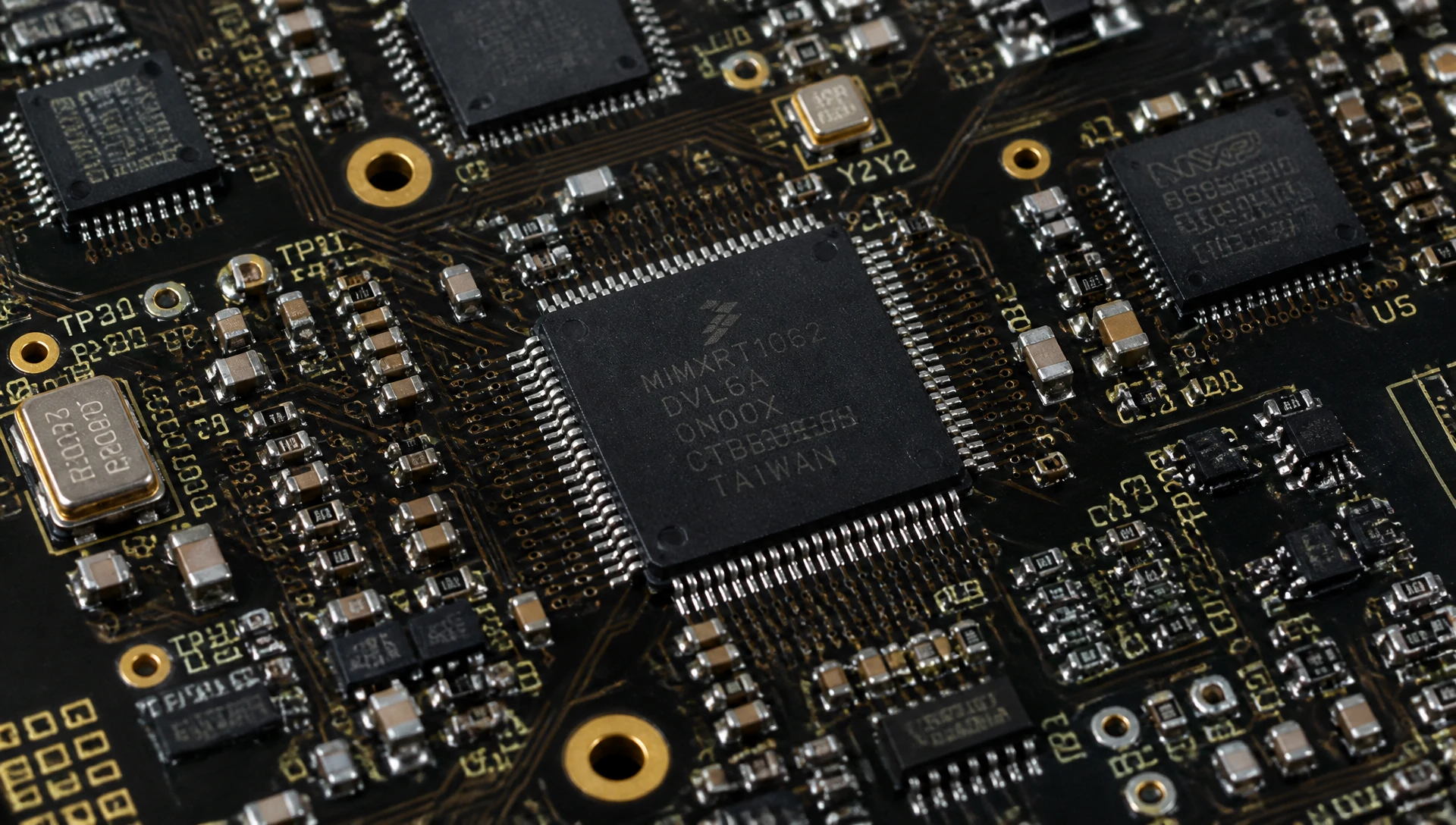
For true OEM partnerships, successful procurement relies on strategic cost mitigation without sacrificing product performance or long-term component reliability. Implementing structural pcb assembly cost control involves optimizing every phase of the design-to-manufacturing pipeline.
A rigorous Design for Manufacturing (DFM) review before sending files to production is the absolute best way to eliminate hidden manufacturing overhead. Design optimizations that yield substantial savings include:
Component Standardization: Minimize the diversity of part numbers on your Bill of Materials. If your design utilizes five different brands of 10k resistors across various sub-circuits, standardize them down to a single manufacturer part number. This minimizes the number of unique SMT feeders the factory needs to set up, lowering labor costs.
Geometric Uniformity: Ensure that passive component footprints are optimized for standard factory stencils. Incorrect pad sizes lead to manufacturing defects like tombstoning or solder balling, which require expensive manual rework.
Raw laminates come in standard industrial sheet sizes. If your individual PCB dimensions do not fit neatly into a production panel, a large portion of expensive substrate material is wasted and thrown away. Working closely with an experienced pcb assembly cost factory allows your team to engineer optimized array panels (e.g., 2x3 or 4x5 panel arrays with break-away tabs) that maximize material utilization. This ensures you are paying for actual product real estate rather than scrap material discarded on the factory floor.
Procurement delays frequently occur when the data packages sent by customers are incomplete or ambiguous. To receive a fast, precise, and fully transparent pcb assembly cost estimate without back-and-forth emails, ensure your engineering package contains the following standard technical files:
Gerber Files / ODB++: Export all copper, solder mask, silkscreen, paste, and mechanical drill layers. Include an accurate board outline drawing detailing dimensions, thickness requirements, and tolerances.
Structured Bill of Materials (BOM): Provide your BOM in an editable spreadsheet format (.xlsx or .csv). It must contain clean columns for Designators, Manufacturer Part Numbers (MPN), Quantity, Component Descriptions, and Footprints.
Centroid File: The Pick-and-Place machine coordinates file. This file must contain the exact X-Y position, rotation angle (0 to 360 degrees), and board side designation (Top or Bottom) for every surface-mount designator.
Selecting an electronics assembly partner solely based on the lowest online price estimate frequently backfires, resulting in compromised component reliability, counterfeit components, or extended shipping delays. Industrial factories and OEMs must audit prospective manufacturers across rigid quality compliance frameworks.
A world-class electronics factory must maintain up-to-date, internationally recognized certifications that prove their manufacturing discipline:
ISO 9001:2015: The baseline standard for comprehensive quality management systems.
IATF 16949: Crucial for automotive electronics, requiring zero-defect production tolerances and complete component lot traceability.
RoHS & REACH Compliance: Ensures that all solder alloys, fluxes, and component materials are entirely free from hazardous substances, conforming to European environmental market mandates.
A: To minimize initial non-recurring engineering (NRE) charges during the prototyping phase, you should focus on single-sided component placement layouts and standardize passive components to match common in-house stock parts used by the manufacturer. At ApolloPCB, we optimize SMT stencil configurations and streamline tooling workflows to provide highly economical low-volume setup options for engineering teams worldwide.
A: Many dominant semiconductor components carry heavy brand premiums or suffer from supply chain scarcity. Sourcing equivalent, fully cross-referenced alternative components from reputable second-source manufacturers can drastically reduce your Bill of Materials cost. The engineering department at ApolloPCB provides comprehensive BOM analysis to suggest safe, high-reliability component substitutions that significantly optimize material budgets.
A: Turnkey assembly means the manufacturing partner manages the entire pipeline, including bare board fabrication, component sourcing, and final assembly. Consigned assembly requires the customer to purchase and ship all components to the factory. Most factories prefer full turnkey sourcing because it eliminates logistics alignment issues, avoids component count discrepancies, and streamlines the production schedule under a single point of responsibility.
Optimizing production budgets requires a holistic understanding of how board complexity, layout choices, component selection, and order volume interact to form your total bill. By partnering with an agile, high-capability manufacturer that prioritizes transparency and engineering rigor, your organization can successfully navigate volatile supply chains and secure stable, long-term pricing advantages.
ApolloPCB is a premier, fully certified electronics manufacturing partner specializing in advanced printed circuit board fabrication and turnkey electronics assembly. Whether you need to run high-speed engineering prototypes or transition to full-scale automated factory production, our dedicated engineering team applies strict design-for-manufacturability reviews to streamline your assembly process, eliminate hidden operational overhead, and maintain absolute cost control from day one.
Ready to optimize your production pipeline and discover the true efficiency of professional electronics manufacturing? Contact our global engineering support team to receive a transparent, comprehensive cost breakdown tailored precisely to your project specifications.
👉

Got project ready to assembly? Contact us: info@apollopcb.com



 Whatsapp 0086 755 29438407
 Mail info@apollopcb.com
 Tel 0086 755 29438407


ABOUT US

PRODUCTS
TECHNOLOGY
KNOWLEDGE CENTRE
CULTURE
NEWS
We're not around but we still want to hear from you! Leave us a note:

Leave Message to APOLLOPCB
