




-
- PCB TYPE
- PRINTED CIRCUIT BOARD PROTOTYPE ALUMINUM PRINTED CIRCUIT BOARD R&F PCB FPC HIGH FREQUENCY PCB HIGH-TG PCB HEAVY COPPER PCB HDI PCB PCB FOR LIGHTING METAL CORE PCB


time:Feb 24. 2026, 13:13:01
In the rapidly evolving landscape of 2026, where electric vehicles (EVs), renewable energy systems, and high-density industrial LED lighting dominate the market, the demand for robust thermal management has hit an all-time high. For factory procurement managers and hardware engineers, the challenge isn't just about moving heat—it’s about moving heat while maintaining electrical isolation under high-voltage stress.
The High-Voltage Aluminum PCB (also known as an Insulated Metal Substrate or IMS) has emerged as the definitive solution. However, not all boards are created equal. Achieving the perfect balance between thermal conductivity and dielectric strength requires a deep understanding of material science and precision manufacturing. At ApolloPCB, we’ve spent years perfecting the aluminum pcb design and fabrication process to ensure your high-power projects don't just run—they endure.
| Safety Parameter | Specification Range | Industrial Application |
| Dielectric Strength | 2000V - 6000V AC | Essential for EV Power & Grid Systems |
| Thermal Conductivity | 1.0 - 4.0 W/m·K | Maintains cooling under high voltage stress |
| CTI (Tracking Index) | PLC 0 / 600V+ | Prevents electrical tracking in dirty environments |
| Insulation Thickness | 50μm - 150μm | Balances heat transfer with voltage safety |
| Base Metal Type | Aluminum 5052 / 6061 | High mechanical & electrical stability |
| Flame Retardancy | UL 94V-0 Certified | Guaranteed fire safety for consumer & industrial |
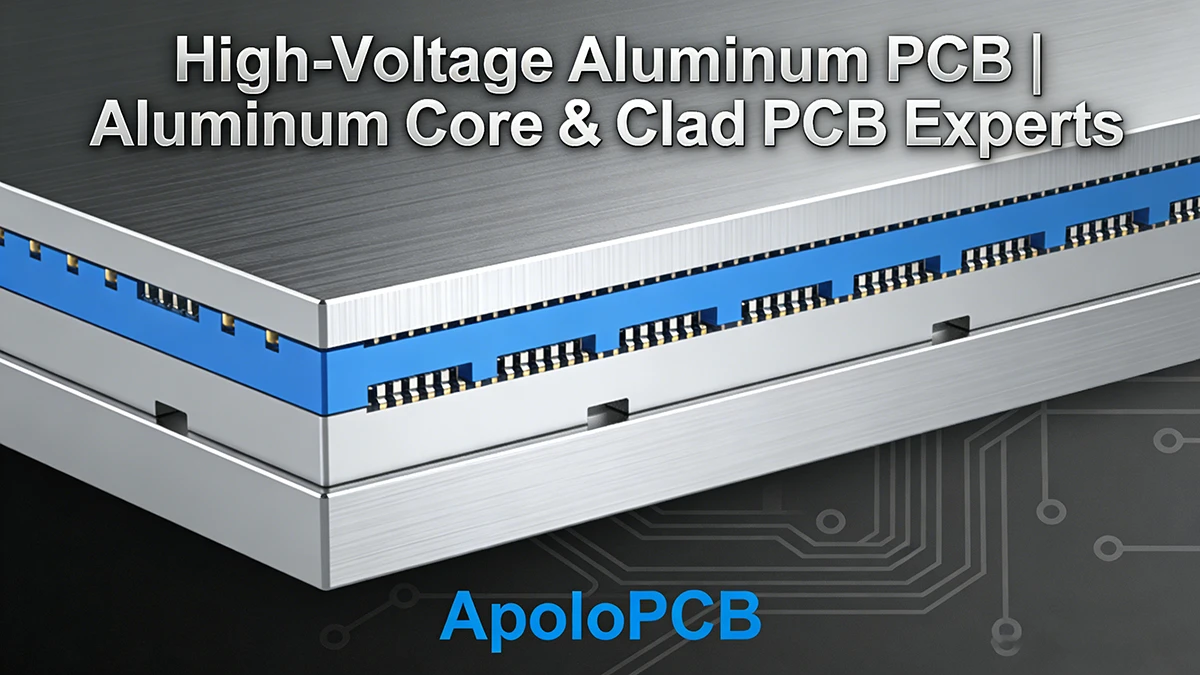
To understand why the aluminum core pcb is superior for high-voltage applications, we must first look at its "sandwich" structure. Unlike a traditional FR4 board, which relies on glass-reinforced epoxy, an aluminum board uses a metallic base to act as a primary heat sink.
A typical aluminum clad pcb consists of three distinct layers:
The Circuit Layer (Copper Foil): Usually 1 oz to 10 oz thick, where your components are soldered.
The Dielectric Layer (The "Heart"): A thermally conductive but electrically insulating layer of epoxy or ceramic-filled resin. This is the most critical layer for high-voltage reliability.
The Base Layer (Aluminum Plate): Typically made of 5052 or 6061 aluminum alloy, providing mechanical rigidity and thermal mass.
The "magic" happens in the dielectric layer. In high-voltage scenarios, this layer must be thick enough to prevent electrical "arcing" or breakdown (dielectric strength) while being thin enough to allow phonons to pass through efficiently (thermal conductivity).
When we talk about "High Voltage," we are often referring to systems operating at 500V, 1000V, or even higher in EV battery management systems. The aluminum clad pcb must be able to withstand these potentials without the current "jumping" from the copper traces to the aluminum base.
Dielectric strength is measured in volts per mil or kilovolts per millimeter (kV/mm). For a LED light aluminum PCB used in outdoor street lighting, a standard dielectric might suffice. But for industrial motor drives, the dielectric must be high-performance.
Standard Dielectrics: Typically offer 2-3 kV AC breakdown voltage.
High-Voltage Dielectrics: Can withstand upwards of 6 kV AC, ensuring safety in fluctuating industrial power grids.
At ApolloPCB, we source specialized resins that incorporate ceramic fillers. These fillers enhance the aluminum pcb Thermal Conductivity while maintaining a high crystalline structure that resists electrical puncture.
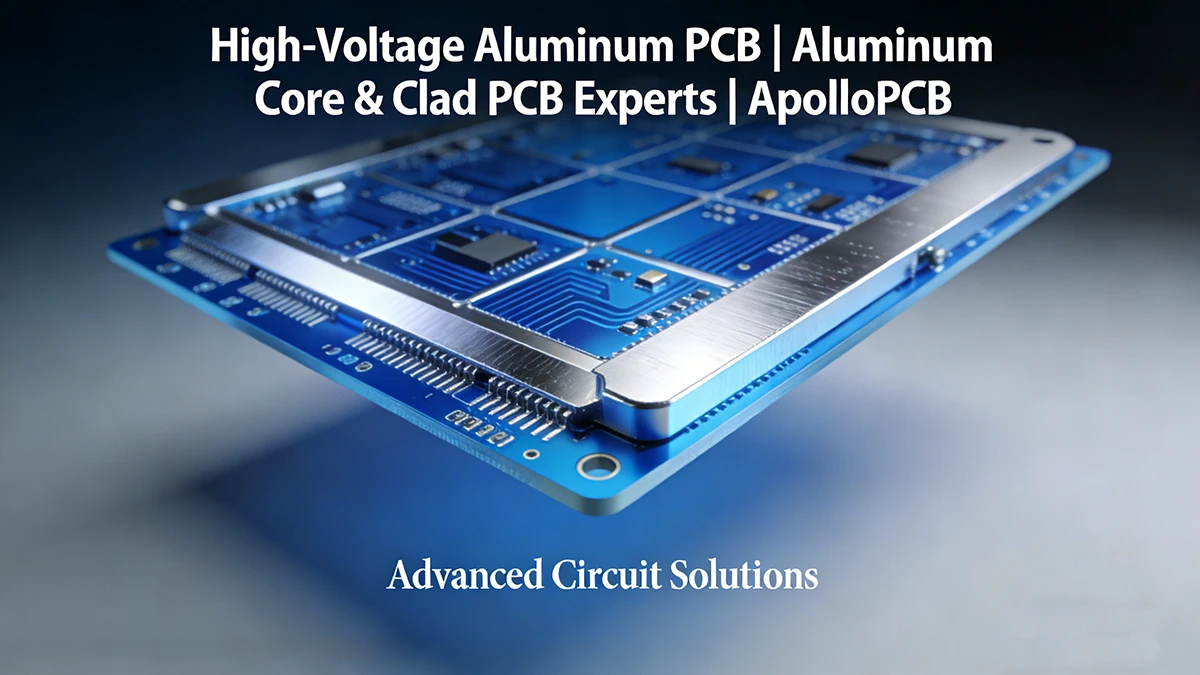
Designing a metal-core board is fundamentally different from designing a standard FR4 board. If you apply FR4 rules to an aluminum pcb design, you risk catastrophic failure during the Hi-Pot (High Potential) test.
In high-voltage designs, the distance between the copper traces and the edge of the board (or mounting holes) is paramount. Since the aluminum backed pcb is conductive, the edge of the board is effectively a "ground."
Creepage: The distance over the insulating surface.
Clearance: The shortest distance through air.
For 600V applications, we often recommend a minimum clearance of 3.0mm from the trace to any exposed aluminum edge.
For a led aluminum plate pcb board, the solder mask does more than just prevent bridges; it acts as an extra layer of insulation. We utilize high-reflectivity white masks for LEDs to maximize light output, but for high-voltage industrial boards, we prioritize masks with high CTI (Comparative Tracking Index) ratings.
As discussed in our recent
While single-layer boards are the "bread and butter" of the outdoor light PCB market, industrial automation often requires more complexity.
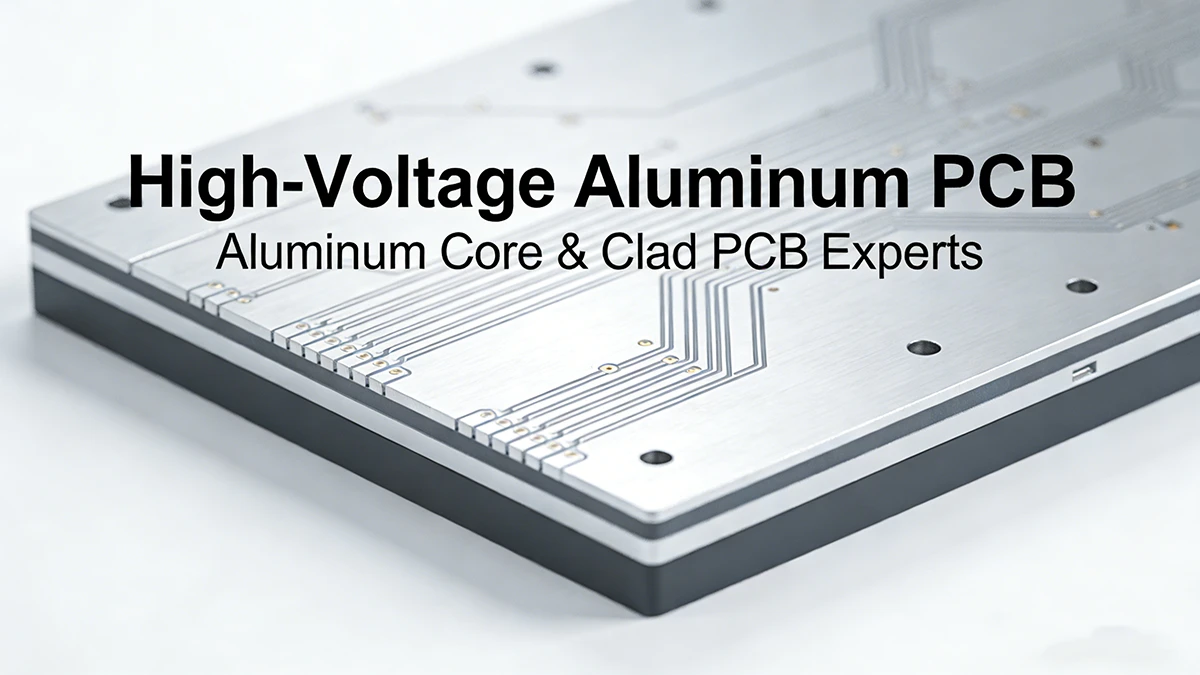
A 2 layer aluminum pcb (Double-Sided IMS) allows for circuitry on both sides of the dielectric or even on both sides of the aluminum core.
Structure A: Copper - Dielectric - Copper - Aluminum.
Structure B: Copper - Dielectric - Aluminum - Dielectric - Copper.
Structure B is particularly useful for power converters where you need isolated input and output stages on the same physical thermal plane. However, the manufacturing process in an aluminum pcb china factory like ApolloPCB requires vacuum lamination to ensure no air bubbles are trapped, which would otherwise lead to localized heat spots or electrical failure.
To save space, engineers are now requesting blind and buried vias aluminum pcb designs.
Blind Vias: Connect an outer layer to an inner layer.
Buried Vias: Connect two inner layers.
In a metal core environment, this involves drilling through the aluminum core, filling the hole with an insulating epoxy, and then re-drilling and plating. This is high-precision work that requires the latest CNC and plating technology.
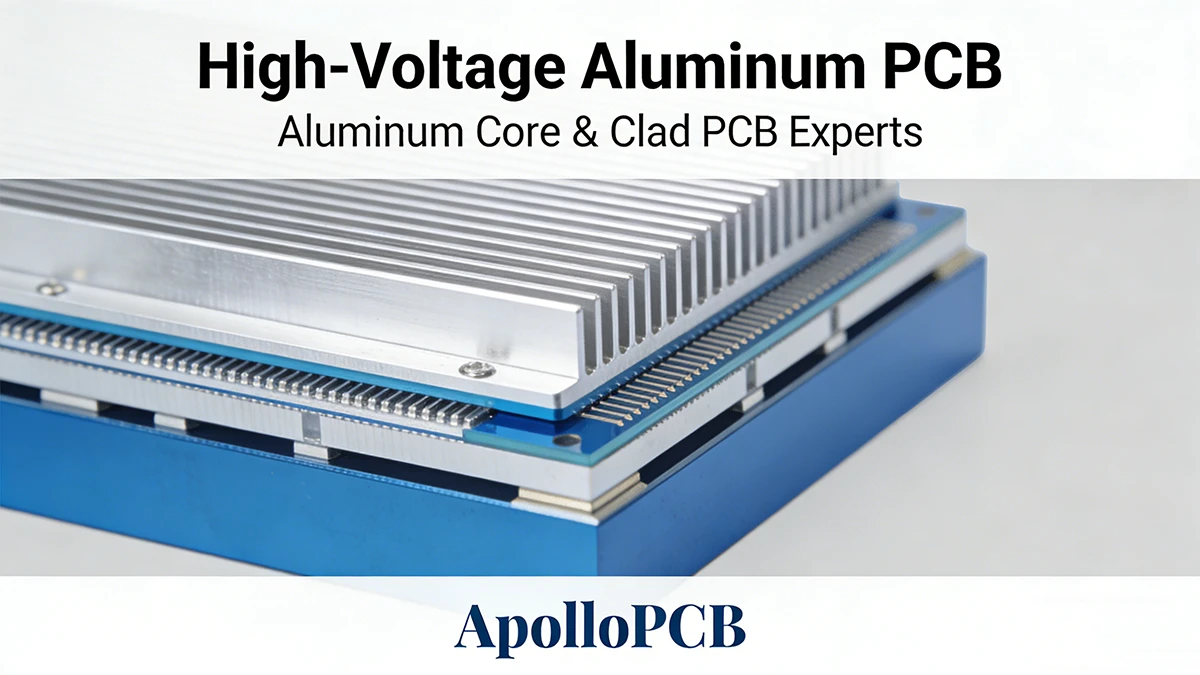
The versatility of the aluminum core pcb has led to its adoption in virtually every sector where power meets precision.
The LED light aluminum PCB is the backbone of the "Smart City" movement.
Outdoor Light PCB: These boards face extreme temperature swings. The aluminum backed pcb provides the necessary dimensional stability to prevent the board from warping in freezing winters or scorching summers.
led aluminum plate pcb board: For high-lumen high-bay lighting, these plates ensure that the junction temperature of the LEDs stays below 85℃, doubling the lifespan compared to standard FR4.
As an aluminum pcb manufacturer, we've seen a massive surge in EV-related orders.
On-board Chargers (OBC): Require high-voltage dielectric layers to handle the 400V to 800V DC charging currents.
DC-DC Converters: Use aluminum clad pcb to dissipate the heat generated by fast-switching MOSFETs.
Environmental compliance is no longer optional. The Halogen Free aluminum pcb uses flame retardants that do not contain bromine or chlorine. Not only is this better for the environment, but it also improves the reliability of the board in high-temperature environments, as halogen-free materials often have a higher Tg (Glass Transition Temperature).
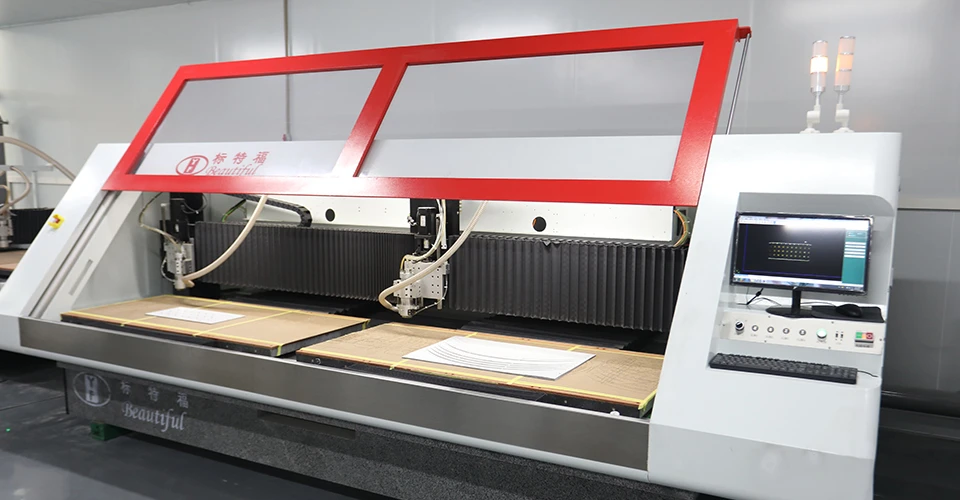
The global supply chain for metal-core boards is centered in China for several reasons: raw material access, specialized equipment, and economies of scale.
As a premier aluminum pcb manufacturer in the region, ApolloPCB leverages these advantages to benefit our factory-type clients:
Material Sourcing: We have direct access to high-grade aluminum alloys (5052/6061) and specialized dielectrics (like Bergquist or Polytherm equivalent).
Advanced Machining: Aluminum is much harder to cut than FR4. We use heavy-duty CNC routing and V-scoring machines with diamond-coated bits to ensure clean edges and prevent burrs that could cause short circuits.
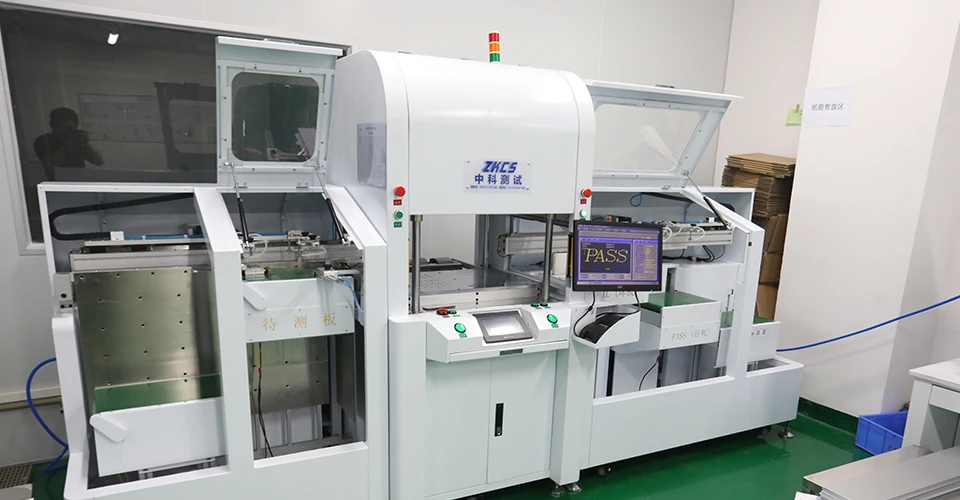
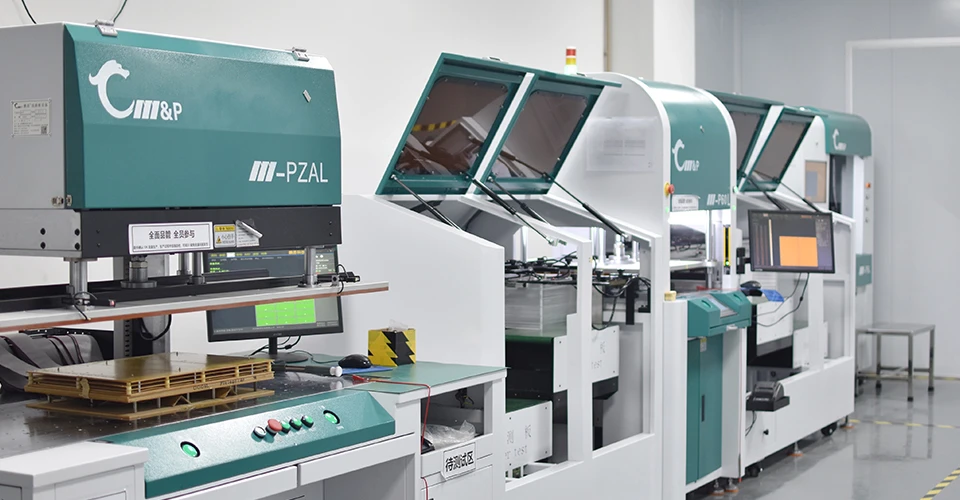
Quality Control: High-voltage boards undergo $100\%$ Hi-Pot testing at $1500\text{V}$ to $3000\text{V}$ before they ever leave our dock.
A niche but growing segment is the aluminum enclosed pcb. In this design, the board is not just a flat plate; it is part of a 3D structure that provides EMI shielding and physical protection.
Lamination: High-pressure bonding of the dielectric and copper to the aluminum.
Etching: Defining the high-power traces.
Mechanical Forming: Using specialized "bendable" aluminum grades to create an aluminum enclosed pcb that fits perfectly into an industrial housing.
Countersink Drilling: For flush-mounting into project circuit boxes.
An aluminum pcb (also called MCPCB) is a printed circuit board that uses a thin layer of conductive dielectric material and a copper circuit layer bonded to a thick aluminum base. It is designed to transfer heat away from critical components and spread it across the metal substrate for cooling.
An aluminum enclosed pcb refers to a design where the aluminum substrate acts as both the circuit carrier and part of the physical enclosure or housing. This provides superior thermal dissipation and EMI shielding, as the board is directly integrated with the metal case.
The primary buyers are industrial equipment manufacturers, automotive Tier-1 suppliers, and high-power LED lighting companies. These projects often involve "Circuit Boxes" where power conversion happens, necessitating the thermal management and physical protection provided by a metal-backed board.
While technically possible with the right bits and lubricants, it is not recommended for production. Industrial aluminum pcb china facilities use specialized heavy-duty CNC routers. Small milling machines often lead to "burring" on the aluminum edge, which can cause electrical shorts in high-voltage applications.
Alignment in a 2 layer aluminum pcb is achieved using high-precision optical registration systems. We align the top and bottom circuitry with the pre-drilled holes in the aluminum core to a tolerance of ±0.05mm, ensuring that blind and buried vias connect perfectly.
The future of high-power electronics depends on the ability to manage heat without sacrificing safety. Whether you are building an outdoor light PCB meant to survive a decade in the elements or a 2 layer aluminum pcb for a next-generation EV charger, the quality of your substrate is your most important component.
At ApolloPCB, we don't just manufacture boards; we engineer reliability. By mastering dielectric strength and thermal conductivity, we help you bring more power to the world with less risk.
[Contact ApolloPCB Today for a Free DFM Review and Precision Quote]
Related Articles:
Custom Aluminum PCB Solutions | Metal Core PCB Manufacturer
HA80 Aluminum PCB Specifications: Technical Foundations and Industrial Adaptability
Counterbore Holes in Aluminum PCBs: Design, Manufacturing, and Applications
Halogen Free Aluminum PCBs: Driving Sustainable Electronics Innovation
Blind and Buried Vias in Aluminum PCBs: Elevating High-Frequency Circuit Design
Single Layer Aluminum PCB A Fundamental Pillar in Modern Electronics
LED Lighting Aluminum PCB: Unveiling the Key to Illumination Innovation

Got project ready to assembly? Contact us: info@apollopcb.com



 Whatsapp 0086 755 29438407
 Mail info@apollopcb.com
 Tel 0086 755 29438407


ABOUT US

PRODUCTS
TECHNOLOGY
KNOWLEDGE CENTRE
CULTURE
NEWS
We're not around but we still want to hear from you! Leave us a note:

Leave Message to APOLLOPCB
