




-
- PCB TYPE
- PRINTED CIRCUIT BOARD PROTOTYPE ALUMINUM PRINTED CIRCUIT BOARD R&F PCB FPC HIGH FREQUENCY PCB HIGH-TG PCB HEAVY COPPER PCB HDI PCB PCB FOR LIGHTING METAL CORE PCB


time:Feb 23. 2026, 11:23:12
In the high-stakes world of industrial electronics, heat is the "silent assassin." For factory-scale power projects—ranging from high-intensity LED street lighting to automotive power modules—the difference between a 10-year lifespan and a catastrophic 6-month failure usually boils down to thermal management.
As a factory procurement manager or hardware engineer, you aren't just buying a board; you are buying insurance for your product’s reputation. This is why Custom Aluminum PCB Solutions have become the industry standard for reducing failure rates and optimizing ROI in high-power applications.
| Customizable Feature | Specification Range | Engineering Benefit |
| Thermal Conductivity | 1.0 W/m·K to 4.0 W/m·K | Precision cooling for high-power density |
| Aluminum Alloy | 1060, 5052, 6061 | Choice between cost-effective or high-strength bases |
| Board Thickness | 0.4mm - 3.0mm | Fits ultra-slim LED strips or heavy-duty power mods |
| Copper Thickness | 1oz - 10oz | Supports extreme current for industrial power |
| Dielectric Strength | 2KV - 6KV AC | Ensures safety and longevity in high-voltage apps |
| Mechanical Finish | CNC Routing, V-Scoring, Punching | Tailored for complex enclosure fitment |
In the early stages of a project, many designers default to standard FR4 because of its low upfront cost. However, the metal core pcb vs fr4 debate is not about the price of the board—it is about the "Total Cost of Ownership."
Standard FR4 is an insulator by nature. Its thermal conductivity is roughly $0.25\text{ W/m·K}$. For low-power devices, this is fine. But in a power project, FR4 acts like a thermal blanket, trapping heat around the components. This leads to "thermal runaway," where heat increases resistance, which creates more heat, eventually melting solder joints or frying delicate ICs.
Metal Core PCBs (MCPCBs), specifically those using an aluminum base, change the game. By replacing the fiberglass core with a metal substrate, the board stops being a "thermal blanket" and starts being a "drainpipe," whisking heat away from the junction to the chassis or ambient air.
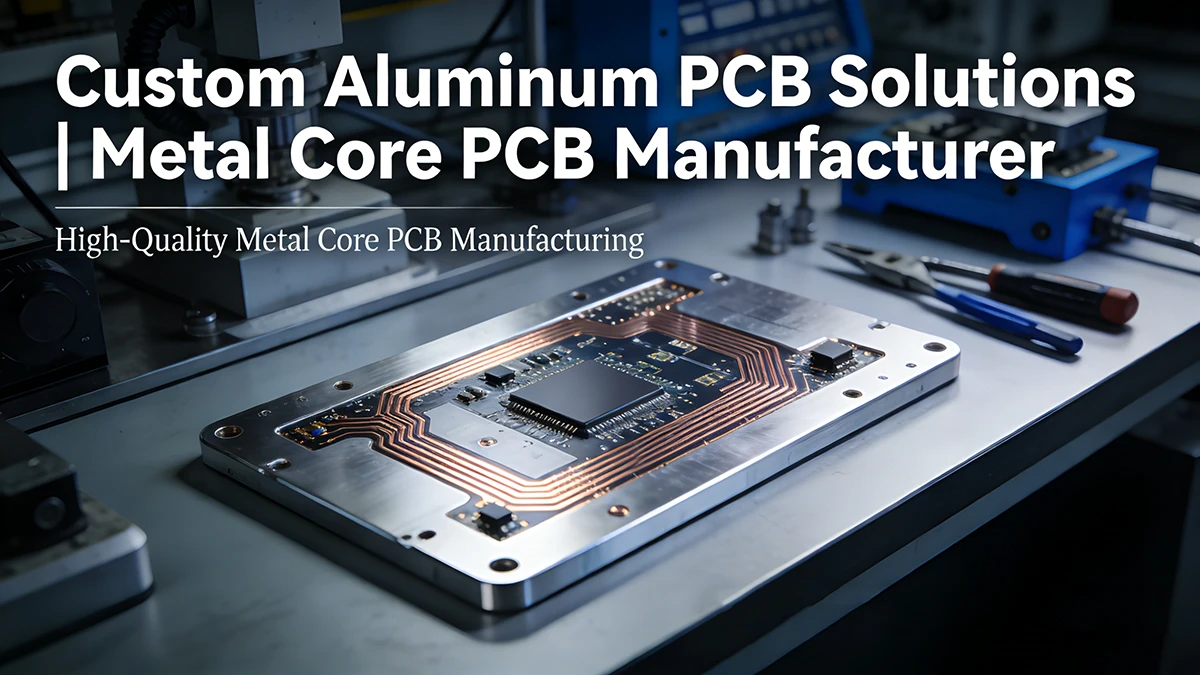
Not all aluminum boards are created equal. Depending on the complexity of your power project, you must choose the right structural configuration.
The Single Layer aluminum pcb is the most common IMS (Insulated Metal Substrate). It consists of a metal base, a dielectric layer, and a copper circuit layer.
Best for: High-volume aluminum pcb led model light production, such as household bulbs or standard indicator panels.
Why it’s used: It is cost-effective and provides a direct, simple path for heat dissipation.
When your design requires higher component density or complex signal routing, a Multi-Layer aluminum pcb is the necessary step up. This involves multiple layers of circuitry separated by dielectric materials, all bonded to a single metal base.
Best for: Complex industrial power supplies, 5G telecommunications, and high-density automotive motor controllers.
The Challenge: These require a highly skilled metal core pcb manufacturer to ensure that the internal layers don't delaminate under high thermal stress.
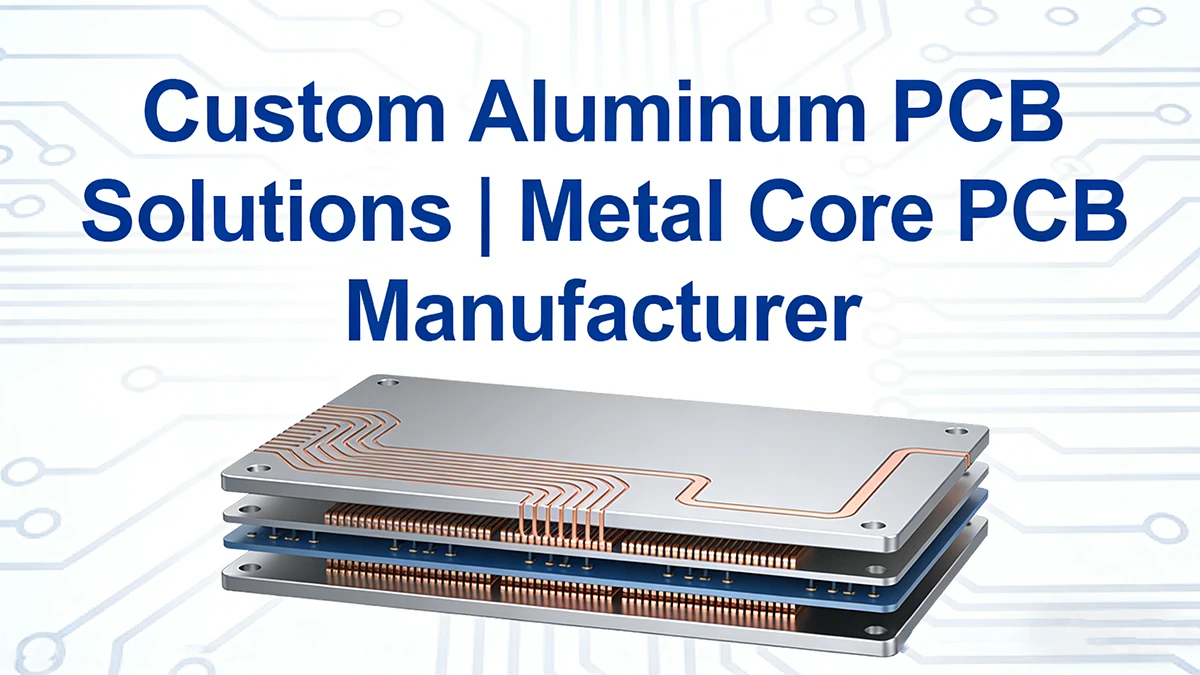
The true performance of an aluminum board isn't in the metal; it’s in the "Thermal Interface Material" (TIM) or the dielectric layer. This layer must be thin enough to let heat pass through but thick enough to withstand high voltage.
When discussing aluminum pcb Thermal Conductivity, most factory clients look for grades between 1.0W/m·K and 3.0W/m·K. At ApolloPCB, we offer specialized high-thermal dielectrics that can reach up to 8.0W/m·K, effectively reducing the operating temperature of your LEDs by up to 30°C compared to standard metal boards.
Modern industrial designs often require more than just a flat square of metal. Mechanical integration is just as important as electrical performance.
Many industrial housings require the PCB to be flush-mounted. We provide precision Countersink Holes in aluminum PCB, allowing screws to sit level with the board surface. This is critical for preventing mechanical interference in tight enclosures and ensuring maximum contact between the board and the heat sink.
For automotive lighting or curved signage, the bendable aluminum pcb offers a unique advantage. Using specialized, thin-gauge aluminum alloys, these boards can be bent (often only once) to fit a specific curved housing, eliminating the need for complex wire harnesses between rigid sections.
In the aluminum pcb led model light sector, the board is often the structural spine of the product. Whether it’s 2835, 3030, or 5050 LED packages, the aluminum board ensures that the "Lumen Depreciation"—the dimming of light over time—is minimized by keeping the LED junction cool.
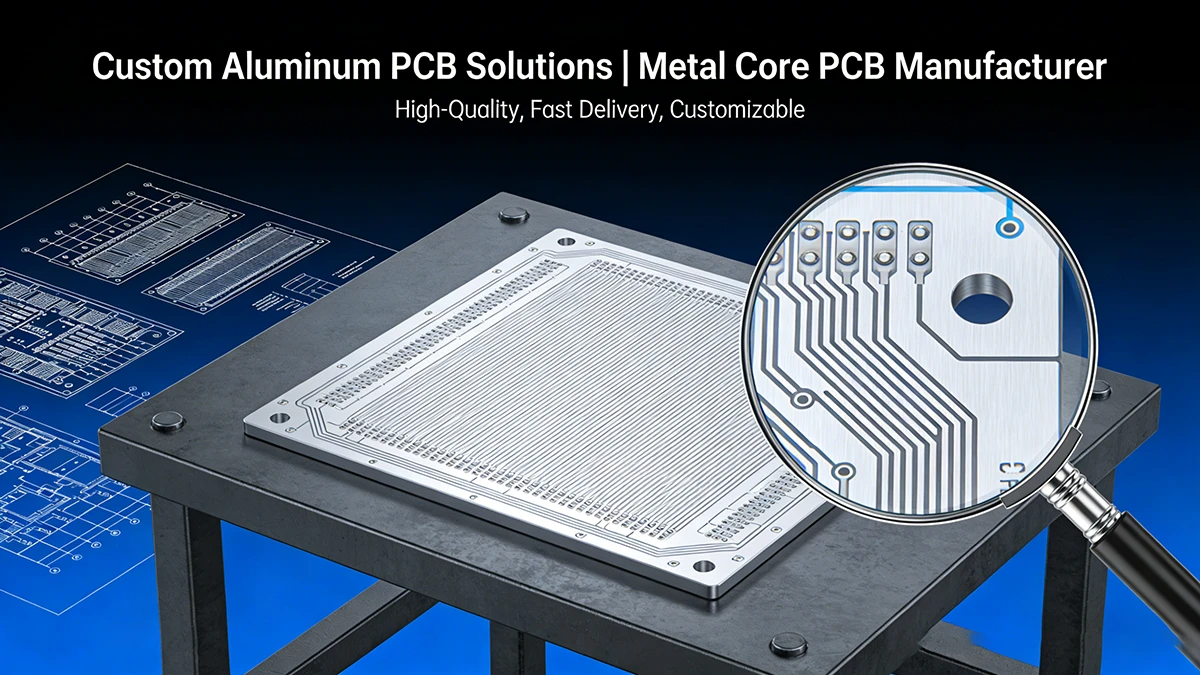
While the aluminium core pcb is the "value king," there are times when it simply isn't enough.
Aluminium Core PCB: Perfect for $90\%$ of LED and general industrial projects. It is light, easy to machine, and cost-efficient.
Copper Core PCB: When power density is extreme (e.g., concentrated solar power or high-speed RF), the copper core pcb is the elite choice. Copper has double the thermal conductivity of aluminum but is significantly heavier and more expensive.
If your design involves high-frequency signals or "Thermo-Electric Separation," a copper core might be the only way to avoid system failure.
To ensure your project moves smoothly from the CAD screen to the production line, follow these metal core pcb design guidelines:
Clearance and Creepage: Because the entire base is conductive, always maintain at least a $1.0\text{mm}$ clearance between the copper traces and the edge of the board to prevent "arcing" to the aluminum.
Solder Mask Choice: For LED projects, use a high-reflectivity white solder mask to maximize light output.
Hole Insulation: Remember that through-holes in a Single Layer aluminum pcb are generally not plated (NPTH). If you need electrical connectivity through the board, you must use specialized insulated-hole technology.
Panelization: Use V-scoring rather than tab-routing for aluminum boards to ensure clean edges and faster assembly.
The market is full of brokers, but for a factory-level power project, you need a direct metal core pcb manufacturer. Why? Because the quality of the "Vacuum Lamination" process—the step that bonds the metal to the dielectric—is the difference between a board that lasts 10 years and one that delaminates in 10 days.
At ApolloPCB, we don't just "print boards." We perform:
100% Hi-Pot Testing: Applying high voltage to ensure your dielectric layer is defect-free.
Thermal Impedance Analysis: Verifying that your aluminum pcb Thermal Conductivity meets the datasheet specs.
Custom CNC Routing: Ensuring that your Countersink Holes are accurate to within 0.05mm.
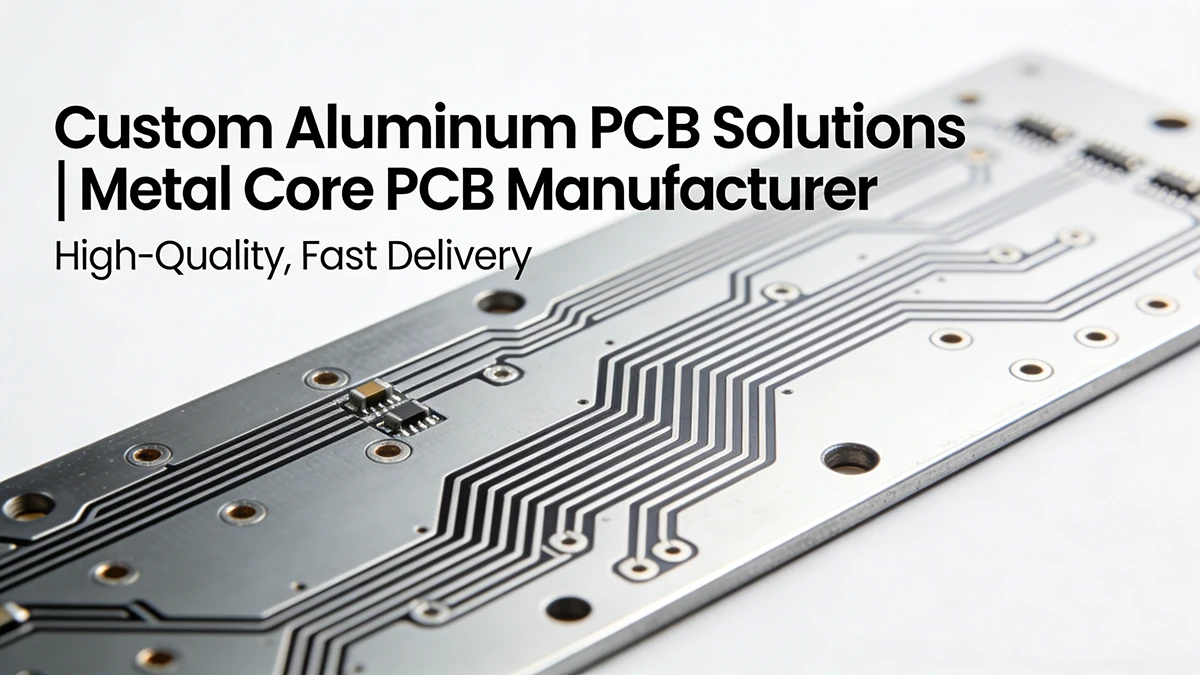
Generally, no. Small hobbyist milling machines lack the torque and cooling systems to handle aluminum alloys like 5052 or 6061. Industrial aluminum pcb production requires heavy-duty CNC routers with high-speed spindles and specialized cooling lubricants to prevent the metal from burring or warping.
An aluminum pcb is made through a process of high-pressure vacuum lamination. We bond a thin dielectric layer and a copper foil to an aluminum substrate. Then, the circuit is etched, the solder mask is applied, and the board is finished with CNC routing for the final shape.
For industrial factories, the process is:
Material Sourcing: Choosing the right Al alloy.
Lamination: Bonding the layers.
Circuit Imaging: Using LDI for precision.
Etching: Removing unwanted copper.
Finishing: V-scoring or CNC routing.
Soldering components to an aluminum pcb requires a different thermal profile than FR4. Because the board is designed to dissipate heat, the soldering iron or reflow oven must reach the target temperature faster. We recommend using a pre-heating plate to bring the board up to 80°C - 100°C before manual soldering.
An aluminum pcb (MCPCB) is a printed circuit board that uses a thin layer of conductive dielectric material and a copper circuit layer bonded to a thick aluminum base. It is designed for maximum heat dissipation in high-power applications.
Choosing the right metal core pcb manufacturer is about more than just a quote; it’s about engineering certainty. By leveraging Custom Aluminum PCB Solutions, you reduce the thermal stress on your components, lower your failure rates, and build a product that stands the test of time.
[Contact ApolloPCB Today for a Free DFM Review and Precision Quote]
Related Articles:
High-Voltage Aluminum PCB | Aluminum Core & Clad PCB Experts | ApolloPCB
HA80 Aluminum PCB Specifications: Technical Foundations and Industrial Adaptability
Counterbore Holes in Aluminum PCBs: Design, Manufacturing, and Applications
Halogen Free Aluminum PCBs: Driving Sustainable Electronics Innovation
Blind and Buried Vias in Aluminum PCBs: Elevating High-Frequency Circuit Design
Single Layer Aluminum PCB A Fundamental Pillar in Modern Electronics
LED Lighting Aluminum PCB: Unveiling the Key to Illumination Innovation

Got project ready to assembly? Contact us: info@apollopcb.com



 Whatsapp 0086 755 29438407
 Mail info@apollopcb.com
 Tel 0086 755 29438407


ABOUT US

PRODUCTS
TECHNOLOGY
KNOWLEDGE CENTRE
CULTURE
NEWS
We're not around but we still want to hear from you! Leave us a note:

Leave Message to APOLLOPCB
