




-
- PCB TYPE
- PRINTED CIRCUIT BOARD PROTOTYPE ALUMINUM PRINTED CIRCUIT BOARD R&F PCB FPC HIGH FREQUENCY PCB HIGH-TG PCB HEAVY COPPER PCB HDI PCB PCB FOR LIGHTING METAL CORE PCB


time:Aug 23. 2025, 10:44:41
CEM-3-09HT High Temp PCB Material represents a specialized evolution of composite epoxy substrates, tailored explicitly to thrive in environments where sustained high temperatures and thermal cycling would degrade standard CEM3 or even mid-tier FR4 materials. Unlike general-purpose CEM3, which operates reliably in moderate thermal ranges, CEM-3-09HT is engineered to maintain structural integrity, electrical stability, and mechanical strength when exposed to prolonged heat—making it indispensable in industries like automotive under-hood systems, industrial heat processing, and high-power LED lighting. Its development addresses a critical gap: the need for a cost-effective, process-compatible substrate that can withstand extreme temperatures without sacrificing performance or manufacturability. This article examines the material science behind CEM-3-09HT’s high-temperature resilience, its core performance advantages, manufacturing considerations, and real-world applications where thermal durability is non-negotiable.
Electronics operating in extreme heat face unique threats that compromise both short-term functionality and long-term reliability. These challenges define why specialized materials like CEM-3-09HT are essential:
Standard epoxy resins in conventional CEM3 begin to soften and degrade at elevated temperatures, losing their ability to bind glass fibers and copper cladding. This leads to “thermal aging”—a gradual breakdown of the resin matrix that reduces mechanical strength and increases electrical conductivity (risking short circuits). In environments like industrial oven controllers (where temperatures exceed 120°C for hours), this degradation can cause PCB failure within months.
High temperatures exacerbate the mismatch in thermal expansion between a PCB’s layers (glass fibers, resin, copper). As the substrate heats and cools, repeated stress can separate these layers—a phenomenon known as delamination. Delamination not only weakens the PCB mechanically but also disrupts electrical pathways, as copper traces peel away from the core. For automotive electronics near engines (subject to 150°C+ spikes), delamination is a leading cause of sensor or control module failure.
Heat disrupts the dielectric properties of standard PCB materials, increasing the dielectric constant (Dk) and dissipation factor (Df). This leads to signal loss, impedance mismatch, and reduced insulation resistance—critical issues for high-power or high-frequency devices. In high-power LED drivers, for example, electrical drift can cause inconsistent current regulation, shortening LED lifespan.
Prolonged heat weakens the flexural and tensile strength of standard CEM3, making it prone to cracking under even minor mechanical stress (e.g., vibration in machinery). This is particularly problematic in applications like aerospace avionics, where PCBs must withstand both high temperatures and physical shock.
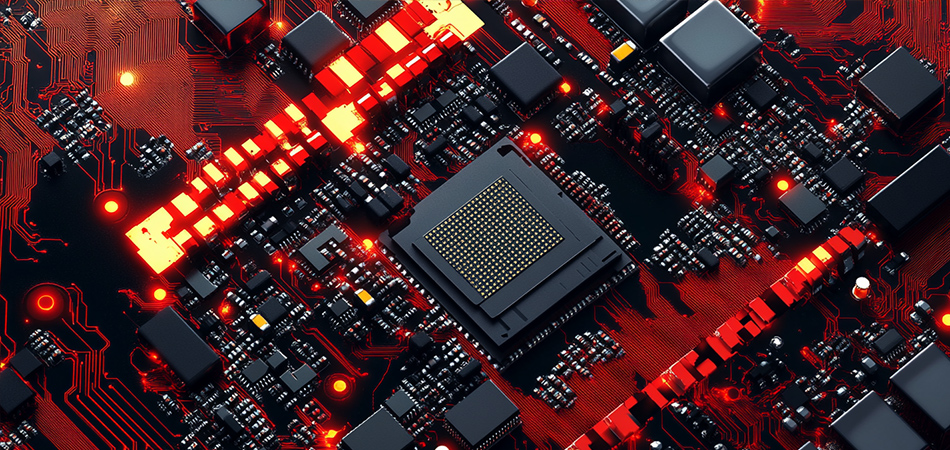
CEM-3-09HT’s high-temperature resilience stems from targeted modifications to its core components—resin, fibers, and interfaces—each optimized to resist thermal stress:
The foundation of CEM-3-09HT’s performance is its specialized epoxy resin, reformulated to withstand sustained heat:
Heat-Resistant Monomers: The resin uses aromatic epoxy monomers (e.g., bisphenol-F derivatives) instead of standard bisphenol-A, which exhibit greater thermal stability. These monomers form stronger chemical bonds during curing, resisting breakdown at elevated temperatures.
Advanced Curing Agents: Instead of standard amine-based curing agents (which degrade above 120°C), CEM-3-09HT uses anhydride or phenolic curing agents. These create a highly cross-linked resin network with a higher glass transition temperature (Tg)—the point at which the resin shifts from rigid to flexible—ensuring the material remains stable in extreme heat.
Thermal Oxidation Inhibitors: Additives like hindered phenols or phosphites are integrated into the resin to slow thermal oxidation, a key driver of long-term degradation. These inhibitors prevent the resin from becoming brittle or conductive over time.
CEM-3-09HT retains CEM3’s layered structure (non-woven core, woven outer layers) but upgrades the glass fibers to enhance thermal resilience:
High-Purity E-Glass or S-Glass Fibers: Standard CEM3 uses low-grade E-glass, which can soften at high temperatures. CEM-3-09HT uses high-purity E-glass or S-glass (with higher silica content), which maintain stiffness and strength even above 150°C. S-glass, in particular, offers superior tensile strength under heat, reducing fiber breakage during thermal cycling.
Dense Fiber Packing: The non-woven core in CEM-3-09HT has a higher fiber volume fraction (55–60% vs. 45–50% in standard CEM3). This dense packing creates a rigid framework that restricts resin expansion, minimizing thermal stress on the substrate.
Even with heat-resistant resin and fibers, weak bonding between layers can lead to delamination. CEM-3-09HT addresses this with:
Silane Coupling Agents: These agents form covalent bonds between glass fibers and resin, creating a cohesive interface that resists separation under thermal stress. Unlike standard coupling agents (which degrade at high temperatures), CEM-3-09HT uses heat-stable amino-silanes that maintain bond strength up to 200°C.
Resin Impregnation Control: During manufacturing, the resin is carefully formulated to fully penetrate the fiber matrix, eliminating air gaps that act as thermal stress points. This ensures uniform heat distribution across the substrate, reducing hot spots that trigger delamination.
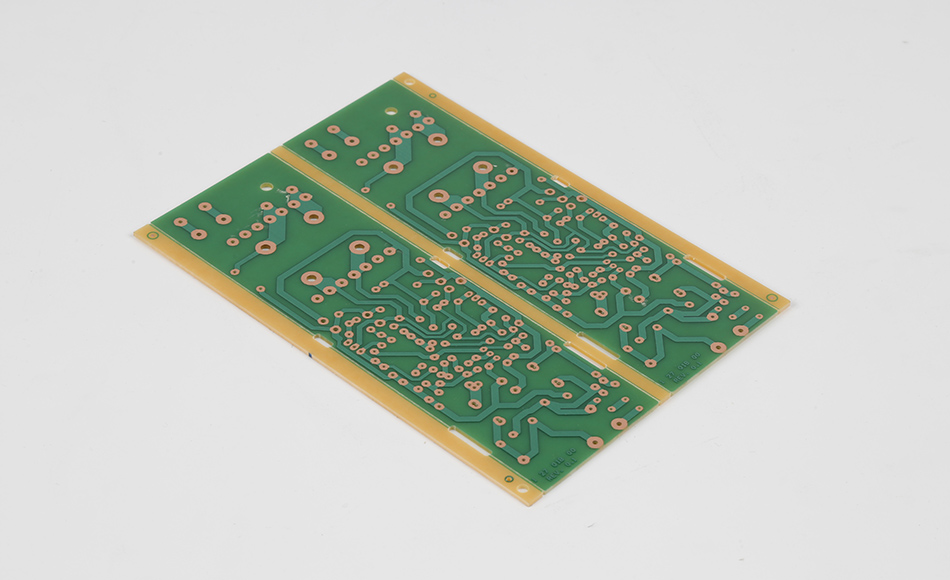
CEM-3-09HT’s material modifications translate to tangible performance benefits that set it apart from standard CEM3 and even some high-temperature alternatives:
CEM-3-09HT maintains its mechanical and electrical properties when exposed to prolonged high temperatures—often operating reliably for thousands of hours in environments where standard CEM3 would fail within weeks. This sustained stability is critical for devices with long service lives, such as industrial furnace controllers or automotive exhaust sensors, which may remain in operation for 5–10 years.
Thermal cycling (repeated heating and cooling) is more damaging than constant heat, as it amplifies stress between layers. CEM-3-09HT’s low coefficient of thermal expansion (CTE) and strong interface bonding allow it to withstand thousands of thermal cycles (e.g., -40°C to 150°C) without delamination or cracking. In automotive applications, where daily temperature swings are common, this resistance reduces warranty claims and maintenance costs.
Unlike standard CEM3, which experiences significant Dk and Df drift at high temperatures, CEM-3-09HT’s resin formulation ensures consistent dielectric properties. This maintains signal integrity in high-power devices (e.g., DC-DC converters) and prevents insulation breakdown in high-voltage applications (e.g., industrial motor drives). For example, in a 200W LED driver operating at 140°C, CEM-3-09HT retains 90% of its initial insulation resistance, compared to 50% for standard CEM3.
Retained Mechanical Strength
High temperatures weaken the flexural and tensile strength of most PCB materials, but CEM-3-09HT’s reinforced fibers and cross-linked resin preserve mechanical performance. Even at 160°C, it retains 70–80% of its room-temperature flexural strength, making it suitable for applications where physical stability is critical—such as robotic arms in high-temperature manufacturing facilities.
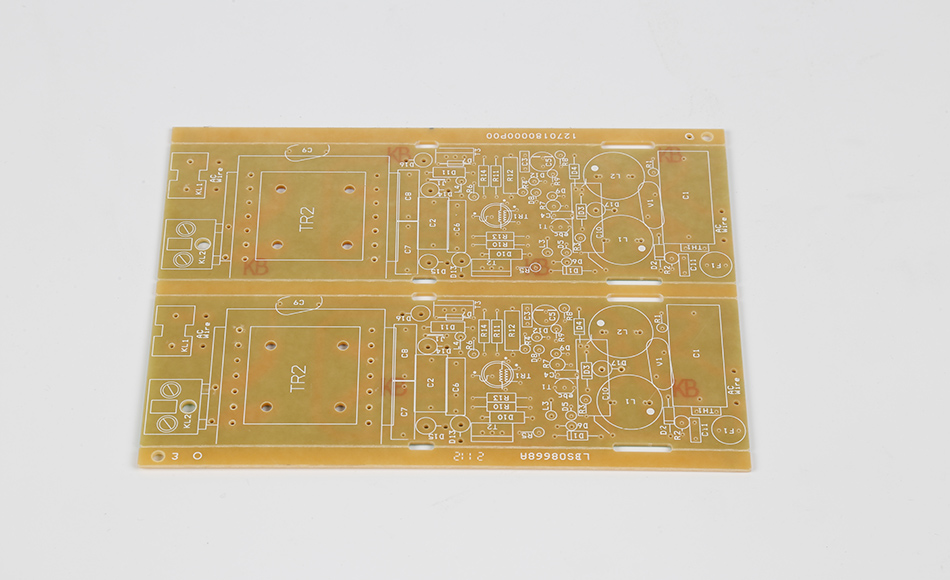
Producing CEM-3-09HT requires adjustments to standard CEM3 manufacturing processes to unlock its full thermal potential, while maintaining compatibility with existing PCB production lines:
The specialized resin in CEM-3-09HT requires a modified curing cycle to achieve maximum cross-link density:
Stepped Heating: Instead of a single temperature ramp, CEM-3-09HT is cured in stages: 120°C for 1 hour (to initiate cross-linking), 160°C for 2 hours (to build bond strength), and 180°C for 1 hour (to complete curing). This slow, controlled process ensures the resin forms a dense, heat-resistant network.
Extended Post-Cure: After lamination, CEM-3-09HT undergoes a post-cure at 200°C for 4–6 hours. This step relieves residual stresses from manufacturing and further stabilizes the resin-fiber interface, ensuring consistent thermal performance across the substrate.
The high-purity fibers and dense resin in CEM-3-09HT require precise lamination parameters:
Higher Pressure: Lamination pressure is increased by 10–15% (to 25–35 psi) compared to standard CEM3, ensuring full resin impregnation of the dense fiber matrix and eliminating air gaps.
Uniform Temperature Distribution: Lamination presses use advanced heating elements to maintain temperature uniformity within ±2°C. Hot spots can cause uneven curing, creating weak points that fail under heat.
A key advantage of CEM-3-09HT is its compatibility with standard drilling, etching, and assembly techniques. It can be processed on existing SMT (surface-mount technology) lines, withstanding reflow soldering temperatures (up to 260°C) without degradation. This eliminates the need for specialized equipment, reducing adoption costs for manufacturers.
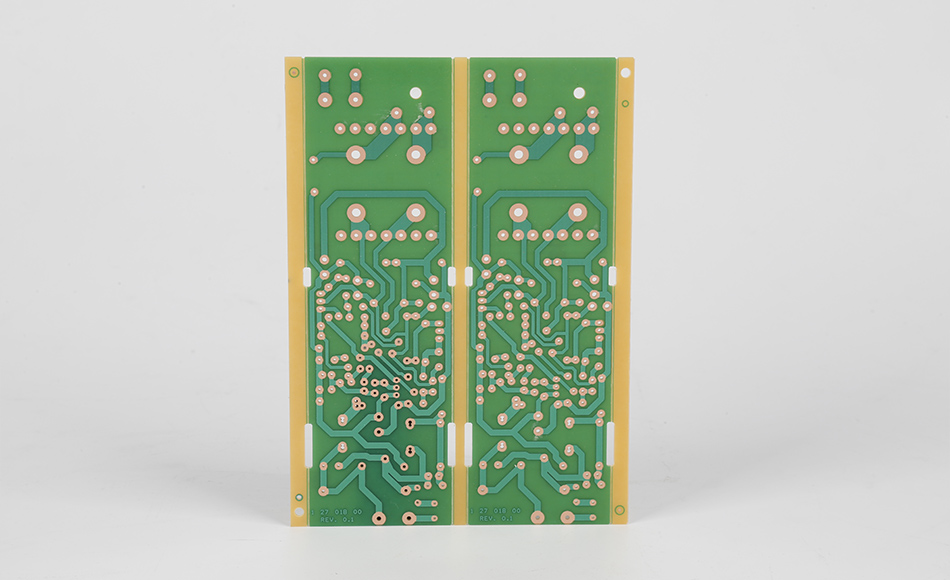
CEM-3-09HT is deployed in industries where high temperatures are inherent to operation, solving reliability challenges that standard materials cannot address:
Engine Control Units (ECUs): Mounted near engines, ECUs experience sustained temperatures of 120–150°C. CEM-3-09HT ensures the PCB maintains signal integrity between sensors and the microprocessor, preventing engine performance issues.
Exhaust Gas Recirculation (EGR) Sensors: These sensors monitor exhaust temperatures up to 180°C. CEM-3-09HT’s thermal stability ensures accurate readings, reducing emissions and improving fuel efficiency.
Battery Management Systems (BMS) for EVs: EV batteries generate heat during fast charging. CEM-3-09HT in BMS PCBs prevents thermal degradation, ensuring safe, reliable battery monitoring.
High-Temperature Furnace Controllers: Furnaces used in metal processing or glass manufacturing operate at 150–200°C. CEM-3-09HT PCBs in controllers withstand constant heat, ensuring precise temperature regulation and reducing downtime.
Welding Equipment: Welders generate intense heat (up to 160°C) in their control circuits. CEM-3-09HT resists resin degradation, ensuring consistent weld quality and equipment longevity.
Plastic Molding Machines: These machines use heated barrels (180–220°C) that radiate heat to nearby electronics. CEM-3-09HT PCBs in temperature controllers maintain stability, preventing molding defects.
Industrial LED High Bays: Used in factories or warehouses, these fixtures operate at 100–140°C due to high-power LEDs (100W+). CEM-3-09HT’s thermal stability prevents driver failure, extending the fixture’s lifespan to 50,000+ hours.
Automotive Headlights: LED headlights generate heat that can damage standard PCBs. CEM-3-09HT ensures the driver circuit remains reliable, even in engine bay temperatures.
Cabin Environmental Controls: Aircraft cabin systems operate at 100–130°C during flight. CEM-3-09HT PCBs in temperature and pressure sensors maintain accuracy, ensuring passenger comfort and safety.
Missile Guidance Systems: These systems experience rapid temperature spikes during launch. CEM-3-09HT’s resistance to thermal shock prevents component failure, ensuring guidance precision.
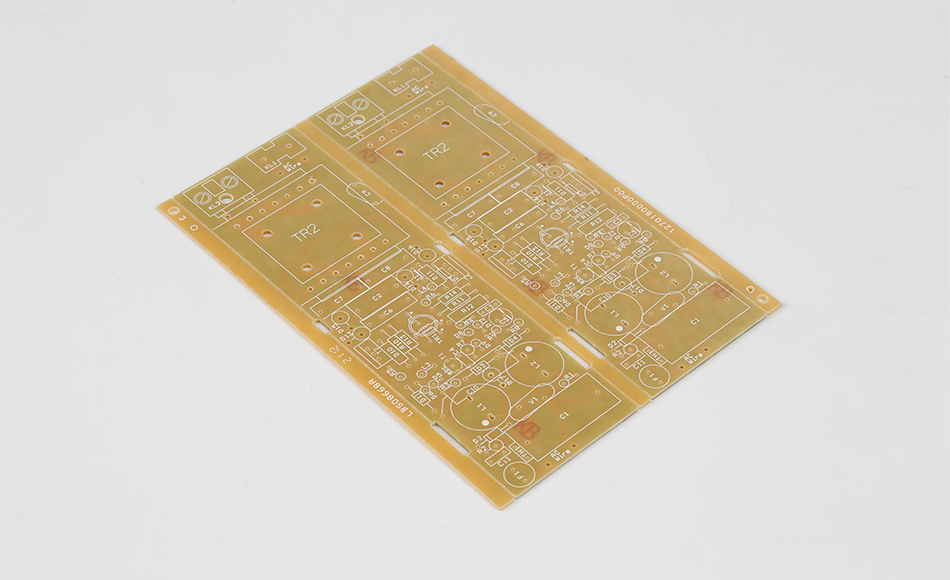
CEM-3-09HT occupies a unique niche in the high-temperature PCB market, balancing performance, cost, and practicality:
Standard CEM3 fails in temperatures above 100°C, with rapid resin degradation and delamination. CEM-3-09HT extends reliable operation to 150°C+, making it suitable for extreme environments. While CEM-3-09HT costs 20–30% more, its longevity justifies the investment in applications where downtime is costly.
High-temp FR4 (e.g., FR4-TG170) offers similar thermal stability but at 40–60% higher cost. For mid-range high-temperature applications (120–160°C)—such as automotive ECUs—CEM-3-09HT delivers comparable performance at a lower price, making it ideal for mass production.
Ceramic substrates excel in ultra-high temperatures (200°C+) but are brittle, expensive, and difficult to machine. They are reserved for specialized applications like power electronics. CEM-3-09HT, by contrast, is flexible enough for complex PCB designs and compatible with standard assembly, making it more practical for mainstream high-temperature devices.
MCPCBs dissipate heat well but conduct electricity, requiring insulation layers that increase complexity. They are also heavier than CEM-3-09HT. For applications where electrical insulation and weight are critical—such as LED drivers—CEM-3-09HT is a superior choice.
Ongoing research and development are expanding CEM-3-09HT’s capabilities, ensuring it meets the evolving needs of high-temperature electronics:
Adding thermally conductive fillers (e.g., boron nitride, aluminum oxide) to CEM-3-09HT’s resin could improve heat dissipation, extending its use to higher-power devices (e.g., 300W+ industrial converters). Early prototypes show a 25–30% increase in thermal conductivity without sacrificing thermal stability.
Manufacturers are exploring bio-based epoxy resins (derived from plant oils) for CEM-3-09HT, reducing reliance on petroleum and lowering carbon emissions. These sustainable variants maintain thermal performance while aligning with global sustainability goals.
Future CEM-3-09HT variants may include embedded thermal vias or heat-spreading layers (e.g., thin copper foils), creating a “thermal management substrate” that combines high-temperature resilience with active heat dissipation. This would be particularly valuable for EV battery systems, where both thermal stability and heat removal are critical.
CEM-3-09HT High Temp PCB Material fills a critical gap in the electronics industry, providing a cost-effective, process-compatible solution for extreme thermal environments. Its specialized resin formulation, reinforced fibers, and enhanced interface bonding enable it to withstand sustained heat and thermal cycling—challenges that render standard CEM3 and even mid-tier FR4 obsolete. From automotive under-hood systems to industrial furnace controllers, CEM-3-09HT ensures reliable performance where it matters most, reducing downtime, lowering maintenance costs, and extending device lifespans.
As industries like EV manufacturing, industrial automation, and high-power lighting continue to push the boundaries of temperature tolerance, CEM-3-09HT will remain a key enabler of innovation. Its unique balance of thermal resilience, affordability, and manufacturability makes it a strategic choice for engineers and manufacturers seeking to build electronics that thrive—not just survive—in extreme heat. In a world where performance under pressure defines success, CEM-3-09HT stands out as a material engineered for resilience.

Got project ready to assembly? Contact us: info@apollopcb.com



 Whatsapp 0086 755 29438407
 Mail info@apollopcb.com
 Tel 0086 755 29438407


ABOUT US

PRODUCTS
TECHNOLOGY
KNOWLEDGE CENTRE
CULTURE
NEWS
We're not around but we still want to hear from you! Leave us a note:

Leave Message to APOLLOPCB
