




-
- PCB TYPE
- PRINTED CIRCUIT BOARD PROTOTYPE ALUMINUM PRINTED CIRCUIT BOARD R&F PCB FPC HIGH FREQUENCY PCB HIGH-TG PCB HEAVY COPPER PCB HDI PCB PCB FOR LIGHTING METAL CORE PCB


time:Aug 20. 2025, 16:31:17
The Tapped Counterbore CEM3 PCB Solution represents a sophisticated fusion of mechanical engineering and PCB design, addressing the need for secure, permanent component mounting in electronics where vibration, thermal cycling, or physical stress could compromise traditional fasteners. A tapped counterbore combines two critical features: a flat-bottomed cylindrical recess (counterbore) to seat a fastener head flush with the PCB surface, and internal threads within the recess to lock the fastener in place without relying solely on friction. In CEM3 PCBs—valued for their balance of affordability, mechanical stability, and electrical performance—this solution bridges the gap between temporary fastening (e.g., friction-fit screws) and permanent bonding (e.g., adhesives), offering reusable yet reliable component retention. This article explores the design principles, manufacturing complexities, quality assurance measures, and real-world applications of tapped counterbore solutions in CEM3 PCBs, highlighting how they elevate assembly integrity in demanding environments.
Tapped counterbores in CEM3 PCBs deliver unique benefits that distinguish them from standard counterbores or tapped holes, making them indispensable in specific applications:
The threads within the counterbore create a mechanical lock between the fastener and the CEM3 substrate, preventing loosening due to vibration or thermal expansion/contraction. This is critical in devices like industrial motors or automotive sensors, where constant movement could cause friction-fit screws to back out. Unlike adhesives, which degrade over time or complicate rework, tapped counterbores allow for repeated assembly and disassembly without losing holding strength.
The counterbore’s flat bottom ensures the fastener head sits flush with the PCB surface, eliminating protrusions that could snag on other components or housings. This low-profile design reduces the risk of accidental damage during handling or operation, a key advantage in compact devices like medical monitors or drones. Simultaneously, the CEM3 material’s glass fiber reinforcement distributes the fastener’s clamping force evenly around the tapped threads, minimizing stress concentration that could crack the substrate.
Tapped counterbores in CEM3 PCBs accommodate a range of standard fasteners, from small machine screws to threaded inserts, providing flexibility in design. This adaptability allows engineers to select fasteners based on load requirements—for example, using finer threads for delicate sensors or coarser threads for heavy connectors—without redesigning the PCB. In CEM3, which supports both through-hole and surface-mount components, this versatility streamlines assembly across product lines.
CEM3’s epoxy resin and glass fibers, when paired with tapped counterbores, resist moisture, dust, and chemical exposure better than thread-forming in softer substrates like paper-based CEM1. The threads are less prone to corrosion or degradation, ensuring long-term performance in harsh environments such as kitchen appliances (exposed to steam) or outdoor IoT sensors (exposed to rain).
Creating functional tapped counterbores in CEM3 PCBs requires overcoming unique obstacles posed by the material’s composition and the precision demanded by threading:
CEM3’s glass fiber reinforcement—both non-woven core and woven outer layers—presents a significant challenge for thread cutting. Glass fibers are abrasive and resistant to deformation, making it difficult to form clean, consistent threads. Unlike homogeneous materials (e.g., plastic or metal), where threads can be cut or formed uniformly, CEM3’s layered structure can cause thread irregularities: the non-woven core may produce ragged threads due to loose fibers, while the woven layers may resist cutting, leading to incomplete thread formation. These inconsistencies weaken the fastener’s grip and increase the risk of thread stripping.
Thread-cutting tools (e.g., taps) degrade rapidly when cutting through CEM3’s glass fibers, leading to dulled edges that produce inaccurate threads. A dull tap may undercut threads (reducing diameter) or leave burrs, which can jam fasteners during assembly. Maintaining thread accuracy—critical for ensuring fastener compatibility—requires frequent tool changes and strict calibration, increasing manufacturing costs and complexity compared to standard counterbores.
The friction generated during tapping elevates temperatures in the CEM3 material, potentially softening the epoxy resin. Softened resin can flow into the thread grooves, clogging them or reducing thread depth. This is particularly problematic in high-speed production, where heat buildup is more pronounced. Excessive heat can also weaken the bond between glass fibers and resin, increasing the risk of delamination around the counterbore.
Tapped counterbores require precise concentricity between the counterbore, the tapped threads, and the through-hole (if present). Misalignment—even by 0.1mm—can cause the fastener to bind during insertion, damaging threads or cracking the CEM3 substrate. Achieving this alignment is challenging in CEM3 due to slight variations in material density, which can cause tools to drift during machining.
Producing reliable tapped counterbores in CEM3 PCBs demands specialized tooling, optimized processes, and material-specific adjustments:
Carbide Taps with Spiral Flutes: Carbide’s hardness resists wear from glass fibers, while spiral flutes efficiently evacuate debris from thread grooves, preventing clogging. These taps are designed with sharp cutting edges to shear fibers cleanly, reducing thread ragging.
Coated Tools: Titanium carbonitride (TiCN) or diamond-like carbon (DLC) coatings reduce friction between the tap and CEM3, lowering heat generation and extending tool life. Coatings also minimize resin buildup on tool surfaces, ensuring consistent thread formation.
Bottoming Taps for Counterbores: Unlike standard taps, bottoming taps are shortened to cut threads close to the counterbore’s flat bottom, maximizing thread engagement in the limited depth of CEM3 counterbores.
Stepwise Machining: Tapped counterbores are created in stages: first, the counterbore is drilled to the required diameter and depth; then, a pilot hole is drilled through the PCB; finally, the tap cuts threads into the counterbore walls. This sequence ensures the tap aligns with the counterbore, reducing misalignment risks.
Controlled Speed and Feed Rates: Tapping at moderate speeds (500–1,000 RPM) with slow, steady feed rates minimizes heat buildup and fiber fraying. This allows the tap to cut threads without softening the epoxy resin or tearing glass fibers.
Coolant Systems: Directed coolant (typically water-based with lubricating additives) is applied during tapping to dissipate heat and flush away glass fiber debris. Coolant compatibility with CEM3’s epoxy resin is critical to avoid chemical reactions that could weaken the material.
Thread Gauging: Each tapped counterbore is inspected with go/no-go gauges to verify thread diameter, pitch, and depth, ensuring compatibility with standard fasteners. This step catches issues like undercut threads or burrs that could compromise fit.
Deburring: Mechanical brushes or ultrasonic cleaning remove loose glass fibers and resin burrs from thread grooves, preventing fastener jamming and ensuring smooth insertion.
Conformal Coating: A thin layer of conformal coating (e.g., acrylic or silicone) is applied to the tapped area to seal exposed fibers and protect threads from moisture, enhancing long-term durability in humid environments.
Ensuring the reliability of tapped counterbores in CEM3 PCBs requires rigorous testing to validate thread strength, alignment, and resistance to operational stress:
Pull-Out Force Measurement: Fasteners are inserted into tapped counterbores and pulled axially until failure, measuring the force required to strip threads or pull the fastener free. This test ensures the CEM3 material and threads can withstand expected operational loads—critical for applications like aerospace sensors or industrial robotics.
Torque Testing: Fasteners are tightened to specified torque levels (e.g., 0.5–2.0 Nm for small screws) and then loosened, verifying that threads retain their integrity through repeated cycles. This simulates maintenance or rework scenarios, ensuring the solution remains reliable over time.
Optical Thread Inspection: High-resolution cameras with thread-specific software analyze thread profiles, checking for uniformity, pitch accuracy, and freedom from defects like incomplete threads or burrs.
Coordinate Measuring Machines (CMMs): CMMs verify concentricity between the counterbore, threads, and through-hole, ensuring alignment within tight tolerances (typically ±0.05mm). This prevents fastener binding and reduces stress on the CEM3 substrate.
Thermal Cycling: Test PCBs undergo temperature cycles (-40°C to 85°C) to simulate extreme operating conditions. After cycling, threads are re-inspected for loosening or material degradation, ensuring performance in devices like automotive electronics.
Humidity Testing: PCBs are exposed to high humidity (85% RH at 85°C) for extended periods, then tested for thread corrosion or strength loss. This validates performance in humid environments, such as kitchen appliances or outdoor sensors.
Tapped counterbore CEM3 solutions excel in applications where secure, reusable component mounting is critical:
Control Panels: CEM3 PCBs in factory controllers use tapped counterbores to secure relays, connectors, and display modules, withstanding vibration from nearby machinery. The threads ensure components remain fixed during thermal cycling from equipment heat.
Robotics: Robotic arm PCBs leverage tapped counterbores to mount motors and position sensors, where precise alignment and vibration resistance are essential for accurate movement.
Diagnostic Equipment: Blood analyzers and imaging devices use tapped counterbores in CEM3 PCBs to secure sample trays and optical components, ensuring alignment critical for accurate results. The reusable threads facilitate maintenance and calibration.
Portable Monitors: Tapped counterbores secure batteries and wiring harnesses in portable patient monitors, withstanding drops and impacts during transport without loosening.
Engine Bay Sensors: While CEM3 is not used in high-heat engine components, tapped counterbores secure sensors in cooler areas (e.g., cabin air intake) to resist vibration and temperature swings.
Infotainment Systems: Tapped counterbores mount displays and circuit boards in car stereos, ensuring components remain aligned despite vehicle movement, preventing audio or video glitches.
Gaming Consoles: Internal CEM3 PCBs use tapped counterbores to secure power supplies and cooling fans, withstanding the vibrations of disc drives or high-performance processors.
Smart Home Hubs: Tapped counterbores secure wireless modules and antennas in smart hubs, ensuring reliable connectivity by preventing component shifts that could disrupt signal strength.
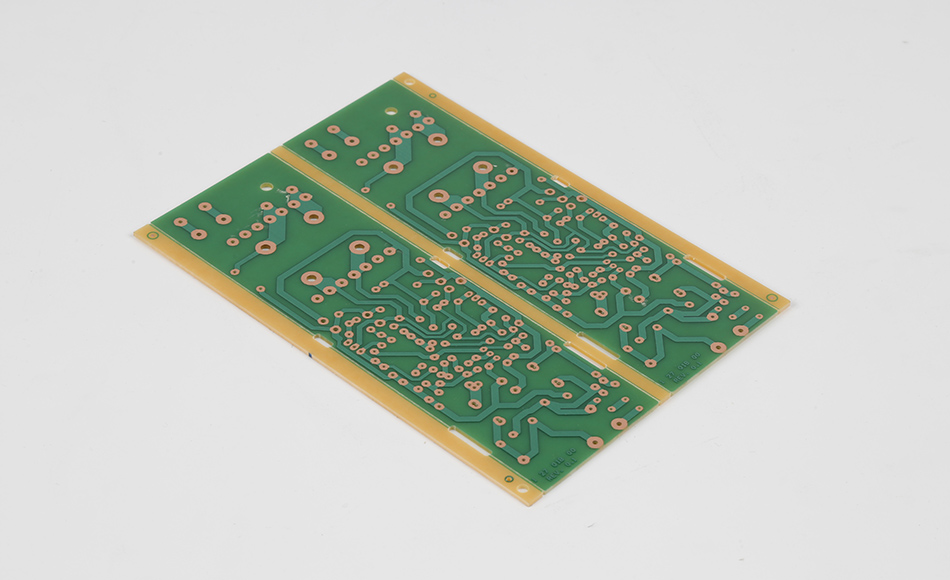
Designers and manufacturers can maximize the effectiveness of tapped counterbore solutions in CEM3 PCBs by following these guidelines:
Thread Selection: Choose standard thread sizes (e.g., M2, #2-56) to ensure fastener availability and compatibility with off-the-shelf taps. Avoid fine threads in thick CEM3 sections, as they may not provide sufficient engagement.
Thread Engagement Length: Ensure threads engage with at least 1.5 times the fastener diameter (e.g., 3mm engagement for an M2 screw) to maximize holding strength without weakening the PCB.
Clearance from Copper Traces: Maintain a 0.5mm gap between tapped counterbores and copper traces to prevent thread-cutting tools from damaging conductive paths.
Material Batch Testing: Test tapping parameters on samples from each CEM3 batch, as fiber content and resin viscosity can vary, affecting thread quality. Adjust speeds or tooling based on results.
Tool Maintenance Schedules: Establish regular tap inspection and replacement protocols to prevent thread defects from dull tools. This is especially critical in high-volume production.
Controlled Torque Application: Use torque drivers set to the fastener’s recommended torque to avoid over-tightening, which can strip threads or crack the CEM3 substrate.
Lubrication During Fastener Insertion: Apply a small amount of non-conductive lubricant (e.g., silicone grease) to fasteners before insertion to reduce friction and thread wear during assembly.
Advancements in manufacturing and material science are enhancing the performance and versatility of tapped counterbore solutions in CEM3 PCBs:
Robotic tapping cells with vision guidance are being integrated into production lines, ensuring precise alignment and consistent thread formation. These systems adjust tap speed and pressure in real time based on CEM3 material variations, reducing defects and improving yield.
Nanostructured coatings (e.g., alumina-titania) are being developed to further reduce friction and wear on taps, extending tool life by up to 50% when cutting CEM3. These coatings also repel resin buildup, maintaining thread quality in high-volume production.
For high-load applications, manufacturers are integrating metal threaded inserts into CEM3 counterbores. The inserts are pressed or bonded into the counterbore, providing stronger threads than those cut directly into CEM3, while retaining the substrate’s cost and weight advantages.
The Tapped Counterbore CEM3 PCB Solution represents a critical innovation in secure component mounting, combining the practical advantages of CEM3—affordability, mechanical stability, and process compatibility—with the reliability of threaded fasteners. By addressing the unique challenges of threading in glass-reinforced epoxy substrates through specialized tooling, optimized processes, and rigorous quality control, this solution delivers reusable, vibration-resistant retention for components in demanding environments. From industrial automation to medical devices, tapped counterbores in CEM3 PCBs ensure assemblies remain secure over time, even in the face of thermal stress, vibration, or repeated handling. As manufacturing technologies continue to advance, these solutions will play an increasingly vital role in enabling robust, cost-effective electronics design, proving that precision engineering can elevate even mid-range substrates to meet high-performance demands.

Got project ready to assembly? Contact us: info@apollopcb.com



 Whatsapp 0086 755 29438407
 Mail info@apollopcb.com
 Tel 0086 755 29438407


ABOUT US

PRODUCTS
TECHNOLOGY
KNOWLEDGE CENTRE
CULTURE
NEWS
We're not around but we still want to hear from you! Leave us a note:

Leave Message to APOLLOPCB
