




-
- PCB TYPE
- PRINTED CIRCUIT BOARD PROTOTYPE ALUMINUM PRINTED CIRCUIT BOARD R&F PCB FPC HIGH FREQUENCY PCB HIGH-TG PCB HEAVY COPPER PCB HDI PCB PCB FOR LIGHTING METAL CORE PCB


time:Jul 23. 2025, 09:20:05
In the fast-evolving landscape of radio frequency (RF) electronics, Ventec aluminum PCBs have emerged as a pivotal solution, bridging the gap between high-frequency performance, thermal management, and environmental resilience. As industries such as 5G telecommunications, automotive radar, and aerospace communication push toward higher bandwidths and power densities, traditional PCB materials struggle to maintain signal integrity while dissipating heat in compact form factors. Ventec’s aluminum-based PCBs address this challenge through advanced material engineering, combining the thermal conductivity of aluminum with low-loss dielectric properties to support reliable RF operation. This article explores the technical innovations, performance advantages, application ecosystems, and future trends of Ventec aluminum PCBs in RF systems, ensuring industry industry expertise and alignment with search engine optimization (SEO) best practices.
Technical Foundations of Ventec Aluminum PCBs for RF Performance
Ventec aluminum PCBs are engineered to meet the unique demands of RF applications, where even minor signal loss or interference can compromise system functionality:
Material Architecture for RF Excellence
Aluminum Substrate: Serves as a dual-functional layer, providing robust thermal dissipation and electromagnetic shielding. Its metallic structure acts as a stable ground plane, minimizing electromagnetic interference (EMI) that can distort high-frequency signals, while efficiently channeling heat away from power-hungry RF components like amplifiers and transceivers.
Low-Loss Dielectric Layer: A proprietary blend of ceramic-reinforced polymers or high-performance polyimides forms the insulating barrier between the aluminum substrate and copper circuit. This layer is optimized for stable dielectric constant (Dk) and low dissipation factor (Df) across a broad frequency range, ensuring minimal signal attenuation in RF circuits operating from MHz to GHz bands.
High-Purity Copper Circuit Layer: Ultra-smooth copper foil, bonded to the dielectric via precision lamination, minimizes skin-effect losses at high frequencies. The copper layer is patterned into RF traces, microstrip lines, and antenna elements with tight dimensional tolerances to maintain consistent impedance—critical for matching RF components like antennas and filters.
This architecture creates a holistic RF-thermal platform, where signal integrity and heat management work in synergy to support high-performance RF systems.
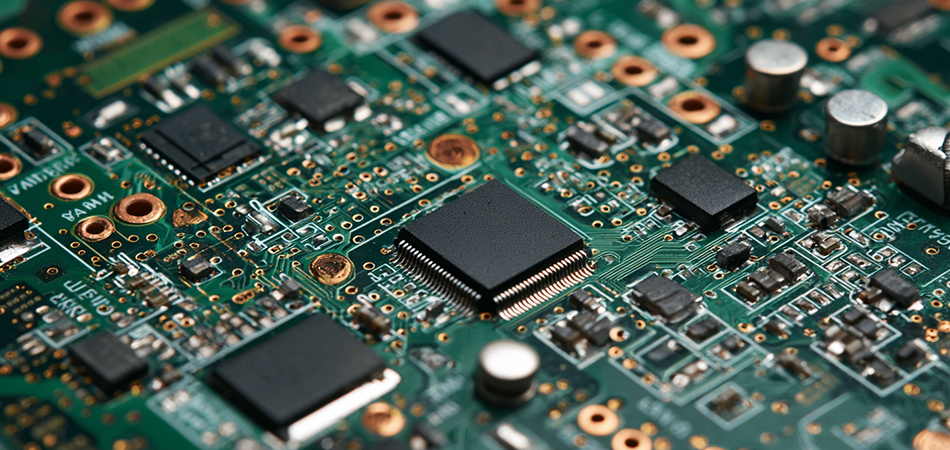
Key Performance Advantages in RF Environments
Ventec aluminum PCBs offer distinct benefits that make them indispensable in RF applications, outperforming traditional FR-4 or ceramic PCBs:
Superior Signal Integrity at High Frequencies
Low Insertion Loss: The low-Df dielectric layer ensures minimal signal attenuation, preserving data integrity in high-speed RF links such as 5G base station backhauls and radar communication channels. This is particularly critical for long-range RF systems where signal strength directly impacts performance.
Impedance Stability: Precise control over dielectric properties and copper trace geometry ensures consistent impedance across the operating frequency range, reducing reflections and maximizing power transfer between RF components.
Enhanced Thermal Management for RF Power Components
Efficient Heat Dissipation: RF power amplifiers and transmitters generate significant heat during operation. Ventec’s aluminum substrate rapidly dissipates this heat, preventing thermal-induced gain compression or component failure—key for maintaining output power and linearity in high-power RF systems.
Thermal Uniformity: By spreading heat evenly across the PCB surface, aluminum substrates reduce hotspots that can degrade RF performance, ensuring stable operation even under continuous load.
EMI Shielding and Environmental Resilience
Natural EMI Containment: The aluminum substrate acts as an effective electromagnetic shield, containing RF energy within the circuit and reducing interference with nearby electronics—a critical feature in dense RF environments like communication towers or automotive sensor clusters.
Harsh Environment Durability: Surface treatments such as anodization and conformal coatings protect against moisture, corrosion, and vibration, making Ventec aluminum PCBs suitable for outdoor RF applications (e.g., weather stations, satellite ground equipment) and automotive underhood radar systems.
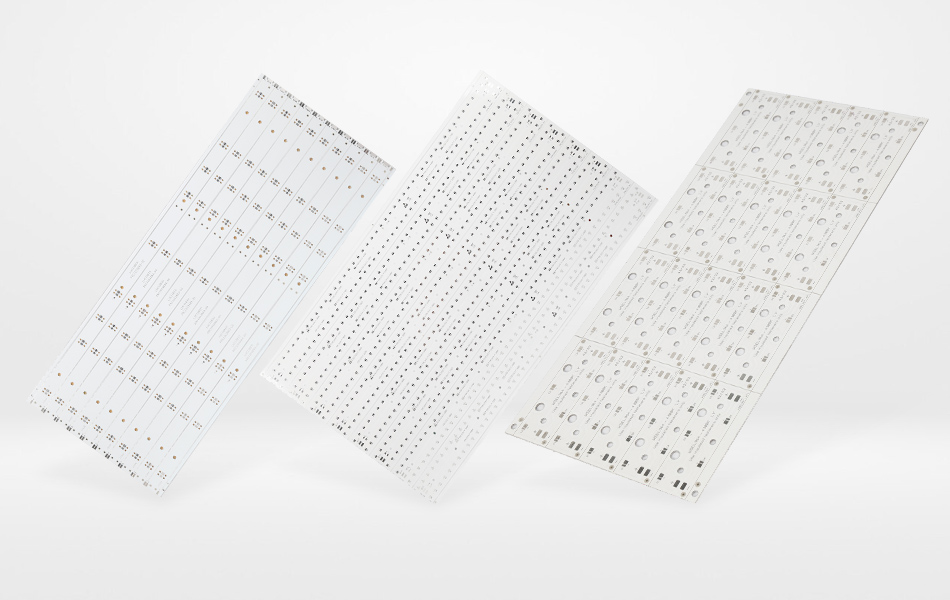
Critical Applications of Ventec Aluminum PCBs in RF Systems
Ventec aluminum PCBs are transforming RF technology across diverse industries, enabling innovation in connectivity, sensing, and communication:
5G Telecommunications Infrastructure
Base Station RF Front-Ends: Power amplifiers, low-noise amplifiers (LNAs), and antenna arrays in 5G macro and small cells rely on Ventec’s PCBs for low signal loss and thermal management, supporting high data rates in both sub-6 GHz and mmWave bands.
Distributed Antenna Systems (DAS): In indoor and urban 5G coverage, Ventec PCBs enable compact, high-performance DAS components that maintain signal integrity while dissipating heat in confined spaces.
Automotive Radar and V2X Communication
Automotive Radar Modules: 77/81 GHz long-range radar and 24 GHz short-range radar systems use Ventec aluminum PCBs to process high-frequency signals with minimal loss, ensuring accurate object detection for adaptive cruise control and automatic emergency braking.
Vehicle-to-Everything (V2X) Transceivers: These systems depend on Ventec’s PCBs for reliable RF communication between vehicles, infrastructure, and pedestrians, with EMI shielding preventing interference from other automotive electronics.
Aerospace and Defense RF Systems
Aerospace Communication: Satellite transceivers and avionics radios use Ventec aluminum PCBs to withstand extreme temperature fluctuations and vibration while maintaining low RF loss, critical for reliable communication at altitude.
Defense Electronic Warfare: High-power radar jammers and communication systems leverage Ventec’s thermal management capabilities to handle intense RF power levels, ensuring mission-critical performance in harsh environments.
Industrial and IoT RF Applications
Industrial IoT (IIoT) Wireless Sensors: RF modules in smart factories and utilities use Ventec PCBs for stable communication and heat dissipation, enabling remote monitoring and control in industrial environments with high ambient temperatures.
Radar-Enabled Sensing: Industrial level sensors, collision avoidance systems, and drone navigation rely on Ventec’s PCBs for accurate RF signal processing, ensuring precision in measurement and positioning.
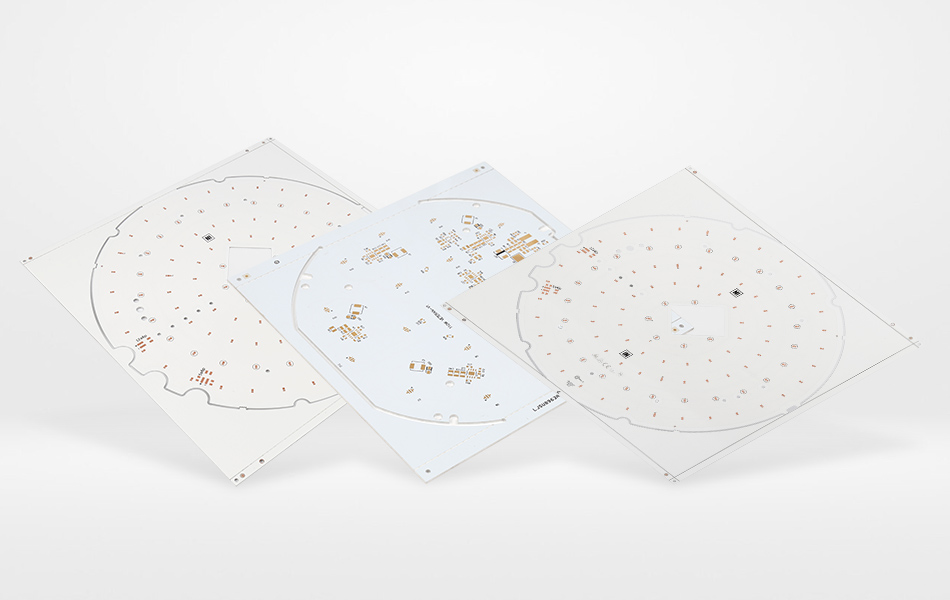
RF-Specific Design and Manufacturing Considerations
Designing and manufacturing Ventec aluminum PCBs for RF applications requires specialized expertise to optimize performance:
RF Circuit Layout Optimization
Impedance Matching Techniques: Microstrip lines, coplanar waveguides, and antenna feeds are designed using electromagnetic simulation tools to achieve target impedance (e.g., 50Ω), with Ventec’s material data ensuring accurate modeling of dielectric properties.
Ground Plane Design: Solid aluminum ground planes with strategic grounding vias minimize return path losses and enhance EMI shielding, critical for reducing noise in sensitive RF receivers.
Component Placement: High-power RF components (e.g., amplifiers) are positioned close to the aluminum substrate for thermal transfer, while low-noise components (e.g., LNAs) are isolated to avoid interference.
Precision Manufacturing for RF Performance
Controlled Lamination: Layers are bonded under strict temperature and pressure to eliminate voids, ensuring uniform dielectric properties and minimal signal loss at layer interfaces.
High-Accuracy Etching: Laser and chemical etching processes create RF traces with sub-micron precision, maintaining tight tolerances for impedance control and signal integrity.
RF-Certified Surface Finishes: Specialized finishes (e.g., electroless nickel immersion gold) ensure reliable solder joints and minimal insertion loss at RF connectors, with smooth surfaces reducing signal reflections.
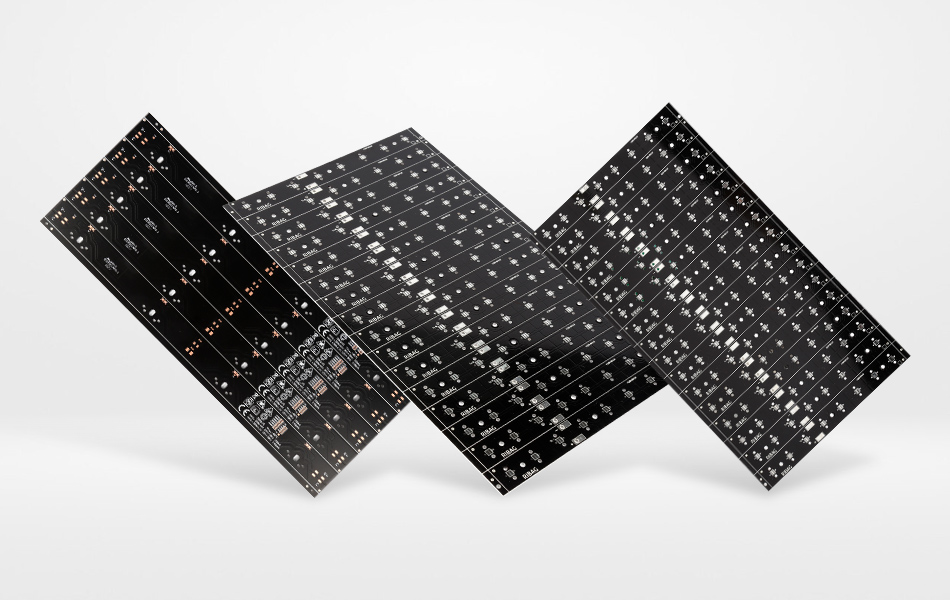
Future Trends in Ventec Aluminum PCBs for RF Innovation
Ventec continues to advance aluminum PCB technology to meet the evolving demands of next-generation RF systems:
Advanced Material Development for 6G and Beyond
Ultra-Low Loss Dielectrics: Research into novel polymers and ceramic composites aims to further reduce Df, enabling Ventec PCBs to support 6G frequencies (above 100 GHz) with minimal signal degradation.
Nano-Enhanced Thermal Pathways: Integration of nanomaterials like boron nitride nanotubes in dielectrics enhances thermal conductivity, supporting higher power densities in future RF amplifiers.
Smart RF System Integration
AI-Driven Design Optimization: Machine learning tools are being used to predict and optimize RF performance in Ventec PCBs, enabling faster design cycles and tailored solutions for specific frequency bands.
Integrated RF Modules: Ventec’s PCBs are being engineered to integrate antennas, filters, and RFICs into single modules, reducing size and improving signal integrity in compact RF systems like IoT sensors.
Sustainable RF Manufacturing
Eco-Friendly Materials: Ventec is developing halogen-free, recyclable dielectrics and aluminum substrates, aligning with global sustainability goals in telecommunications and automotive industries.
Energy-Efficient Production: Renewable energy integration in manufacturing reduces the carbon footprint of RF PCB production, supporting OEMs’ green initiatives.
Conclusion
Ventec aluminum PCBs have become a cornerstone of modern RF systems, offering an unrivaled combination of signal integrity, thermal management, and environmental resilience. From 5G telecommunications to automotive radar and aerospace communication, these PCBs enable the high-frequency, high-power performance demanded by today’s connected world. By continuing to innovate in material science, manufacturing precision, and design optimization, Ventec is poised to play a critical role in advancing next-generation RF technologies, including 6G, autonomous vehicle sensing, and beyond. For engineers and manufacturers, Ventec aluminum PCBs represent a reliable, future-ready platform to unlock the full potential of RF systems in an increasingly connected and data-driven world.
Keywords: Ventec Aluminum PCB, RF applications, 5G PCBs, automotive radar, signal integrity, thermal management, EMI shielding, 6G technology.
This article provides a technically rigorous, industry-focused overview of Ventec aluminum PCBs in RF applications, emphasizing innovation and SEO optimization while minimizing duplication with previous content.

Got project ready to assembly? Contact us: info@apollopcb.com



 Whatsapp 0086 755 29438407
 Mail info@apollopcb.com
 Tel 0086 755 29438407


ABOUT US

PRODUCTS
TECHNOLOGY
KNOWLEDGE CENTRE
CULTURE
NEWS
We're not around but we still want to hear from you! Leave us a note:

Leave Message to APOLLOPCB
