




-
- PCB TYPE
- PRINTED CIRCUIT BOARD PROTOTYPE ALUMINUM PRINTED CIRCUIT BOARD R&F PCB FPC HIGH FREQUENCY PCB HIGH-TG PCB HEAVY COPPER PCB HDI PCB PCB FOR LIGHTING METAL CORE PCB


time:May 11. 2021, 17:55:01
The integrity of the printed circuit board is essential to ensure the reliability of electronic products. For this reason, process control measurements must be performed to optimize the SMT PCB assembly. This ensures that costly errors will not be discovered in the future, which may lead to higher product failure rates and damage the reputation of electronics manufacturers.
The process control of SMT PCB assembly essentially involves the use of some reliable processes in the printing, mounting and reflow soldering stages.
Let's learn more about them for SMT PCB assembly:
Solder paste printing
Before SMT placement, the following must be checked:
There is no deformation on the board and the surface is smooth.
There is no oxidation on the circuit board pads.
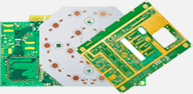
No copper is exposed on the surface of the circuit board.
When printing solder paste, you need to pay attention to the following additional issues:
The boards should not be stacked vertically, and the boards should not collide.
The fiducial mark on the board should match the positioning hole on the template.
A thorough visual inspection is required. It is recommended that in this visual inspection, the distance between the eyes and the board should be between 30-45 cm.
For best results, the temperature during solder paste application should be around 25°C, and the relative humidity should be in the range of 35-75%.
It is necessary to ensure that the solder paste used is effective and has not expired.
If you are using newly opened solder paste and old solder paste, a good mixing ratio is 3:1.
You need to make sure that you cannot see the bridge when printing.
It is essential that the thickness of the printing is uniform.
The template needs to be cleaned to ensure that there is no dry flux.

Got project ready to assembly? Contact us: info@apollopcb.com



 Whatsapp 0086 755 29438407
 Mail info@apollopcb.com
 Tel 0086 755 29438407


ABOUT US

PRODUCTS
TECHNOLOGY
KNOWLEDGE CENTRE
CULTURE
NEWS
We're not around but we still want to hear from you! Leave us a note:

Leave Message to APOLLOPCB
