




-
- PCB TYPE
- PRINTED CIRCUIT BOARD PROTOTYPE ALUMINUM PRINTED CIRCUIT BOARD R&F PCB FPC HIGH FREQUENCY PCB HIGH-TG PCB HEAVY COPPER PCB HDI PCB PCB FOR LIGHTING METAL CORE PCB

Real PCB &PCB Assembly Manufacturer
IS09001:2015 Standard
UL.RoHS. REACH Certified
3000+ Orders/Day
99% on-time Shipping
100,000+ Customers
Metal Core PCBs, widely recognized as MCPCBs or Insulated Metal Substrates (IMS), represent a revolutionary shift in high-power electronic design. Unlike traditional FR4 boards that act as thermal insulators, an MCPCB utilizes a metallic base to facilitate rapid heat transfer away from heat-sensitive components.
The performance and cost-profile of an MCPCB are primarily dictated by its core material:
Aluminum-Based PCBs: The industry standard for balanced performance. Aluminum (typically 5052 or 6061 alloy) offers excellent thermal dissipation and mechanical stability at a highly cost-effective price point. It is the go-to solution for high-power LED lighting and consumer electronics.
Copper-Based PCBs: The premium choice for extreme power density. Copper possesses a much higher thermal conductivity (~400 W/m·K) than aluminum, making it indispensable for RF amplifiers, high-speed telecommunications, and high-intensity COB LEDs. While the cost is higher, the reliability in mission-critical environments is unmatched.
Steel-Based PCBs (Stainless/Carbon Steel): Engineered for superior mechanical strength and durability. While steel has lower thermal conductivity compared to aluminum or copper, it excels in high-vibration automotive sensors and industrial applications where structural integrity is the priority.
The "secret" to an MCPCB's success lies in its Thermal Dielectric Layer. This thin, ceramic-filled epoxy layer provides electrical insulation while maintaining a high thermal path between the circuit and the metal base. This structure allows MCPCBs to dissipate heat 8 to 10 times faster than standard FR4, drastically extending component lifespan and preventing lumen depreciation in lighting systems.
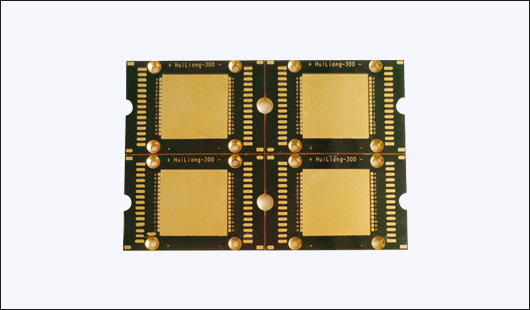
As electronic specifications evolve, the industry is racing towards miniaturization, lightweight structures, and multi-functional integration. While these advancements drive innovation, they create a "thermal paradox": more power is packed into smaller footprints, leading to concentrated heat flux that traditional materials can no longer handle.
In modern high-density circuits, thermal issues are no longer a secondary concern—they are the vital bottleneck affecting system stability. Excessive heat is the primary cause of semiconductor failure and signal drift. For customers moving from PCB assembly prototyping to mass production, selecting a substrate that can "breathe" is essential for long-term reliability.
The transition to Metal Core PCBs (MCPCBs) offers several transformative benefits for high-performance hardware:
Exceptional Thermal Dissipation: Thermal conductivity is the definitive parameter of a material's cooling performance. Standard FR4 substrates are essentially thermal insulators with a conductivity of approximately 0.25 W/m·K. In contrast, Aluminum-based MCPCBs offer conductivity levels ranging from 1.0 W/m·K to 4.0 W/m·K, while Copper-based solutions can exceed this even further.
Rapid Heat Extraction: The metallic base acts as an integrated heat spreader. Heat generated by high-power ICs, MOSFETs, and LEDs is pulled through the thin dielectric layer and distributed across the metal substrate instantaneously. This rapid removal reduces the "hot spot" temperature, protecting sensitive components from thermal damage.
Enhanced Service Life & Performance: By maintaining a lower operating temperature, MCPCBs prevent the accelerated aging of solder joints and delicate silicon structures. For industries like Bokysee (Security Surveillance) or Mottcell (Industrial Power), this translates to a significantly lower failure rate in the field and a prolonged product lifecycle, even in 24/7 operating environments.
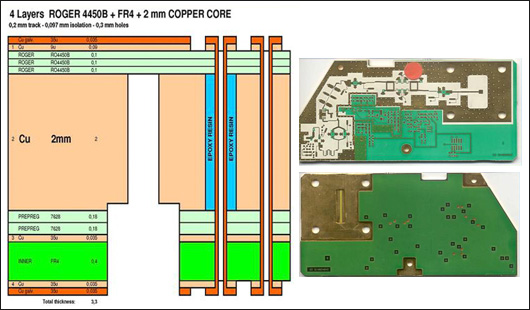
In the world of high-performance electronics, Dimensional Stability is the unsung hero of long-term reliability. As circuits operate under fluctuating thermal loads, materials naturally expand and contract. This physical movement is measured by the Coefficient of Thermal Expansion (CTE).
CTE describes how much a material grows or shrinks when heated. While metal substrates like Aluminum and Copper have their own specific expansion rates, their primary advantage in an MCPCB structure is their predictable and uniform expansion.
Compared to standard FR4 (which is a composite of resin and glass fiber), Metal Core PCBs provide a more "rigid" and "stable" foundation for several reasons:
Minimal Warpage Under High Heat: Traditional FR4 boards often suffer from "bow and twist" when exposed to extreme temperatures due to their non-uniform internal structure. Aluminum and Copper bases provide a solid mechanical backbone that keeps the board flat, ensuring the board size remains consistent and within tolerance during reflow soldering and field operation.
CTE Matching for Component Safety: One of the greatest challenges in PCB design is the CTE mismatch between the board and the components (like large LED chips or ceramic power modules). Because metal bases transfer heat so efficiently, they maintain a more uniform temperature across the entire board. This reduces the internal thermal stress that can lead to cracked solder joints or delamination.
Precision in High-Density Assembly: For technical teams moving from prototyping to mass production, dimensional stability is critical for automated SMT placement. A board that retains its dimensions accurately under process heat ensures that every component is aligned perfectly, reducing the risk of "tombstoning" or misaligned pads.
At ApolloPCB, we understand that every project has unique mechanical requirements. Whether you are designing for Bokysee (Security Surveillance) with outdoor temperature swings or Mottcell (Industrial Battery Systems) with high internal heat, selecting the right metal alloy (such as 5052 or 6061 Aluminum) is key to balancing thermal expansibility with structural rigidity.
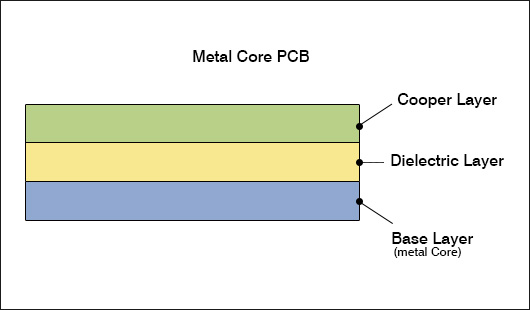
In the era of high-speed and high-power electronics, thermal management is directly linked to Signal Integrity. Metal Core PCBs (MCPCBs) provide a stable physical and thermal environment that traditional substrates simply cannot match.
Heat is a major enemy of clear signal transportation. When a PCB operates at elevated temperatures, the dielectric properties of the substrate can shift, leading to impedance mismatch and signal distortion. Because MCPCBs dissipate heat so efficiently, they maintain a consistent operating temperature. This stability ensures that high-frequency signals remain clean and reliable, preventing data errors in complex control systems.
The unique advantages of MCPCBs—thermal efficiency, structural rigidity, and signal stability—make them the ideal solution across a vast spectrum of mission-critical industries:
Solid-State Lighting: Aluminum-based PCBs are the backbone of modern lighting. By drastically reducing heat, they allow engineers to drive LEDs at higher currents, achieving higher lighting levels with fewer LEDs, which significantly lowers the overall Bill of Materials (BOM) cost.
Automotive & E-Mobility: Essential for LED headlights, power steering modules, and EV charging infrastructure.
Power Conversion: Optimized for motor drives, high-efficiency inverters, and photovoltaic (solar) power systems.
Industrial & Home Appliances: Providing the durability needed for smart power modules in modern appliances.
At ApolloPCB, we don't just follow standards; we set them. Our manufacturing facility is equipped to handle extreme specifications tailored to your specific engineering needs:
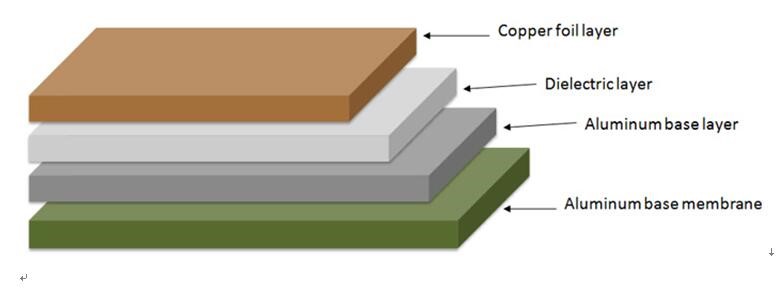
Copper Foil Thickness: We offer a versatile range from 1oz to 10oz. Our heavy-copper (10oz) capability is specifically designed for high-current power distribution and extreme heat sinking.
Metal Core Thickness: Standard boards typically range from 30mil to 125mil, providing the perfect balance of weight and thermal mass.
Bespoke Substrates: Need something thinner for a compact wearable or thicker for a heavy-duty industrial stabilizer? ApolloPCB offers fully customizable substrate thicknesses to fit your enclosure perfectly.

Got project ready to assembly? Contact us: info@apollopcb.com



 Whatsapp 0086 755 29438407
 Mail info@apollopcb.com
 Tel 0086 755 29438407


ABOUT US

PRODUCTS
TECHNOLOGY
KNOWLEDGE CENTRE
CULTURE
NEWS
We're not around but we still want to hear from you! Leave us a note:

Leave Message to APOLLOPCB
