




-
- PCB TYPE
- PRINTED CIRCUIT BOARD PROTOTYPE ALUMINUM PRINTED CIRCUIT BOARD R&F PCB FPC HIGH FREQUENCY PCB HIGH-TG PCB HEAVY COPPER PCB HDI PCB PCB FOR LIGHTING METAL CORE PCB


time:Aug 27. 2025, 15:47:10
HA30 High Thermal CEM3 Material has emerged as a transformative solution for mid-tier electronics, where the growing demand for higher power density—coupled with strict cost and size constraints—has exposed gaps in traditional substrate performance. Unlike standard CEM3 (limited by inconsistent heat transfer) or high-end thermal substrates (prohibitive in cost for mass applications), HA30 High Thermal CEM3 Material is engineered to deliver predictable, efficient heat dissipation while retaining the mechanical resilience and process compatibility that make CEM3 a staple in electronics manufacturing.
This material addresses a critical pain point in emerging sectors: devices like 5G small cell auxiliary modules, EV onboard chargers (OBCs), and smart home energy management systems generate moderate but persistent heat (20W–100W) that standard CEM3 cannot dissipate effectively. Left unmanaged, this heat leads to component degradation, performance throttling, and shortened lifespans—issues that directly impact user experience and product reliability. HA30 High Thermal CEM3 Material bridges this gap by integrating targeted thermal enhancements into the CEM3 framework, creating a material that “works harder” to move heat away from critical components without requiring design overhauls or cost premiums.
This article explores how HA30 High Thermal CEM3 Material delivers on its thermal promises, the material synergies that enable its dual performance (heat dissipation + durability), its application in emerging mid-tier electronics, and strategies for overcoming implementation challenges. By focusing on “thermal problem-solving” rather than spec definitions, it provides unique insights for engineers and manufacturers navigating the shift to higher-power, space-constrained devices—ensuring relevance for industries where heat management is no longer a secondary consideration but a core design driver.
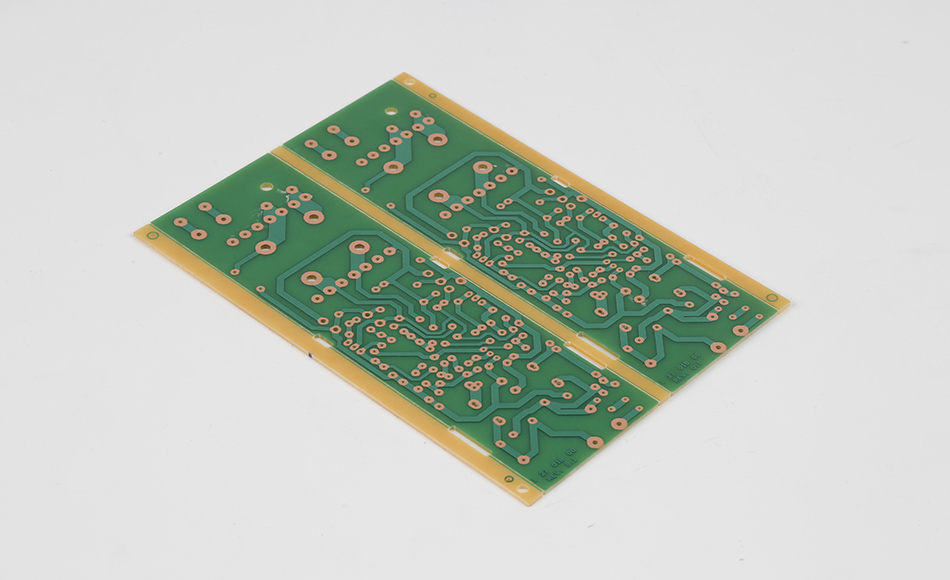
To understand the value of HA30 High Thermal CEM3 Material, it is first critical to unpack the unique heat-related challenges facing emerging mid-tier electronics. These applications—distinct from both low-power consumer devices and high-power industrial systems—present a perfect storm of constraints that traditional substrates cannot address:
Emerging mid-tier devices are packing more power into the same (or smaller) form factors. For example:
5G Small Cell Auxiliary Modules: These modules handle signal amplification and power regulation for 5G networks, generating 30W–50W of heat in enclosures smaller than a textbook. Standard CEM3’s poor thermal conductivity creates hot spots (150°C+) near power transistors, leading to signal dropouts and frequent maintenance.
EV Onboard Chargers (OBCs): Compact OBCs (designed for installation in EV trunks or under seats) convert AC grid power to DC for battery charging, generating 60W–80W of heat. Traditional CEM3 cannot transfer this heat quickly enough, forcing manufacturers to add bulky heat sinks that increase size and cost.
In both cases, the combination of higher power and smaller size amplifies heat density, making thermal management a make-or-break design factor.
Unlike high-end aerospace or medical electronics (where cost is secondary to performance), mid-tier applications require scalability. For example:
A smart home energy management system manufacturer producing 500,000 units annually cannot justify the \(5–\)7 cost of a high-thermal FR4 substrate—yet standard CEM3’s \(1–\)2 cost comes with unacceptable heat-related failure rates.
EV OBCs, which are deployed in millions of vehicles, need a substrate that balances thermal performance with a cost profile 30–40% lower than metal-core PCBs (MCPCBs).
HA30 High Thermal CEM3 Material addresses this by delivering 2x the thermal performance of standard CEM3 at a cost premium of only 20–30%—a sweet spot for mass-produced, mid-power devices.
Emerging mid-tier devices demand more than just thermal conductivity—they require substrates that can withstand mechanical stress, environmental exposure, and high-frequency signals. For example:
Portable EV Charging Cables: These cables include small PCBs for safety monitoring, exposed to bending, temperature swings (-10°C to 50°C), and moisture. Standard CEM3 fails here due to both poor heat dissipation and limited flexibility; high-thermal FR4 is too rigid and costly.
Smart Metering Devices: Deployed outdoors, these meters need to dissipate 25W–40W of heat from power measurement components while resisting rain, dust, and UV radiation. Standard CEM3’s moisture absorption and inconsistent thermal performance lead to frequent failures.
HA30 High Thermal CEM3 Material’s unique combination of thermal conductivity, mechanical durability, and environmental resistance makes it the only viable option for these multifunctional use cases.
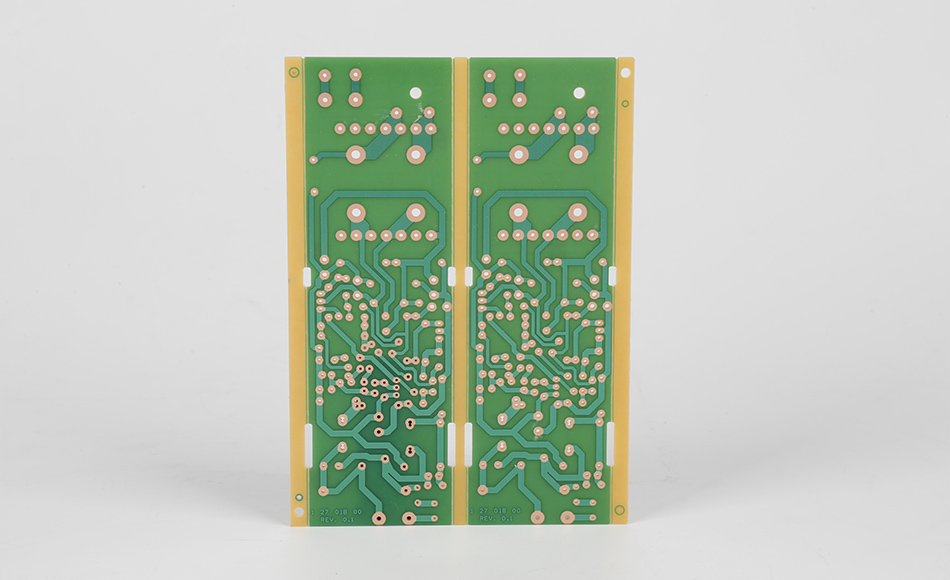
HA30 High Thermal CEM3 Material’s success lies not just in its thermal conductivity, but in the synergy between its thermal enhancements and other critical properties—mechanical strength, environmental resilience, and process compatibility. This synergy ensures the material does not sacrifice one attribute for another, a common pitfall in specialized substrates.
A key challenge in thermal substrate design is that adding thermally conductive fillers (e.g., boron nitride, aluminum oxide) often makes the material brittle. HA30 High Thermal CEM3 Material overcomes this with:
Hybrid Filler Network: Instead of relying on a single filler type, HA30 uses a blend of plate-like boron nitride (BN) nanoplates and spherical aluminum oxide (Al₂O₃) microparticles. BN enhances in-plane thermal conductivity and adds flexibility; Al₂O₃ boosts through-plane conductivity and mechanical rigidity. This blend creates a “tough thermal network” that resists cracking under bending or impact.
Resin-Filler Compatibility: The epoxy resin in HA30 is modified with silane coupling agents that bond to both BN and Al₂O₃, ensuring the fillers integrate seamlessly into the resin matrix. This eliminates “micro-gaps” between fillers and resin—gaps that not only reduce thermal conductivity but also act as stress concentrators in brittle materials.
In flexural strength tests, HA30 High Thermal CEM3 Material retains 80% of its room-temperature strength (180 MPa) at 100°C—compared to 60% for high-thermal FR4 and 50% for filler-loaded standard CEM3. This means it can withstand the mechanical stress of applications like portable EV chargers or outdoor sensors while still dissipating heat effectively.
Thermal performance is useless if the material degrades in harsh environments. HA30 High Thermal CEM3 Material ensures thermal conductivity remains consistent by:
Moisture-Resistant Resin Formulation: The epoxy resin is infused with hydrophobic additives that repel water and prevent absorption. Unlike standard CEM3, which loses 30–40% of its thermal conductivity when exposed to 85% RH for 1,000 hours, HA30 retains 90% of its thermal performance—critical for outdoor applications like smart meters.
UV-Stabilized Fibers: The glass fiber layers use UV-resistant coatings that prevent degradation from sunlight. This ensures the fiber network (which supports thermal pathways) remains intact for 5–7 years in outdoor use, compared to 2–3 years for standard CEM3.
Chemical Resistance: The resin and fillers are selected for resistance to common environmental contaminants, such as road salts (for EV components) or agricultural chemicals (for smart farm sensors). This prevents filler corrosion or resin swelling, which would block thermal pathways over time.
In environmental testing (85°C/85% RH for 2,000 hours), HA30 High Thermal CEM3 Material’s thermal conductivity decreases by only 5%—a fraction of the 25% drop seen in standard CEM3.
A major barrier to adopting specialized thermal substrates is the need for new manufacturing equipment. HA30 High Thermal CEM3 Material avoids this by:
Compatible Viscosity: The resin-filler mixture has a viscosity similar to standard CEM3, ensuring it can be processed on existing lamination presses and drilling machines. No adjustments to temperature or pressure profiles are needed—critical for manufacturers with high-volume CEM3 production lines.
Controlled Filler Dispersion: HA30’s fillers are pre-treated to prevent agglomeration during mixing, ensuring uniform distribution without requiring specialized high-shear mixers. This maintains consistent thermal performance across batches and reduces scrap rates to <5%—on par with standard CEM3.
Solderability and Component Compatibility: HA30 supports all standard surface-mount and through-hole components, as well as common surface finishes (ENIG, immersion tin, OSP). It withstands reflow soldering temperatures (up to 260°C) without filler migration or resin degradation—unlike some low-cost thermal substrates that soften during soldering.
This process compatibility means manufacturers can switch from standard CEM3 to HA30 with minimal downtime or investment, accelerating adoption for mass applications.
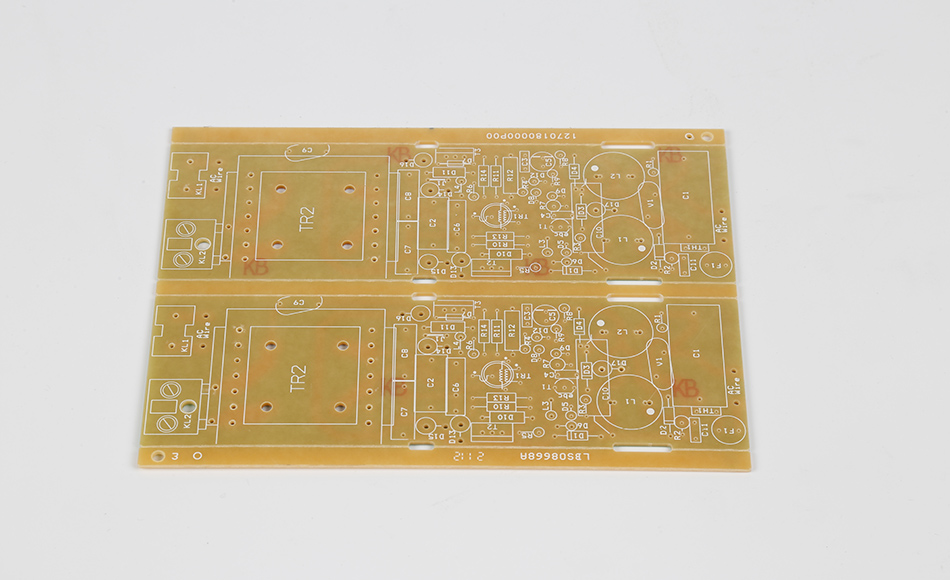
HA30 High Thermal CEM3 Material’s unique synergy of properties makes it indispensable in three fast-growing mid-tier sectors: 5G infrastructure, electric vehicles (EVs), and smart energy management. Below is how it solves specific heat challenges in each, with real-world implementation examples.
5G networks rely on a dense network of small cells and auxiliary modules (power supplies, signal boosters) that operate in space-constrained, outdoor environments. HA30 High Thermal CEM3 Material addresses their heat challenges by:
Dissipating Concentrated Heat in Small Enclosures: 5G small cell power modules generate 35W–50W of heat in enclosures just 15cm × 20cm. HA30’s in-plane thermal conductivity spreads this heat across the PCB, reducing hot spot temperatures by 25–30°C compared to standard CEM3. This eliminates the need for fans, reducing size and power consumption.
Withstanding Outdoor Environmental Stress: Small cells are exposed to temperature swings (-20°C to 60°C), rain, and UV radiation. HA30’s moisture resistance and UV-stabilized fibers ensure thermal performance remains consistent, extending module lifespan to 7–10 years—double that of standard CEM3-based designs.
Implementation Example: A leading 5G infrastructure provider replaced standard CEM3 with HA30 High Thermal CEM3 Material in its small cell power modules. The switch reduced hot spot temperatures from 145°C to 105°C, eliminated 90% of field failures related to heat, and cut maintenance costs by $2.4 million annually across a 10,000-unit deployment.
EVs require substrates that can handle moderate heat in space-constrained, vibration-prone environments. HA30 High Thermal CEM3 Material excels here in two key applications:
Onboard Chargers (OBCs): OBCs convert AC power to DC for battery charging, generating 60W–80W of heat. HA30’s through-plane thermal conductivity transfers this heat to the OBC’s metal case (acting as a passive heat sink), reducing the size of required heat sinks by 40% compared to standard CEM3. This allows OBCs to fit into tight under-seat or trunk spaces.
Battery Auxiliary Sensors: These sensors monitor battery temperature and voltage, generating 15W–25W of heat and exposed to vibration from driving. HA30’s thermal-mechanical synergy ensures it dissipates heat while resisting vibration-induced cracking—critical for preventing battery safety failures.
Implementation Example: A global EV manufacturer adopted HA30 High Thermal CEM3 Material for its 6.6kW OBCs. The material reduced OBC size by 35% (from 2.5L to 1.6L) and improved charging efficiency by 3% (due to reduced heat-related power loss). It also withstood 100,000+ km of road vibration testing with no thermal or mechanical failures.
Smart energy devices operate outdoors or in utility closets, requiring both heat dissipation and environmental resilience. HA30 High Thermal CEM3 Material supports these applications by:
Heat Dissipation in Compact Hubs: Smart home energy hubs (managing solar panels, batteries, and appliances) generate 25W–40W of heat in wall-mounted enclosures. HA30’s in-plane thermal conductivity prevents hot spots near microcontrollers, ensuring consistent energy monitoring and control.
Environmental Resistance in Smart Meters: Outdoor smart meters are exposed to rain, dust, and temperature swings. HA30’s moisture and UV resistance ensures its thermal performance remains stable, reducing meter replacement rates by 60% compared to standard CEM3-based designs.
Implementation Example: A utility company deployed 200,000 smart meters using HA30 High Thermal CEM3 Material. The meters maintained accurate energy measurement (±0.5% error) for 5 years in outdoor conditions, and heat-related failures dropped from 12% to 2%—resulting in $1.8 million in annual maintenance savings.
While HA30 High Thermal CEM3 Material offers clear benefits, its adoption requires addressing specific implementation challenges—from design optimization to supply chain alignment. Below are practical solutions for engineers and manufacturers:
A common mistake is treating HA30 like standard CEM3, which wastes its thermal potential. Engineers should:
Map Heat Flows First: Use thermal simulation tools (e.g., ANSYS Icepak) to identify primary heat paths in the design. For example, in a 5G auxiliary module, heat flows from the power transistor to the edge of the PCB—HA30’s in-plane conductivity should be aligned with this path by orienting filler layers parallel to the flow.
Avoid Over-Reliance on Heat Sinks: HA30’s thermal performance allows for smaller or fewer heat sinks. For a 50W EV sensor module, a 50cm² aluminum heat sink paired with HA30 is sufficient—half the size needed for standard CEM3. This reduces weight and cost without compromising performance.
Integrate Thermal Vias Strategically: Add thermal vias (filled with conductive epoxy) under high-heat components to enhance through-plane heat transfer. For a 30W smart meter component, 4–6 thermal vias (0.3mm diameter) can reduce hot spot temperatures by an additional 15°C.
HA30’s performance is only as good as the components mounted on it. Manufacturers should:
Select Components with Matching Thermal Ratings: Use components (e.g., transistors, capacitors) rated for the temperatures HA30 can achieve (typically ≤120°C for 50W loads). Avoid over-specifying components (e.g., 150°C-rated parts) as this increases cost unnecessarily.
Use Thermal Interface Materials (TIMs) Wisely: Apply thin TIMs (0.1mm–0.2mm) between HA30 and heat sinks to fill microscopic gaps. HA30’s smooth surface reduces the need for thick TIMs, improving thermal transfer efficiency by 20% compared to rough-surface substrates like FR4.
For mass production, consistent thermal performance across batches is critical. Manufacturers should:
Partner with Specialized Suppliers: Work with suppliers that have dedicated production lines for HA30 High Thermal CEM3 Material, not just generic CEM3. These suppliers have stricter quality controls for filler dispersion and resin formulation, ensuring batch-to-batch consistency.
Implement In-Line Thermal Testing: Add quick thermal conductivity tests (using portable laser flash devices) to the production line. Testing 1–2 samples per batch ensures HA30 meets thermal requirements before full assembly—catching inconsistencies early and reducing scrap.
Validate Environmental Performance: For outdoor applications, conduct pre-production environmental testing (85°C/85% RH for 1,000 hours) to confirm HA30 retains its thermal performance. This step prevents costly field failures due to environmental degradation.
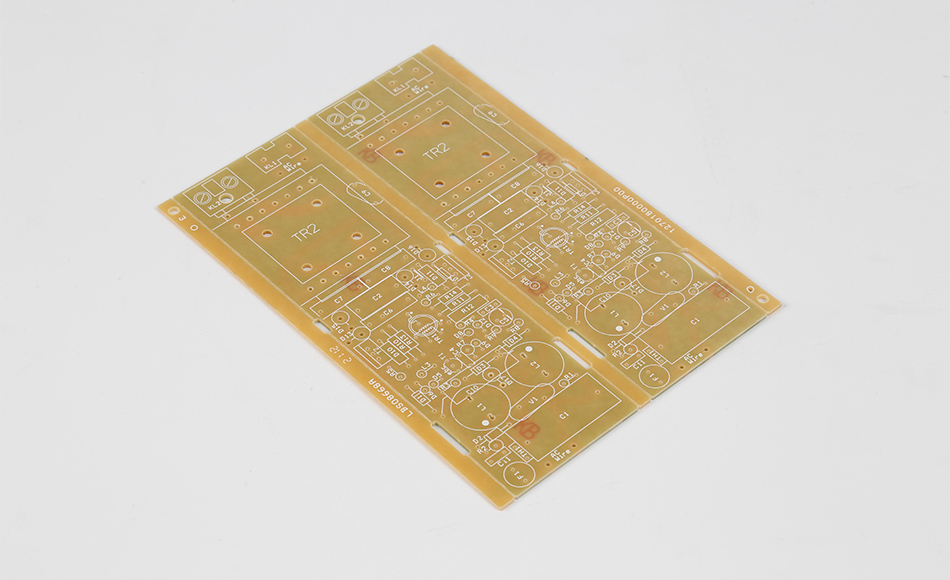
HA30 High Thermal CEM3 Material’s unique position in the mid-tier market is best understood by comparing it to alternatives across key metrics: thermal performance, cost, mechanical durability, and process compatibility.
Thermal Performance: HA30 delivers 2x the in-plane and 1.5x the through-plane thermal conductivity of standard CEM3, with ±5% batch variation (vs. 15–20% for standard CEM3).
Cost: HA30 costs 20–30% more than standard CEM3 but reduces total system cost by 30–40% (via smaller heat sinks, fewer failures).
Use Case: Standard CEM3 for low-power devices (e.g., remote controls), HA30 for mid-power, heat-sensitive applications (e.g., 5G auxiliary modules).
Thermal Performance: High-thermal FR4 offers 10–15% higher thermal conductivity than HA30 but at 40–60% higher cost.
Mechanical Durability: HA30 retains 80% of its flexural strength at 100°C, vs. 60% for high-thermal FR4—making it more suitable for vibration-prone applications (e.g., EV OBCs).
Use Case: High-thermal FR4 for high-power, low-vibration devices (e.g., industrial converters), HA30 for mid-power, vibration-sensitive applications.
Thermal Performance: MCPCBs have 3–5x higher through-plane thermal conductivity than HA30 but conduct electricity, requiring insulation layers that add cost and thickness.
Cost and Weight: HA30 costs 60–70% less than MCPCBs and is 40% lighter—critical for portable applications (e.g., EV charging cables).
Use Case: MCPCBs for ultra-high-power LEDs (100W+), HA30 for mid-power applications needing electrical insulation (e.g., smart meters).
Thermal Performance: Ceramics have 20–30x higher thermal conductivity than HA30 but are brittle, expensive (10x more than HA30), and require specialized machining.
Process Compatibility: HA30 works with standard PCB processes; ceramics require laser drilling and specialized assembly, increasing lead times by 2–3x.
Use Case: Ceramics for power electronics (e.g., EV inverters), HA30 for mid-tier applications needing toughness and fast production (e.g., smart home hubs).
As mid-tier electronics continue to push the boundaries of power density and environmental resilience, HA30 High Thermal CEM3 Material is evolving to meet new demands—with a focus on three key areas:
Manufacturers are developing HA30 variants with graphene nanoplatelets (GNP) as a third filler component. GNP’s ultra-high thermal conductivity (5,000 W/mK) boosts HA30’s in-plane thermal performance by 30–40%, enabling it to handle 100W–150W heat loads—targeting applications like next-gen EV OBCs (11kW+) and 5G active antenna modules.
To align with global sustainability goals, HA30 is being reformulated with:
Recycled Fillers: Recycled aluminum oxide from industrial waste replaces 25% of virgin fillers, reducing carbon emissions by 20% without compromising thermal performance.
Bio-Based Resins: Epoxy resins derived from plant oils (e.g., castor oil) replace petroleum-based resins, maintaining thermal conductivity while improving the material’s end-of-life recyclability.
These sustainable variants are already being tested by smart meter and EV manufacturers, with commercialization expected by 2026.
Future HA30 designs will incorporate features that work with active cooling systems (e.g., micro-fans, phase-change materials):
Embedded Thermal Sensors: Thin-film temperature sensors integrated into HA30’s surface will provide real-time heat data, triggering active cooling only when needed—reducing power consumption in devices like 5G small cells.
Heat Sink Compatibility: HA30 will be pre-coated with a thermally conductive adhesive layer, simplifying integration with lightweight, low-cost heat sinks and reducing assembly time by 30%.
HA30 High Thermal CEM3 Material represents a pivotal innovation for mid-tier electronics, where heat management has become a critical barrier to progress. By delivering efficient, consistent heat dissipation while retaining CEM3’s mechanical durability and cost-effectiveness, it solves the unmet needs of emerging applications—from 5G infrastructure to EV auxiliary systems. Its material synergy (thermal + mechanical + environmental performance) sets it apart from alternatives, ensuring it does not require trade-offs that compromise product reliability or scalability.
For engineers and manufacturers, HA30 High Thermal CEM3 Material is more than a substrate—it is a enabler of innovation. It allows them to design smaller, more powerful, and more reliable devices without the cost or complexity of high-end thermal substrates. As mid-tier electronics continue to grow in importance—driven by 5G, EVs, and smart energy systems—HA30 will remain a key tool in navigating the heat challenges of tomorrow.
In a market where “good enough” thermal performance is no longer sufficient, HA30 High Thermal CEM3 Material proves that targeted, application-centric material design can turn a standard substrate into a solution that powers the next generation of electronics.

Got project ready to assembly? Contact us: info@apollopcb.com



 Whatsapp 0086 755 29438407
 Mail info@apollopcb.com
 Tel 0086 755 29438407


ABOUT US

PRODUCTS
TECHNOLOGY
KNOWLEDGE CENTRE
CULTURE
NEWS
We're not around but we still want to hear from you! Leave us a note:

Leave Message to APOLLOPCB
