




-
- PCB TYPE
- PRINTED CIRCUIT BOARD PROTOTYPE ALUMINUM PRINTED CIRCUIT BOARD R&F PCB FPC HIGH FREQUENCY PCB HIGH-TG PCB HEAVY COPPER PCB HDI PCB PCB FOR LIGHTING METAL CORE PCB


time:Jul 03. 2025, 10:42:44
The Rise of China in Low-Cost Aluminum PCB Manufacturing
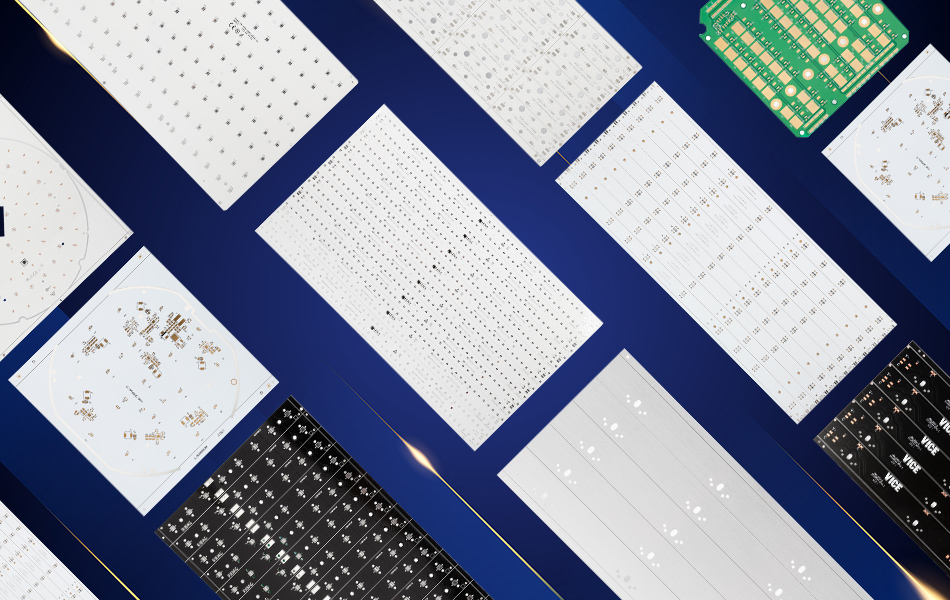
In the global electronics industry, China has emerged as a dominant force in producing low-cost aluminum-based printed circuit boards (Al PCBs) without compromising technical performance. As demand grows for energy-efficient, thermally robust PCBs across consumer electronics, automotive systems, and industrial applications, Chinese manufacturers have leveraged supply chain integration, manufacturing scale, and technological innovation to offer Al PCB solutions that combine cost-effectiveness with reliability. This article explores the factors driving China’s leadership in low-cost Al PCB production, the engineering strategies behind affordable designs, and the impact of Chinese manufacturing on global electronics supply chains.
The rapid expansion of China’s PCB industry over the past two decades has been nothing short of revolutionary. From humble beginnings as a low-cost manufacturing hub, the country now accounts for over 50% of global PCB production, with aluminum-based boards representing a fast-growing segment. This dominance is not merely a result of low labor costs but a strategic combination of technological investment, supply chain optimization, and government-led industrial policies. As electronics continue to miniaturize and power densities increase, the ability to produce Al PCBs that balance thermal management with cost efficiency has become a critical competitive advantage, one that Chinese manufacturers have mastered through years of innovation and scale.
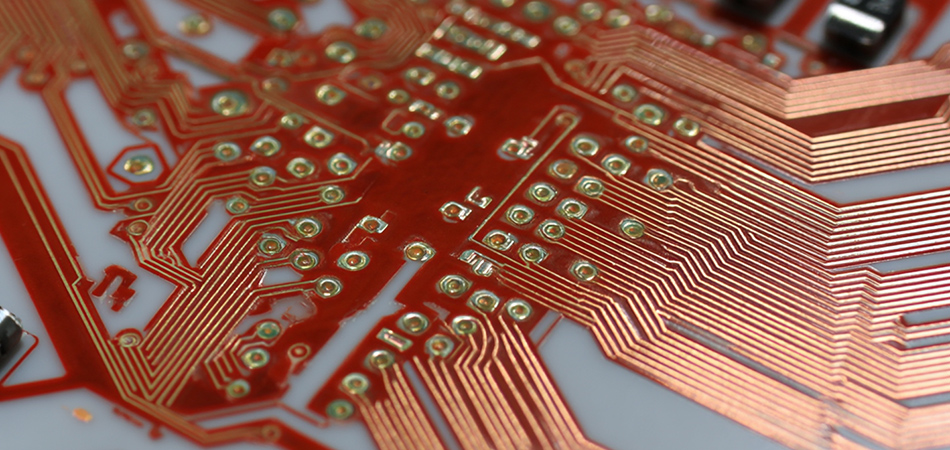
China’s Dominance in Aluminum PCB Manufacturing: Key Drivers
Integrated Supply Chain Ecosystem
China’s position as the world’s largest producer of aluminum and copper materials provides a foundational cost advantage. The country’s aluminum smelting capacity exceeds 38 million tons annually, accounting for nearly 60% of global production. This massive output allows Chinese PCB manufacturers to source high-purity aluminum cores (99.5% purity and above) at significantly lower costs than competitors reliant on imported materials. Localized sourcing of raw materials—from high-purity aluminum cores to dielectric films—reduces logistics costs and lead times, with some manufacturers located within 100 kilometers of aluminum extrusion plants, enabling just-in-time inventory management.
Additionally, the country’s dense network of component suppliers, equipment manufacturers, and PCB fabricators creates a vertically integrated ecosystem. In regions like the Pearl River Delta, entire supply chains exist within close proximity, from copper foil producers to specialized drilling equipment manufacturers. This integration enables rapid prototyping and mass production at scale, with some companies able to turn around prototype Al PCBs within 24 hours—a timeline unrivaled by most international competitors. The ecosystem also fosters collaboration, with material suppliers and PCB manufacturers working together to develop cost-effective solutions, such as custom dielectric layers optimized for aluminum cores.
Economies of Scale and Manufacturing Efficiency
Mass Production Capabilities: Chinese PCB facilities often operate at scales unmatched globally, with some factories spanning over 100,000 square meters and producing millions of square meters of Al PCBs annually. This volume allows for significant cost reductions in materials, labor, and overhead. For example, a large-scale manufacturer can purchase aluminum cores in bulk at negotiated prices up to 30% lower than smaller competitors, while spreading the cost of specialized equipment—such as multi-million-dollar lamination presses—across a vast production run.
Automation and Process Optimization: Advanced manufacturing automation, such as robotic drilling, automated optical inspection (AOI), and high-speed plating lines, enhances efficiency while maintaining quality. In modern Chinese PCB factories, robotic arms handle material loading and unloading, reducing labor costs and minimizing human error. AOI systems equipped with machine vision can inspect thousands of vias per minute, ensuring consistency that would be impossible with manual inspection. High-speed plating lines use advanced electrolysis techniques to deposit uniform copper layers in vias at rates up to five times faster than traditional methods, contributing to lower per-unit costs.
Government Support and Industrial Clusters
Strategic government policies, such as tax incentives for high-tech manufacturing and investment in research parks, have fostered the growth of PCB industrial clusters in regions like Guangdong, Jiangsu, and Zhejiang. The Chinese government’s "Made in China 2025" initiative specifically identifies printed circuit boards as a key industry for technological advancement, providing subsidies for R&D and infrastructure development.
These clusters facilitate knowledge sharing, standardized processes, and collaborative innovation. In Shenzhen, often referred to as the "Silicon Valley of China," hundreds of PCB manufacturers coexist with component suppliers and electronic OEMs, creating a hub of innovation. Shared facilities for waste treatment, energy supply, and logistics further drive down costs through economies of scale. Industry associations in these clusters organize technical seminars and workshops, ensuring that even smaller manufacturers can access the latest knowledge in Al PCB design and manufacturing, leveling the playing field and promoting overall industry excellence.
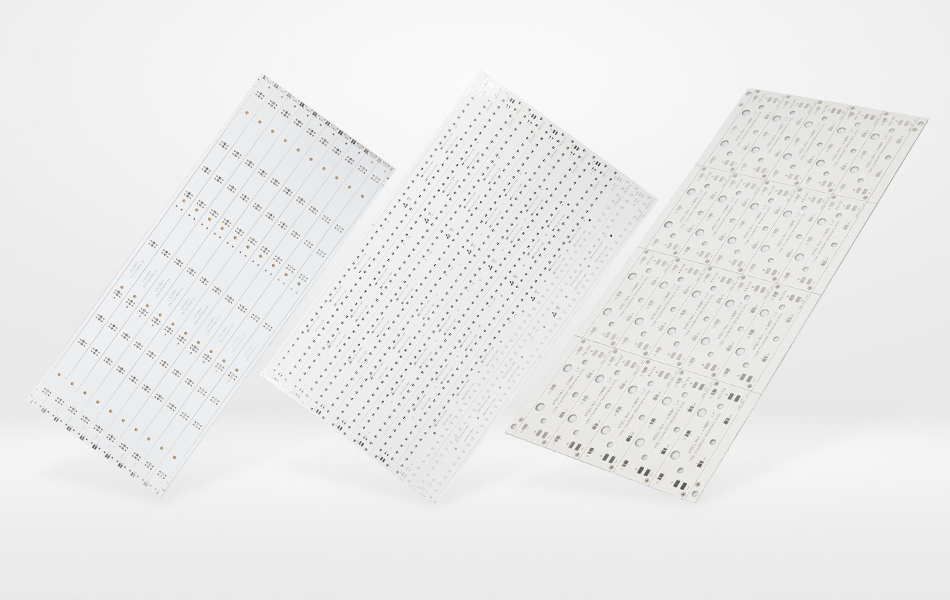
Engineering Low-Cost Aluminum PCBs: Design and Manufacturing Strategies
Cost-Optimized Material Selection
Aluminum Core Grades: Chinese manufacturers leverage commonly available aluminum alloys that balance thermal conductivity with cost. Alloys like 1050 and 1060 (pure aluminum with minimal impurities) are preferred for most low-cost applications, offering thermal conductivity around 200-240 W/mK—sufficient for the majority of consumer and industrial applications. These alloys are widely available and cost up to 40% less than premium alloys like 5052 or 6061, which are reserved for specialized high-performance applications. Manufacturers conduct rigorous testing to ensure that even these standard alloys meet basic thermal and mechanical requirements, such as flatness within 0.1mm per 100mm and tensile strength above 60 MPa.
Dielectric Layer Trade-offs: For cost-sensitive applications, manufacturers use budget-friendly dielectric materials like FR-4 derivatives or polyester films. Modified FR-4 materials with improved thermal conductivity (up to 0.8 W/mK) strike a balance between electrical insulation and heat transfer, suitable for basic LED lighting or low-power electronics. Polyester films, while offering lower thermal conductivity, are extremely cost-effective and find use in non-critical thermal management applications. In cases where higher thermal performance is needed, Chinese suppliers have developed ceramic-filled epoxy dielectrics that offer thermal conductivity up to 1.5 W/mK at a fraction of the cost of PTFE-based materials.
Design for Cost Efficiency
Simplified Layer Stackups: Low-cost Al PCBs often feature single or double-sided designs with minimal inner layers, reducing lamination and drilling complexities. Single-sided Al PCBs, which consist of an aluminum core with a single copper layer, are the most cost-effective, ideal for basic LED lighting or simple power electronics. Double-sided designs add a second copper layer and require through-hole vias for connectivity, but still avoid the higher costs associated with multi-layer boards. Even when multi-layer designs are necessary, Chinese manufacturers limit the number of inner layers to four or six, using sequential lamination techniques to minimize processing steps.
Standardized Via Structures: Focus on through-hole vias over blind/buried vias in basic designs, as they require fewer manufacturing steps and less precision equipment. Through-hole vias can be drilled using standard mechanical drills, while blind/buried vias often require laser drilling or more complex sequential lamination. By prioritizing through-hole vias, manufacturers reduce production time and equipment costs, with some facilities able to drill thousands of through-holes per minute. Standardized via diameters (0.3-1.0mm) further simplify tooling and reduce setup costs.
Modular Design Approaches: Using standardized PCB sizes and shapes minimizes material waste during production. Common sizes like 100x100mm, 150x200mm, and 200x300mm are optimized for material utilization, with manufacturers often offering discounts for orders that use these standard formats. Customizations are limited to critical functional areas, such as cutouts for heat sinks or component placement, while the rest of the board follows standardized dimensions. This approach reduces design time, material waste, and production complexity, making it ideal for high-volume, low-cost applications.
Manufacturing Process Innovations
Batch Processing: High-volume batch production of Al PCBs allows for shared setup costs across multiple orders, reducing per-board expenses. Manufacturers group orders with similar specifications—such as the same aluminum core thickness or dielectric material—into production batches, minimizing machine setup times. For example, a batch of 10,000 Al PCBs with 100x100mm dimensions and 1.6mm aluminum cores can be processed in a single run, with the setup cost 分摊 (shared) among all units. This batch processing can reduce per-unit costs by 15-20% compared to custom, small-batch production.
Selective Surface Finishing: Cost-effective surface finishes like hot air leveled (HASL) or organic solderability preservatives (OSP) are preferred over premium finishes like ENIG for non-critical applications. HASL, while less aesthetically pleasing than ENIG, is highly reliable and costs up to 70% less. OSP provides a thin organic coating that protects copper traces from oxidation, suitable for applications where solderability is key but cosmetic appearance is secondary. Chinese manufacturers have perfected these finishes to ensure long-term reliability, with OSP coatings lasting up to 12 months in normal storage conditions without degradation.
Lean Manufacturing Principles: Implementation of lean methodologies, such as 5S and Kaizen, eliminates waste in production flows, from material handling to quality control. The 5S principles (Sort, Set in Order, Shine, Standardize, Sustain) help maintain an organized production floor, reducing time wasted on material search and equipment maintenance. Kaizen, or continuous improvement, encourages frontline workers to suggest process optimizations, such as adjusting drill speeds to reduce bit wear or reorganizing workstations for better flow. These initiatives can lead to productivity gains of 10-15%, directly translating to lower production costs.
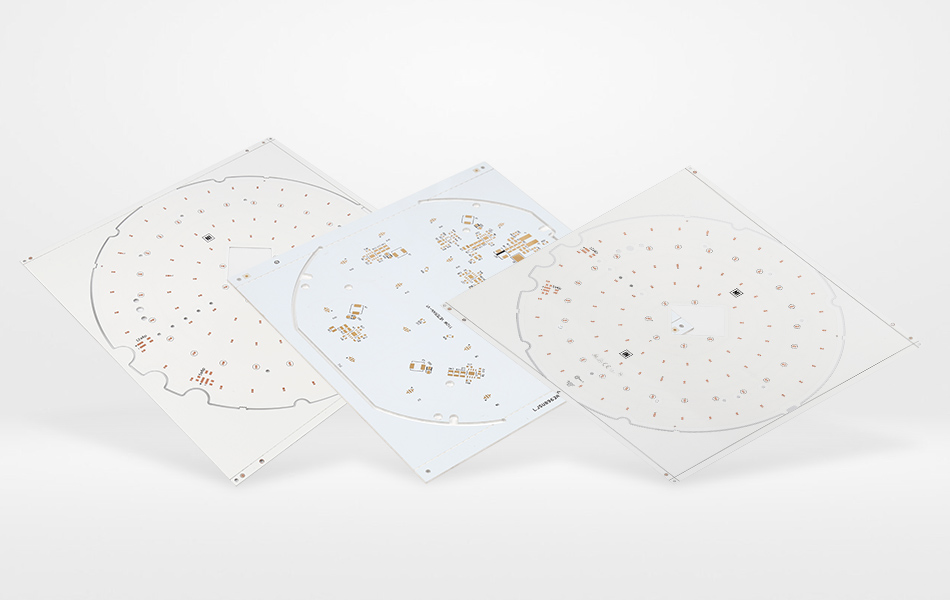
Quality Assurance in Low-Cost Al PCB Production
Standardized Quality Control Processes
Chinese manufacturers adhere to international standards (e.g., IPC-6012 for PCBs) and implement rigorous quality control at every stage:
Incoming Material Inspection: Verification of aluminum core flatness, copper foil thickness, and dielectric layer consistency. Aluminum cores are inspected for surface roughness (Ra < 1.6μm) and flatness (within 0.1% of thickness), while copper foils are measured for thickness uniformity (variation < 5%). Dielectric layers undergo tensile strength tests and dielectric breakdown voltage measurements to ensure they meet minimum standards.
In-Process Testing: Electrical continuity checks, thermal conductivity measurements, and visual inspections during drilling, plating, and soldering. After drilling, vias are inspected for diameter consistency and wall quality, with any deviations from specification immediately corrected. During plating, copper thickness in vias is monitored using X-ray fluorescence (XRF) to ensure uniformity (within 10% of target thickness). Visual inspections using microscopes check for solder bridging, trace defects, and other manufacturing anomalies.
Cost-Effective Reliability Testing
Thermal Cycle Simulation: Affordable temperature cycling chambers test for delamination and via integrity under controlled thermal stress. Chambers capable of cycling between -40°C and +125°C are used, with samples subjected to 100-500 cycles depending on application requirements. After testing, PCBs are inspected for delamination using cross-sectional analysis, and via resistance is measured to ensure conductivity stability.
Humidity Resistance Testing: Simple yet effective tests like the 85/85 test (85°C at 85% humidity) ensure performance in humid environments without premium equipment. Samples are placed in humidity chambers for 1,000 hours or more, after which they undergo electrical testing and visual inspection for signs of corrosion or delamination. This test is particularly important for outdoor LED lighting or automotive applications exposed to moisture.
Certification and Compliance
Many Chinese PCB manufacturers hold international certifications (ISO 9001, ISO 14001) and comply with RoHS/REACH regulations, ensuring that low-cost Al PCBs meet global environmental and safety standards without additional compliance costs. ISO 9001 certification guarantees a structured quality management system, while ISO 14001 ensures environmental practices are in place, such as proper waste treatment and energy conservation. RoHS compliance (restriction of hazardous substances) is achieved through careful material selection, with manufacturers maintaining detailed records of component origins and chemical compositions. This certification allows Chinese Al PCBs to enter markets worldwide without facing regulatory barriers, making them a viable option for global electronics manufacturers.
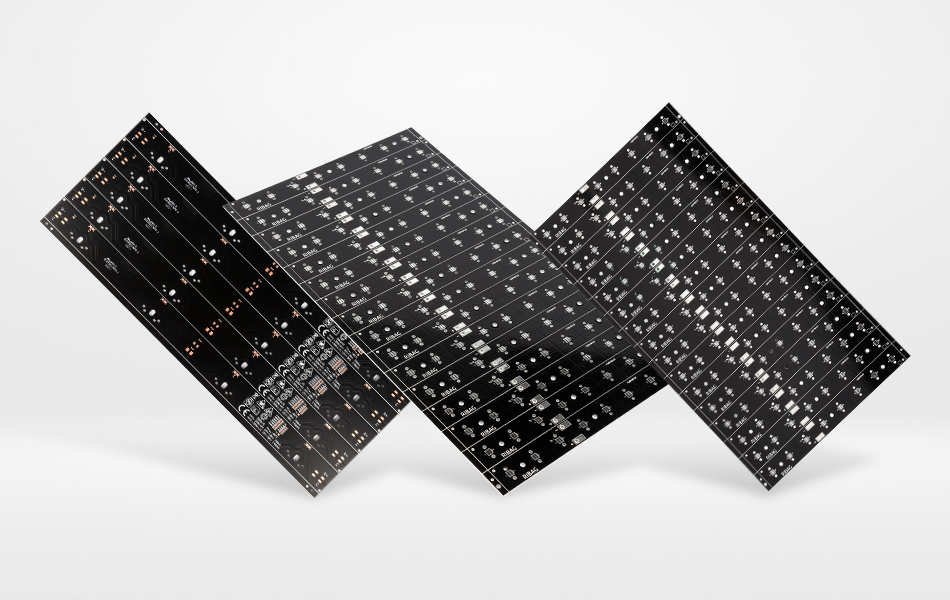
Applications of Low-Cost Aluminum PCBs from China
Consumer Electronics: Balancing Cost and Thermal Performance
LED Lighting Solutions: Low-cost Al PCBs power affordable LED bulbs, panels, and automotive lighting, with thermal management sufficient for standard lumen outputs. In household LED bulbs, single-sided Al PCBs with 1.0mm aluminum cores efficiently dissipate heat from 5-20W LED arrays, ensuring light output stability and longevity. For automotive lighting, double-sided Al PCBs with through-hole vias handle the higher heat loads of headlamps and taillights, with thermal conductivity sufficient to maintain LED junction temperatures below 85°C. Chinese manufacturers supply these PCBs to major LED brands globally, enabling the production of affordable lighting solutions for both residential and commercial use.
Portable Power Banks and Chargers: Al PCBs manage heat in high-current charging circuits, enabling compact designs at competitive prices. In power banks with 20,000mAh or more, Al PCBs with 0.8mm aluminum cores dissipate heat from fast-charging ICs and lithium-ion battery management systems. The thermal conductivity of the aluminum core allows for smaller heat sink sizes or even passive cooling, reducing overall product weight and cost. Chinese-made Al PCBs in these applications undergo rigorous thermal cycling tests to ensure reliability over hundreds of charge-discharge cycles.
Automotive Electronics: Cost-Effective Thermal Management
Basic Engine Control Units (ECUs): Al PCBs handle moderate heat loads in entry-level automotive ECUs, balancing reliability with cost constraints. These PCBs typically feature 1.6mm aluminum cores and double-sided copper layers, with through-hole vias connecting power transistors to the thermal plane. The aluminum core dissipates heat from switching regulators and microcontrollers, maintaining operational stability in under-the-hood temperatures up to 105°C. Chinese manufacturers supply these ECUs to both OEMs and the aftermarket, contributing to the cost efficiency of modern vehicles.
Interior Lighting and Infotainment Systems: Thermally stable Al PCBs support LED clusters and low-power processing units in vehicle interiors. In dashboard lighting and ambient interior LED strips, single-sided Al PCBs with thin (0.5mm) aluminum cores provide sufficient thermal management for low-power LED arrays. For infotainment systems, Al PCBs with integrated ground planes reduce EMI, ensuring clear audio and video performance while managing heat from processors and amplifiers. The cost-effectiveness of these PCBs allows automakers to incorporate more features without significantly increasing vehicle costs.
Industrial and Commercial Electronics
Low-Power Industrial Controls: Al PCBs manage heat in motor drives, sensors, and basic control panels for manufacturing equipment. In small motor drives (up to 1kW), Al PCBs with 1.0mm aluminum cores dissipate heat from MOSFETs and IGBTs, enabling compact drive units that can be mounted directly on machinery. For temperature and pressure sensors, Al PCBs provide a stable thermal platform, ensuring measurement accuracy even in warm industrial environments. Chinese manufacturers offer these PCBs in standardized sizes, making them easy to integrate into various industrial systems.
Commercial Refrigeration and HVAC Systems: Cost-effective thermal management in compressor control units and temperature sensors. Compressor control boards in commercial refrigerators use Al PCBs with 1.6mm aluminum cores to handle the heat generated by power relays and control electronics. In HVAC systems, Al PCBs in temperature sensor modules maintain accuracy in fluctuating ambient temperatures, with the aluminum core acting as a heat sink to stabilize component temperatures. The reliability of these PCBs is crucial for maintaining consistent cooling and heating, and their low cost makes them ideal for large-scale commercial installations.
(四)Emerging Markets and DIY Electronics
Affordable Solar Inverters: Al PCBs in low-power solar inverters for residential use in emerging economies. In off-grid solar systems (100W-1kW), Al PCBs with 1.0mm aluminum cores dissipate heat from inverter transistors and diodes, ensuring efficient power conversion. The cost-effectiveness of these PCBs makes solar power more accessible in regions with limited electricity infrastructure, with Chinese manufacturers supplying inverter producers in Africa, Southeast Asia, and South America.
Hobbyist and Maker Projects: Budget-friendly Al PCBs for DIY thermal management applications, such as 3D printer hot ends or audio amplifiers. Makers and hobbyists often use single-sided Al PCBs to create custom heat sinks for 3D printer extruders, with the aluminum core providing efficient heat dissipation at a low cost. In audio amplifiers, Al PCBs reduce thermal distortion by keeping power transistors cool, enabling high-fidelity sound without expensive cooling solutions. Chinese online marketplaces offer these PCBs in various sizes, with pre-drilled holes and even custom printing options for DIY enthusiasts.
China’s Role in Shaping the Future of Low-Cost Al PCBs
Technological Upgrades for Cost-Efficiency
AI-Driven Production Planning: Machine learning optimizes material usage and production scheduling, further reducing waste in low-cost Al PCB manufacturing. Chinese manufacturers are increasingly adopting AI algorithms to analyze production data and predict equipment maintenance needs, reducing downtime. AI-driven nesting software optimizes PCB layouts on raw material sheets, increasing material utilization by 5-10% and reducing waste. Production scheduling algorithms take into account order priorities, machine capabilities, and material availability, ensuring that each production run is as efficient as possible.
Advanced Drilling and Plating Technologies: Adoption of faster, more precise equipment allows for higher throughput without significant capital expenditure increases. Next-generation drilling machines use multi-spindle heads to drill multiple vias simultaneously, increasing speed by 30-50%. Advanced plating lines use pulse plating technology to deposit copper more uniformly and at higher speeds, reducing plating time by up to 40%. These technological upgrades are often financed through government subsidies or industry partnerships, making them accessible even to mid-sized manufacturers.
Expanding Application Boundaries
5G Infrastructure at Scale: Chinese manufacturers are developing low-cost Al PCBs for 5G base station components, balancing thermal demands with the cost pressures of widespread network deployment. 5G base stations require PCBs that can handle higher frequencies and greater power densities, with Al PCBs offering a cost-effective solution for non-critical components like power supplies and cooling systems. Chinese suppliers are working with telecom equipment manufacturers to develop Al PCBs with improved thermal conductivity and lower dielectric loss, ensuring they meet the rigorous requirements of 5G while remaining affordable for mass deployment.
Electric Vehicle (EV) Cost Reduction: Low-cost Al PCBs support thermal management in EV battery management systems (BMS) and charging modules, contributing to overall vehicle cost optimization. In EV BMS, Al PCBs with 1.5mm aluminum cores dissipate heat from battery monitoring ICs and balance circuits, preventing thermal runaway and extending battery life. For fast-charging modules, Al PCBs manage heat from high-power DC-DC converters, enabling compact, efficient charging solutions. The low cost of these PCBs helps EV manufacturers reduce production costs, making electric vehicles more affordable for consumers.
Sustainable Manufacturing Initiatives
Recycling and Waste Reduction: Chinese PCB manufacturers are investing in aluminum and copper recycling technologies to lower material costs while meeting environmental standards. Advanced recycling facilities can recover up to 95% of copper and aluminum from PCB waste, with the recycled materials meeting industry standards for new PCB production. This not only reduces reliance on virgin materials but also creates a closed-loop system that lowers costs over time. Some manufacturers even offer "green" Al PCBs made from recycled materials, appealing to environmentally conscious customers.
Energy-Efficient Production: Adoption of renewable energy sources in manufacturing facilities reduces operational costs and enhances global market competitiveness. Solar panels and wind turbines are increasingly used to power PCB factories, particularly in regions with abundant renewable energy resources. Energy-efficient lighting, heating, and cooling systems further reduce power consumption, with some facilities achieving energy savings of 20-30%. These initiatives not only lower production costs but also position Chinese manufacturers as leaders in sustainable electronics manufacturing.
Conclusion: China’s Dual Role in Cost and Innovation
China’s dominance in low-cost aluminum PCB manufacturing stems from a unique combination of supply chain integration, manufacturing scale, and continuous process innovation. By balancing affordability with reliable performance, Chinese manufacturers have enabled the widespread adoption of Al PCBs across price-sensitive applications, from consumer electronics to basic industrial systems. The country’s ability to produce high-quality Al PCBs at low costs is not just a result of cheap labor but a testament to its advanced manufacturing capabilities, vertically integrated supply chains, and supportive government policies.
As technology evolves, the country’s PCB industry is poised to maintain its cost leadership while advancing toward more sophisticated, yet still affordable, solutions for emerging markets like 5G, EVs, and smart infrastructure. The integration of AI, advanced materials, and sustainable manufacturing practices will further enhance China’s position as a global leader in low-cost Al PCB production.
For global electronics designers and buyers, low-cost Al PCBs from China represent not just a cost-saving measure but a strategic enabler for bringing innovative, thermally robust products to market at scale. Whether powering the next generation of affordable LED lighting, enabling cost-effective EV components, or supporting the rollout of 5G infrastructure, Chinese-made Al PCBs are set to play a crucial role in shaping the future of global electronics—where affordability and performance go hand in hand.

Got project ready to assembly? Contact us: info@apollopcb.com



 Whatsapp 0086 755 29438407
 Mail info@apollopcb.com
 Tel 0086 755 29438407


ABOUT US

PRODUCTS
TECHNOLOGY
KNOWLEDGE CENTRE
CULTURE
NEWS
We're not around but we still want to hear from you! Leave us a note:

Leave Message to APOLLOPCB
