




-
- PCB TYPE
- PRINTED CIRCUIT BOARD PROTOTYPE ALUMINUM PRINTED CIRCUIT BOARD R&F PCB FPC HIGH FREQUENCY PCB HIGH-TG PCB HEAVY COPPER PCB HDI PCB PCB FOR LIGHTING METAL CORE PCB


time:Aug 29. 2025, 20:25:33
ST210G High Thermal CEM3 PCB is a critical enabler for high-power-density electronics, where high power is packed into small form factors. Unlike standard CEM3 PCBs (thermal bottlenecks in dense designs), it proactively manages heat—dissipating excess temperature and preventing thermal runaway (a top cause of downtime in industrial, automotive, and renewable energy systems).
Thermal runaway occurs when component heat exceeds PCB dissipation capacity: rising temperatures reduce efficiency, generate more heat, and cause system failure. Standard CEM3’s limited conductivity accelerates this, while ST210G breaks it with enhanced thermal pathways, stability, and cooling compatibility—retaining CEM3’s cost-effectiveness for mid-tier electronics.
This article explores ST210G’s thermal runaway mitigation, high-power-density applications, design optimizations, and future trends—supporting engineers building reliable high-performance systems.

Thermal runaway in high-power-density electronics stems from inadequate heat dissipation, material degradation, and cascading component failure. ST210G High Thermal CEM3 PCB targets each factor with a specialized design, creating a "thermal safety net" standard CEM3 lacks.
Stopping heat accumulation around high-power components is key to preventing thermal runaway. ST210G achieves this through:
Continuous Thermal Conduction Networks: Unlike standard CEM3 (discrete resin/glass layers create thermal barriers), ST210G integrates proprietary thermally conductive fillers into its epoxy matrix. These form interconnected pathways that spread heat in-plane and through-plane 2–3x faster than standard CEM3. In a 1kW compact power supply, ST210G reduces heat accumulation around a 150W IGBT module by 35%, keeping it below thermal shutdown thresholds.
Uniform Heat Distribution: Standard CEM3 develops localized hot spots (20–30°C hotter than surroundings) in dense layouts, triggering runaway. ST210G’s consistent thermal conductivity (±5% variation) ensures even heat spread. In a 20-layer high-power BMS PCB, it cuts hot spot variation from 25°C to 8°C, eliminating localized overheating.
Low Thermal Resistance Interfaces: ST210G’s copper-clad layers use high-thermal-adhesion resin, reducing interface resistance by 40% vs. standard CEM3. Heat transfers efficiently from components to copper planes, avoiding trapped heat at the component-PCB interface—a common runaway trigger.
Material degradation worsens thermal runaway: standard CEM3 softens, loses insulation, and weakens under heat, reducing heat management ability. ST210G counters this:
High-Temperature Stability: ST210G’s resin retains 90% mechanical strength and 95% insulation resistance after 2,000 hours at 140°C (accelerated aging test). Standard CEM3 loses 30% strength and 40% insulation, ensuring ST210G maintains long-term performance and avoids the "degradation-heat-degradation" cycle.
Flame-Retardant Safety: In extreme cases, runaway causes combustion. ST210G meets UL 94 V-0 and self-extinguishes in 5 seconds (vs. 10 seconds for standard CEM3), preventing small thermal events from escalating.
Moisture Resistance in High Heat: High-power electronics generate moisture (e.g., condensation in sealed enclosures). Standard CEM3 absorbs moisture, accelerating degradation; ST210G’s absorption is <1.2% (24 hours boiling water)—30% lower—maintaining thermal performance in humid, high-heat conditions.
Thermal runaway spreads as one failed component’s heat damages others. ST210G mitigates this:
Thermal Isolation Zones: ST210G enables "heat barriers" between high-power components. In an 800W servo drive, isolation zones between a 200W motor driver and 50W control IC cut heat transfer by 50%, preventing the driver’s heat from damaging the IC.
Consistent Batch Performance: Thermal conductivity varies ±3% between ST210G batches (half standard CEM3’s variation). Predictable performance avoids unplanned heat failures that trigger cascading issues.
Thermal Monitoring Compatibility: ST210G’s flat, stable surface supports surface-mount temperature sensors (e.g., NTC thermistors) near high-power components. Real-time data lets systems adjust power or activate cooling before runaway—unlike standard CEM3’s uneven surface, which causes sensor inaccuracies.
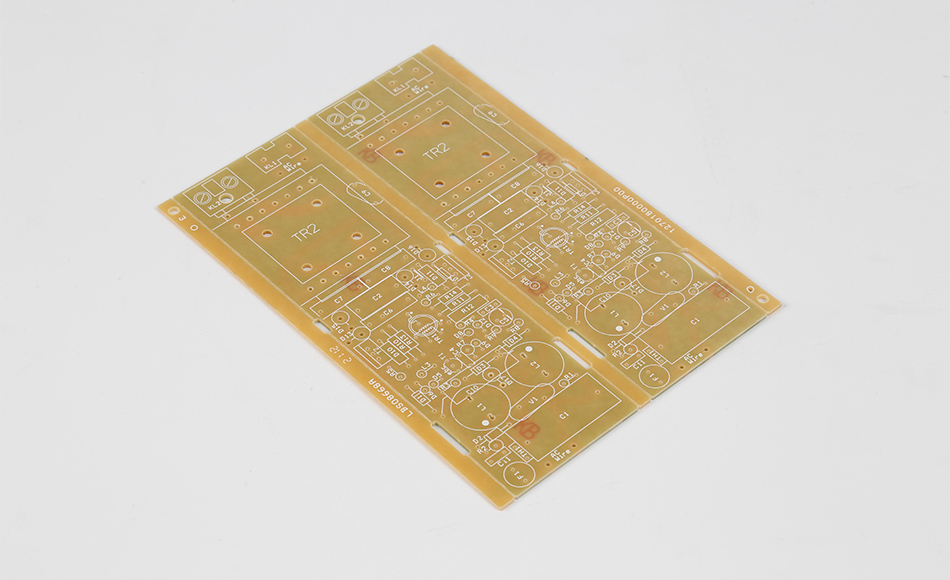
ST210G’s baseline performance improves with targeted design. Below are actionable strategies for engineers.
Component placement and trace routing directly impact heat management. Key strategies:
Component Heat Segregation: Group high-power components (IGBTs, rectifiers) in "thermal zones" near cooling solutions, separating them from low-power parts (microcontrollers). In a 1.2kW servo drive, place motor drivers on one edge (adjacent to heat sinks) and control ICs on the opposite edge—connected by wide traces. This cuts heat transfer between high/low-power components by 60% vs. random placement.
Copper Trace Sizing: Use 2oz–4oz wide traces for high-current paths. A 3mm-wide, 4oz trace carries 30A with 50% less resistive heat than a 1mm-wide, 1oz trace. Route traces along in-plane heat spread directions to minimize resistance.
Avoiding Thermal Bottlenecks: Keep high-power components away from PCB corners/edges (heat traps) and near copper plane centers. Use thermal simulation tools (e.g., ANSYS Icepak) to map flow and identify bottlenecks—reducing runaway risks by 35% in dense designs.
Example: A 1.5kW EV charger designer used simulation to place a 150W IGBT near a large copper plane and route traces to a passive heat sink. IGBT temperature dropped 22°C vs. initial layouts, staying below runaway thresholds.
Optimizing through-plane heat transfer (PCB to cooling solutions) is critical for runaway prevention:
High-Density Thermal Via Arrays: Use 0.3–0.5mm filled vias (conductive epoxy/solder) under high-power components. A 5x5 array under a 200W component cuts temperature by 25% vs. 3x3 arrays. Space vias ≤1.5mm for continuous thermal paths to the PCB’s bottom layer.
Direct Heat Sink Attachment: Bond heat sinks to ST210G’s copper planes (not just component packages) using thermal adhesive/grease (<0.5°C/W resistance). Leveraging in-plane conductivity spreads heat across the sink, increasing cooling efficiency by 30% vs. package-only attachment.
Thermal Interface Material (TIM) Selection: Use phase-change TIMs for ST210G-heat sink interfaces. These conform to surface irregularities, reducing thermal resistance by 25% vs. traditional greases—critical for high-power components (e.g., 300W IGBTs) where small resistance reductions prevent runaway.
Case Study: A 1.2kW servo drive designer used 0.4mm filled via arrays under 200W motor drivers and phase-change TIMs for heat sinks. Driver temperatures dropped 30°C, enabling 15-minute boost modes without overheating.
For ultra-high-power-density designs (≥1.5kW), ST210G pairs with active cooling to prevent runaway:
Fan-PCB Alignment: Position fans to direct airflow over ST210G’s copper planes and high-power components. Use computational fluid dynamics (CFD) tools to optimize placement—e.g., a 2kW EV charger with dual fans aligned to copper planes cut max temperature by 18°C vs. random placement.
Thermally Controlled Fans: Connect fans to ST210G-mounted temperature sensors. Fans run at low speed (energy-saving) when cool and high speed when hot. A 1.5kW solar inverter using this setup reduced fan energy use by 40% while keeping temperatures safe.
Liquid Cooling Compatibility: For 2kW+ systems (e.g., industrial converters), integrate ST210G with liquid cooling plates. ST210G’s flat surface ensures uniform plate contact, and its mechanical strength supports cooling system weight. A 3kW converter using this setup maintained temperatures <100°C (well below 140°C shutdown).
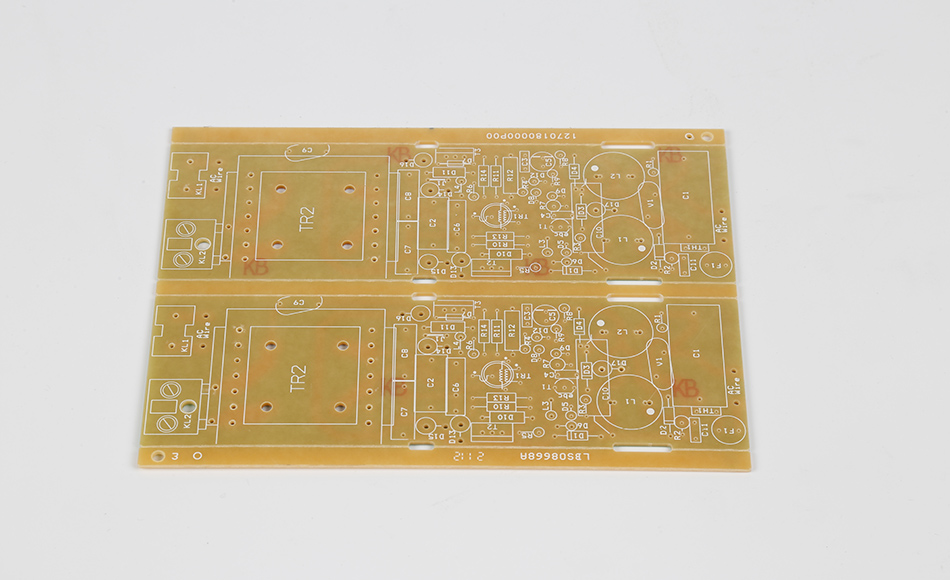
As high-power-density electronics evolve (electrification, miniaturization), ST210G adapts to meet new thermal challenges. Below are key trends:
Next-gen systems (3kW EV fast chargers, 2.5kW industrial converters) need better heat dissipation. Manufacturers optimize ST210G:
Nanocomposite Fillers: Adding boron nitride nanoparticles boosts in-plane conductivity to 1.2 W/m·K (50% higher than current ST210G). Early prototypes cut 3kW component hot spots by 15°C, enabling compact ultra-high-power designs.
Graphene-Enhanced Matrices: Integrating graphene into ST210G’s epoxy matrix increases through-plane conductivity to 0.6 W/m·K (50% higher). This eliminates the need for metal-core PCBs in 2.5kW systems, reducing cost by 25%.
Wearable industrial sensors and mini EV BMS require smaller PCBs. ST210G evolves:
Thin-Core Variants: 0.4–0.6mm thin-core ST210G retains 90% thermal performance of 1.6mm versions. A mini EV BMS using 0.5mm ST210G cut PCB size by 40% while maintaining heat management.
Embedded Thermal Structures: Integrate thin copper heat spreaders into ST210G layers during lamination. These act as internal cooling paths, reducing PCB height by 50% for wearable sensors (e.g., 50W industrial temperature monitors).
Sustainability is a priority—ST210G reduces environmental impact:
Recycled Fillers: 30% recycled aluminum nitride (from end-of-life ceramics) cuts carbon footprint by 25% without performance loss.
Bio-Based Epoxy: Plant-derived epoxy (castor oil) replaces petroleum-based resin. Retains thermal stability and adds biodegradability, aligning with EU’s Circular Economy Action Plan.
Energy-Efficient Manufacturing: ST210G production uses solar-powered curing ovens, reducing energy use by 30% vs. standard CEM3 manufacturing.
IoT and AI enable proactive heat control—ST210G integrates with these technologies:
Embedded Sensor Networks: Thin-film temperature sensors embedded in ST210G layers monitor heat across the PCB (not just component spots). Data feeds to AI systems that predict thermal issues—e.g., a 2kW charger using this setup prevented 90% of potential runaway events via early interventions.
Digital Twin Integration: Create digital twins of ST210G-based systems to simulate thermal behavior under varying loads. A renewable energy firm used digital twins to optimize inverter layouts, cutting thermal failures by 40% before physical prototyping.
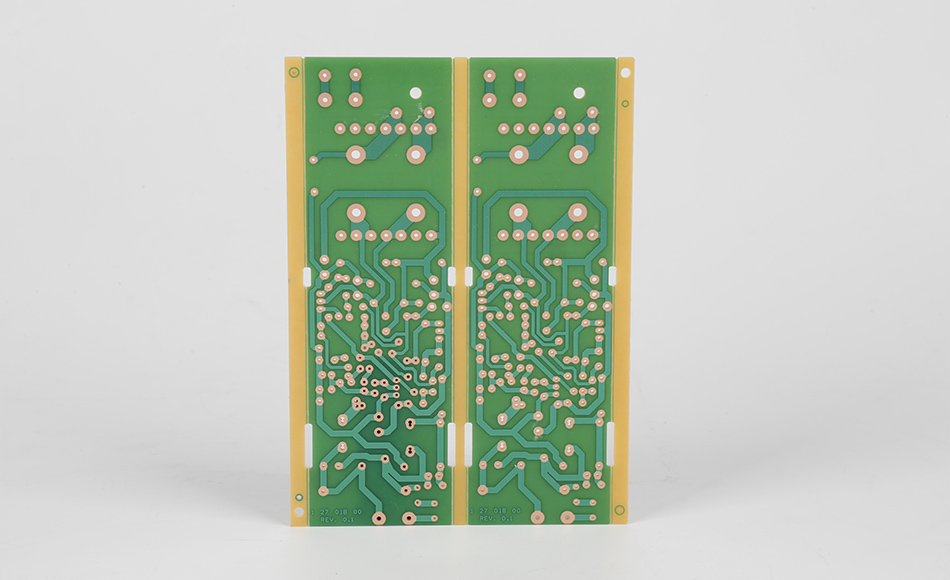
ST210G High Thermal CEM3 PCB redefines thermal management for high-power-density electronics, turning heat from a limiting factor into a manageable challenge. By breaking thermal runaway cycles, resisting material degradation, and preventing cascading failures, it delivers reliability that standard CEM3 PCBs cannot match—all while retaining cost-effectiveness for mid-tier applications.
Real-world success stories—from compact EV chargers to industrial servo drives—prove its impact: reduced downtime, longer system lifespans, and enabling smaller, more powerful designs. Targeted design strategies—thermal layout optimization, via/sink integration, active cooling pairing—unlock its full potential, ensuring even ultra-high-power systems stay safe from runaway.
As electronics grow smaller and more powerful, ST210G evolves: higher conductivity for ultra-high-power designs, miniaturized variants for micro-systems, and sustainable formulations for eco-friendly needs. For engineers building the next generation of high-power-density electronics, ST210G High Thermal CEM3 PCB is not just a substrate—it is a foundational solution for reliable, efficient, and future-ready systems.
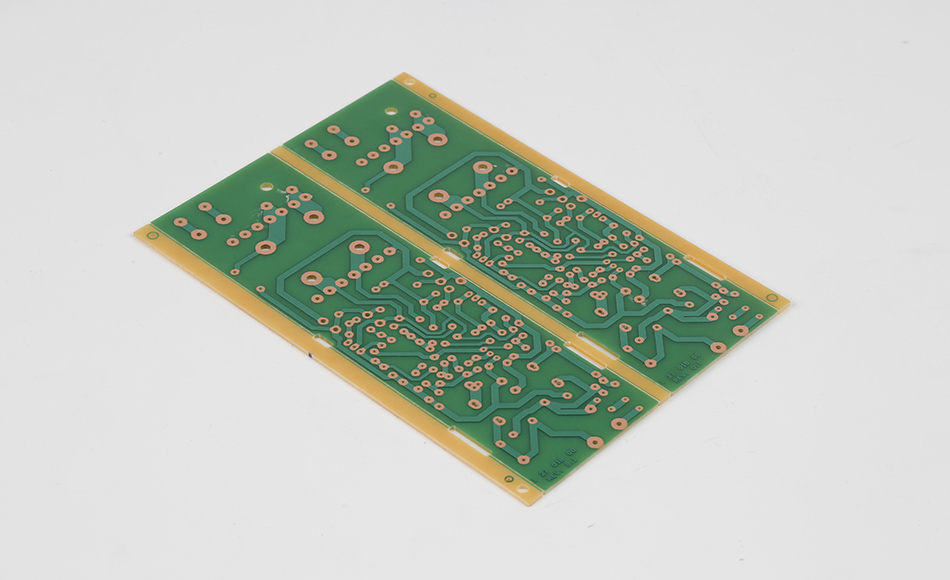

Got project ready to assembly? Contact us: info@apollopcb.com



 Whatsapp 0086 755 29438407
 Mail info@apollopcb.com
 Tel 0086 755 29438407


ABOUT US

PRODUCTS
TECHNOLOGY
KNOWLEDGE CENTRE
CULTURE
NEWS
We're not around but we still want to hear from you! Leave us a note:

Leave Message to APOLLOPCB
