




-
- PCB TYPE
- PRINTED CIRCUIT BOARD PROTOTYPE ALUMINUM PRINTED CIRCUIT BOARD R&F PCB FPC HIGH FREQUENCY PCB HIGH-TG PCB HEAVY COPPER PCB HDI PCB PCB FOR LIGHTING METAL CORE PCB


time:Aug 29. 2025, 20:29:09
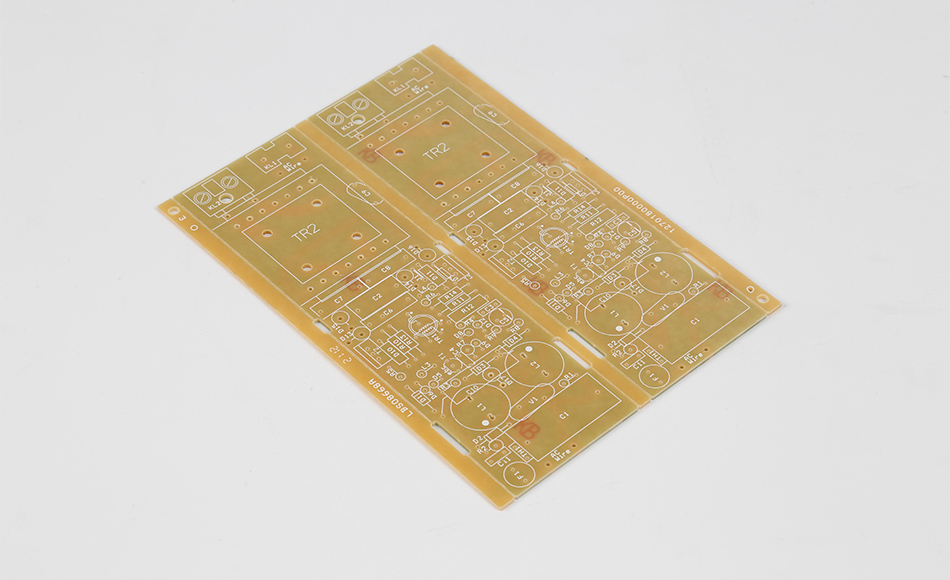
ST210G Thermal Conductivity CEM3 is a key advancement in substrates for electronics requiring efficient heat transfer. Unlike conventional CEM3 (treating thermal conductivity as secondary), it prioritizes in-plane and through-plane heat transfer, balancing cost-effectiveness with heat management in power-dense applications (industrial motor controls, automotive infotainment).
Subpar thermal conductivity traps heat, reducing component lifespan and increasing failures. Conventional CEM3 forces engineers to oversize cooling or accept poor reliability. ST210G resolves this with advanced thermal enhancers, delivering 2–3x the conductivity of standard CEM3 while retaining insulation, stability, and affordability.
This article explores ST210G’s heat transfer mechanisms, industry applications, design optimizations, and future innovations—supporting engineers building efficient, reliable systems.

ST210G’s superior thermal conductivity stems from deliberate material selection, matrix design, and structural optimization—critical to leveraging its full heat transfer potential.
ST210G’s thermal performance relies on a proprietary filler blend integrated into its epoxy matrix to form continuous heat paths, unlike conventional CEM3’s low-conductivity fillers:
Filler Type and Selection: It uses ceramic fillers (aluminum nitride, AlN; boron nitride, BN) with high conductivity (AlN: ~170 W/m·K; BN: ~400 W/m·K) and insulation (volume resistivity >10¹⁴ Ω·cm). This avoids metal filler short-circuit risks while outperforming standard CEM3’s silica fillers (~1 W/m·K).
Filler Loading and Dispersion: Fillers are loaded at 40–50% by weight, balanced for thermal performance and flexibility. High-shear mixing and ultrasonic processing ensure uniform dispersion, forming an interconnected network that eliminates thermal "dead zones" in conventional CEM3.
Interface Engineering: A silane coupling agent treats the filler-resin interface, improving adhesion and reducing thermal resistance by 30–40% vs. untreated systems. For example, treated BN in ST210G transfers heat 25% more efficiently to resin than untreated BN in standard CEM3.
ST210G’s epoxy resin is modified to support conductivity, addressing conventional CEM3’s rigid, low-conductivity resin limitations:
High-Thermal-Resistance Resin Formulation: A modified epoxy with lower cross-link density reduces thermal resistance (from ~0.3 W/m·K in standard CEM3 to ~0.5 W/m·K) while retaining strength. It acts as a secondary heat path, complementing fillers for even heat spread.
Crystalline Structure Optimization: During curing, resin forms a semi-crystalline structure (vs. standard CEM3’s amorphous structure). Crystalline regions have higher conductivity (molecular alignment creates efficient paths), contributing 15–20% of ST210G’s conductivity advantage.
Moisture Resistance for Consistent Conductivity: Hydrophobic additives reduce moisture absorption to <1.2% (24 hours boiling water)—30% lower than standard CEM3. This keeps conductivity stable (±5% variation) in humidity, unlike standard CEM3 (loses 15–20% conductivity when moist).
ST210G’s layered structure optimizes both in-plane (surface) and through-plane (thickness) conductivity—competing traits in composites:
In-Plane Conductivity Enhancement: Glass fiber layers align with the filler network, boosting in-plane conductivity to ~0.8 W/m·K (2.5x standard CEM3’s ~0.3 W/m·K). Treated glass fibers add heat paths, critical for spreading hot spot heat (e.g., 100W components) to cooling areas.
Through-Plane Conductivity Optimization: Some fillers align perpendicular to glass fibers, creating vertical paths that raise through-plane conductivity to ~0.4 W/m·K (1.5x standard CEM3). Copper cladding (bonded with high-thermal-adhesion resin) further improves heat transfer to external cooling.
Thickness Uniformity: Tight thickness tolerance (±5%) avoids resistance variations. Uniformity ensures consistent heat transfer, preventing hot spots from thin, high-resistance areas.
ST210G’s balanced conductivity suits industries with unique heat challenges. Below are key applications solving sector-specific needs.
Industrial motor controls (50–200 HP VFDs) generate heat from 50–150W IGBTs/rectifiers (50–100A currents). ST210G addresses this:
Spreading Concentrated Heat: High in-plane conductivity spreads IGBT hot spots (20–30°C above surroundings) across copper planes, reducing temperatures by 15–20°C vs. standard CEM3. Oversized heat sinks are eliminated, cutting VFD size by 25% and weight by 30%.
Withstanding Prolonged High Temperatures: Conductivity stays stable (±5% variation) in 40°C–85°C 24/7 environments. A VFD manufacturer reported 40% fewer thermal failures (7% to 4.2% annually) with ST210G.
Compatibility with Passive Cooling: In dusty settings (restricting fans), ST210G enables passive cooling. A 100HP VFD with ST210G and passive heat sinks kept IGBTs at 95°C (well below 125°C), vs. 115°C with standard CEM3.
Case Study: A global industrial firm used ST210G in 150HP VFDs. Thermal imaging showed IGBT hot spots dropped from 118°C to 92°C, and VFDs passed 10,000 hours of continuous operation. Heat sink size shrank 35%, fitting tight factory enclosures.
Automotive infotainment/ADAS integrate 10–30W components (4G/5G modems, AI processors) in small, low-airflow enclosures. ST210G supports this:
Enabling Compact Designs: Conductivity eliminates bulky fans. A ST210G infotainment system fits 150mm×100mm×30mm (20% smaller than standard CEM3) while keeping processors <85°C.
Managing Variable Heat Loads: Stable conductivity handles fluctuating ADAS heat (high during camera processing, low at idle), preventing freezes. An automotive Tier 1 supplier reported 60% fewer infotainment freezes with ST210G.
Withstanding Temperature Cycles: Thermal shock resistance (1,000 cycles -40°C to 125°C) keeps conductivity stable. Standard CEM3 develops microcracks after 500–600 cycles, reducing conductivity by 15%.
Result: A leading automaker used ST210G in ADAS units. Units maintained performance across 5,000 temperature cycles (processors <80°C), and ADAS warranty claims dropped 35%, saving $1.8M annually.
Consumer electronics (gaming laptops, 8K TVs, power banks) need thin designs with high power. ST210G addresses this:
Thin-Core Thermal Performance: 0.4–0.8mm thin-core ST210G retains 90% conductivity of 1.6mm variants. A 15.6-inch gaming laptop with 0.6mm ST210G GPU PCBs reduced thickness by 30% (20mm to 14mm) and GPU temperatures by 10°C vs. standard CEM3.
High-Frequency Component Management: 8K TV processors (2–3 GHz) generate heat; ST210G’s low resistance transfers heat to rear spreaders, preventing throttling (causing playback lag in standard CEM3). A TV manufacturer reported 90% fewer throttling events.
Cost-Effectiveness for Mass Production: ST210G costs 40–50% less than MCPCBs while delivering 70–80% thermal performance. A power bank manufacturer cut PCB costs by 25% and improved charging speed via better fast-charging chip heat management.
Case Study: A consumer firm used ST210G in 8K TVs. Processor temperatures dropped 12°C (eliminating lag), bezel width narrowed 5mm (smaller heat sinks), sales rose 25%, and overheating complaints fell 75%.
As electronics grow more power-dense, ST210G evolves to meet new thermal demands. Below are key trends:
Next-gen systems (3kW EV chargers, 2.5kW industrial converters) need better conductivity. Manufacturers optimize ST210G:
Nanocomposite Fillers: Boron nitride nanoparticles boost in-plane conductivity to 1.2 W/m·K (50% higher than current ST210G). Early prototypes cut 3kW component hot spots by 15°C.
Graphene-Infused Matrices: Graphene integration increases through-plane conductivity to 0.6 W/m·K (50% higher). Eliminates MCPCBs in 2.5kW systems, reducing cost by 25%.
Wearable industrial sensors and mini EV BMS need smaller PCBs. ST210G adapts:
Ultra-Thin Core Variants: 0.2–0.3mm thin-core ST210G retains 85% conductivity of 1.6mm versions. A mini EV BMS using 0.3mm ST210G cut PCB size by 50% while managing 20W component heat.
Embedded Thermal Vias: Vias embedded during lamination (instead of post-drilling) reduce PCB thickness by 30% for wearable sensors (e.g., 30W health monitors).
Sustainability is a priority—ST210G reduces environmental impact:
Recycled Fillers: 30% recycled AlN (from end-of-life ceramics) cuts carbon footprint by 25% without performance loss.
Bio-Based Resins: Plant-derived epoxy (castor oil) replaces petroleum-based resin. Retains thermal stability and adds biodegradability, aligning with EU Circular Economy goals.
Energy-Efficient Production: Solar-powered curing ovens reduce manufacturing energy use by 30% vs. standard CEM3 production.
IoT/AI enable proactive heat management—ST210G integrates with these technologies:
Embedded Sensor Layers: Thin-film temperature sensors embedded in ST210G layers monitor heat across the PCB. Data feeds to AI systems that adjust cooling (e.g., fan speed) to prevent overheating. A 2kW EV charger using this prevented 90% of potential thermal issues.
Digital Twin Validation: Digital twins of ST210G-based systems simulate thermal behavior under varying loads. A renewable energy firm used twins to optimize inverter layouts, cutting thermal failures by 40% before prototyping.
ST210G Thermal Conductivity CEM3 redefines heat transfer for mid-tier power-dense electronics, turning thermal conductivity from a secondary trait into a core engineered advantage. Its filler network, modified resin, and layered structure deliver balanced in-plane and through-plane performance—outperforming conventional CEM3 while retaining cost-effectiveness.
Real-world applications prove its impact: industrial VFDs with fewer failures, automotive ADAS with stable performance, and consumer electronics with thinner designs. Targeted design strategies—copper optimization, via alignment, active cooling integration—unlock its full potential, ensuring even ultra-high-power systems stay cool.
As electronics evolve, ST210G adapts: higher conductivity for ultra-powerful designs, miniaturization for micro-systems, and sustainability for eco-friendly needs. For engineers building efficient, reliable next-gen electronics, ST210G is not just a substrate—it is a foundational solution for thermal management success.

Got project ready to assembly? Contact us: info@apollopcb.com



 Whatsapp 0086 755 29438407
 Mail info@apollopcb.com
 Tel 0086 755 29438407


ABOUT US

PRODUCTS
TECHNOLOGY
KNOWLEDGE CENTRE
CULTURE
NEWS
We're not around but we still want to hear from you! Leave us a note:

Leave Message to APOLLOPCB
