




-
- PCB TYPE
- PRINTED CIRCUIT BOARD PROTOTYPE ALUMINUM PRINTED CIRCUIT BOARD R&F PCB FPC HIGH FREQUENCY PCB HIGH-TG PCB HEAVY COPPER PCB HDI PCB PCB FOR LIGHTING METAL CORE PCB


time:Feb 03. 2026, 10:37:36
In the rapidly evolving electronics landscape, the foundation of every high-performance device is its printed circuit board. For procurement managers and hardware engineers at industrial factories, the challenge lies in selecting from the leading flex & fr4 pcb makers to find a partner that balances technical precision with supply chain stability.
Whether you are developing aerospace-grade sensors that require the durability of an American PCB manufacturer or scaling consumer electronics that demand the cost-efficiency of a top-tier Chinese PCB manufacturer, understanding the material science and manufacturing nuances is critical to your product's success.
| Feature | Flexible PCB (FPC) | Rigid FR4 PCB | Your Project Benefit |
| Layer Count | 1 - 10 Layers | 1 - 32 Layers | Supports ultra-complex designs |
| Base Material | Polyimide (PI) / PET | Standard / High-Tg FR4 | Matches thermal & flex needs |
| Min. Trace/Space | 2 mil / 2 mil | 3 mil / 3 mil | High-density interconnect (HDI) |
| Bending Radius | Dynamic / Static Flex | N/A (Rigid) | Perfect for compact enclosures |
| Stiffeners | FR4, PI, Stainless Steel | N/A | Targeted mechanical support |
| Surface Finish | ENIG, OSP, Imm. Tin | HASL-LF, ENIG, ENEPIG | Optimized for any assembly type |
Today’s market is divided into several specialized sectors. A general PCB manufacturing company might handle standard rigid boards, but industrial-scale projects often require a hybrid approach involving both FR4 PCB and flex PCB manufacturer capabilities.
For factory-scale buyers, the "best" manufacturer isn't always the one with the lowest price. It is the one that offers:
Material Traceability: Ensuring FR4 PCB material meets exact flame-retardant standards.
Engineering Support: Providing DFM (Design for Manufacturability) to reduce production errors.
Turnkey Solutions: Acting as a comprehensive PCB assembly supplier to manage the entire Bill of Materials (BOM).
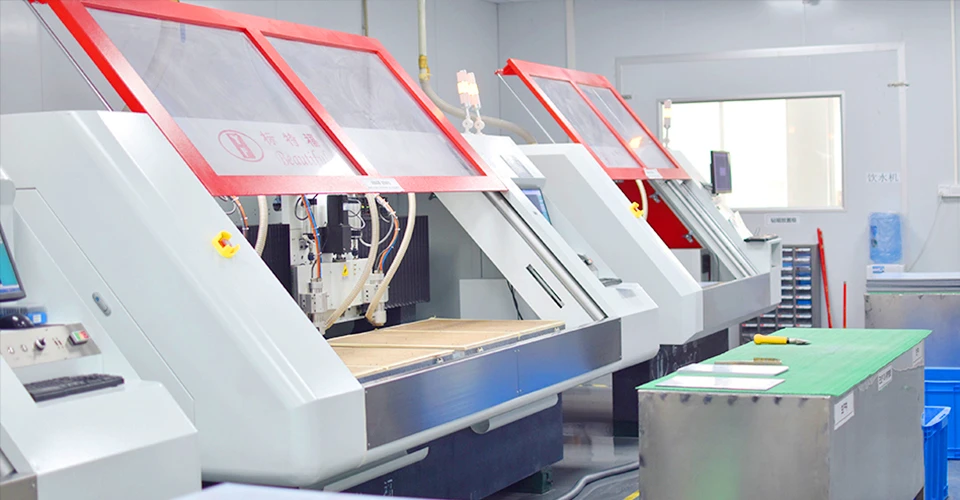
Many Tier-1 defense and medical firms prioritize an American PCB manufacturer due to ITAR regulations and proximity. American PCB manufacturers are renowned for their high-mix, low-volume expertise and stringent quality certifications.
However, for many global factories, the transition from a proto PCB manufacturer in the USA to mass production often leads back to Asia. Why?
Vertical Integration: Leading makers in China, like ApolloPCB, integrate flexible PCB manufacturing and assembly under one roof, reducing transit risks.
Advanced Tooling: Huge investments in laser direct imaging (LDI) and vacuum lamination allow for cheap PCB manufacturing without sacrificing the precision of high-density interconnect (HDI) designs.
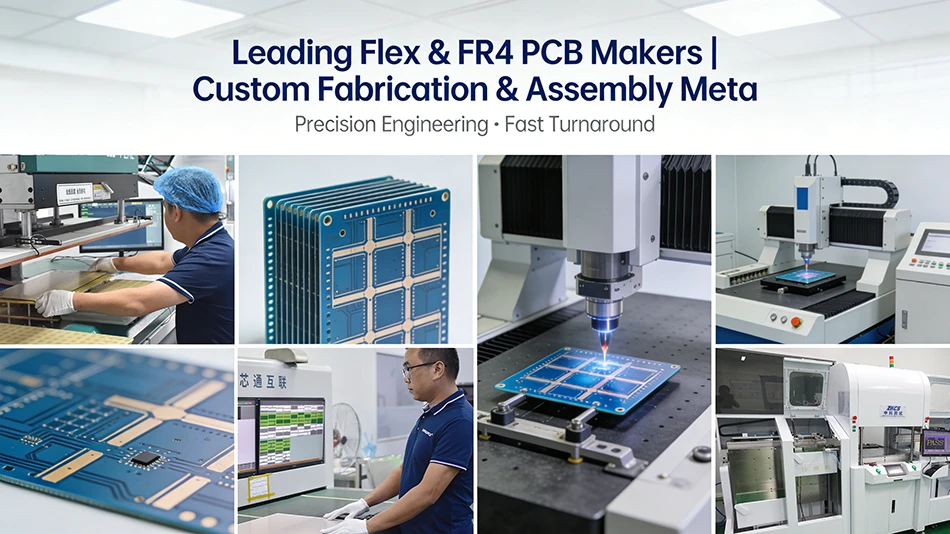
The FR4 PCB remains the undisputed king of rigid boards. Its popularity stems from the PCB FR4 material, a composite of woven fiberglass cloth with an epoxy resin binder that is flame resistant (NEMA grade FR-4).
Mechanical Strength: Supports heavy components and multi-layer stackups.
Cost-Efficiency: Ideal for cheap PCB manufacturing at scale.
Dielectric Stability: Provides consistent performance across a wide range of environmental conditions.
For industrial controllers and power supplies, a rigid FR4 PCB provides the structural integrity needed to withstand vibration and thermal stress.
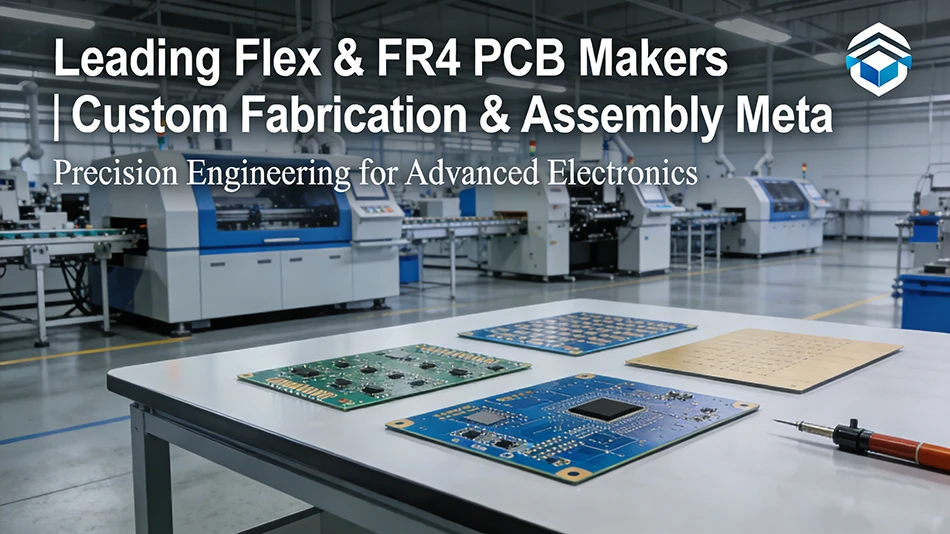
As devices become smaller and more ergonomically complex, the demand for flexible circuit board manufacturers has surged. A flex PCB manufacturer utilizes polyimide substrates rather than rigid fiberglass, allowing the board to bend and fold into tight spaces.
Dynamic Flex: Designed for constant movement (like a laptop hinge).
Static Flex: Designed to be bent once to fit into a specific enclosure (fit-to-form).
When searching for a flex PCB assembly partner, factories must ensure the provider can handle the delicate nature of flexible substrates during the SMT (Surface Mount Technology) process, which often requires specialized carriers and stiffeners.
For modern factories, the "board-only" model is becoming obsolete. Sourcing from a combined fabrication and PCB assembly supplier offers significant advantages:
No Liability Gaps: If a board fails, the assembly house cannot blame the fabricator.
Optimized Procurement: A turnkey supplier manages component sourcing, protecting you from counterfeit parts.
Speed to Market: Transitioning from a flexible PCB prototype to a populated assembly happens within days, not weeks.
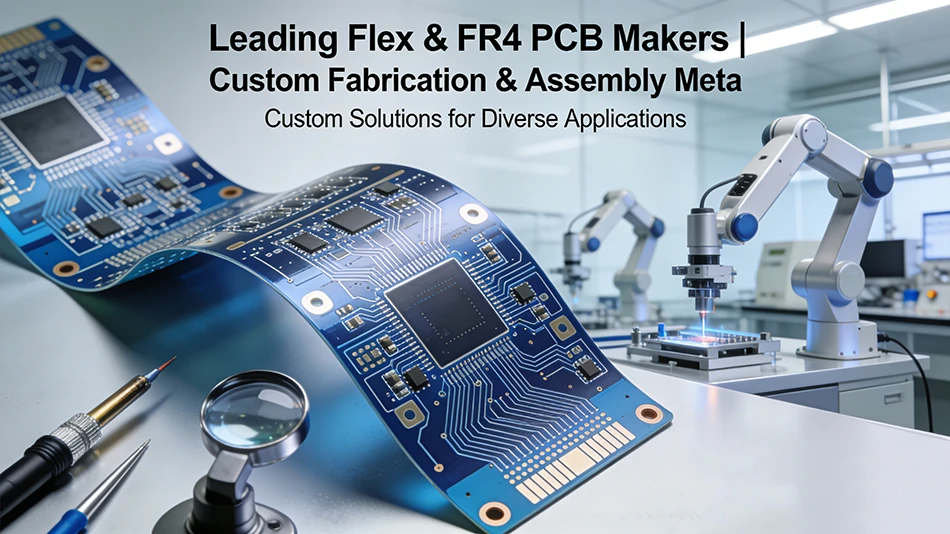
Before committing to 10,000 units, every project requires a proto PCB manufacturer. In the prototyping phase, the focus is on speed and accuracy.
Minimizing Bend Radius: Testing the mechanical limits of the polyimide.
Impedance Control: Ensuring high-speed signals aren't lost across the flexible trace.
Stiffener Placement: Determining where rigid materials (like FR4 or Aluminum) are needed to support heavy components on a flex circuit.
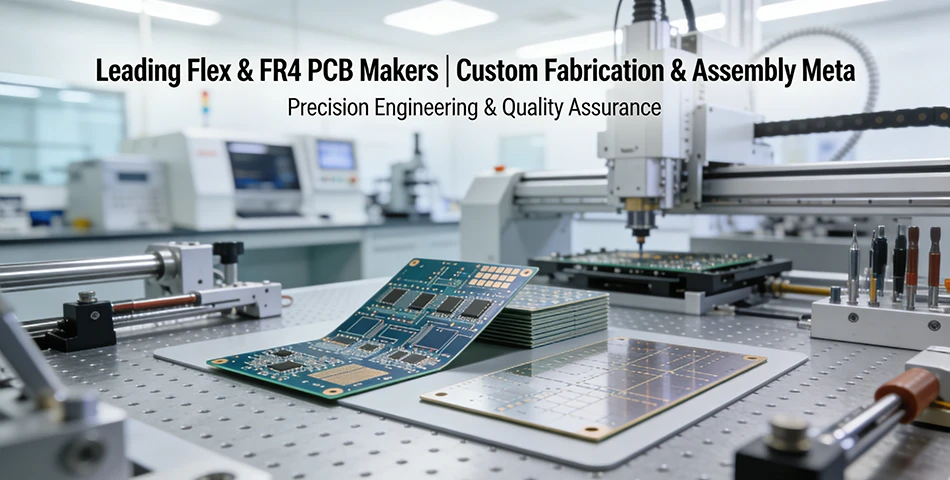
Whether you choose a local American PCB manufacturer or a global giant, the quality benchmarks remain the same:
AOI (Automated Optical Inspection): Scans for trace defects.
E-Test (Electrical Test): Confirms 100% continuity.
Micro-sectioning: Destructive testing to verify plating thickness in through-holes.
A Flexible Circuit board (Flex PCB) is a patterned arrangement of printed circuitry and components that utilizes flexible base material (typically polyimide) with or without flexible coverlays. They are designed to save space, reduce weight, and replace bulky wiring harnesses.
The primary difference is the substrate. FR4 PCB uses a rigid fiberglass base, whereas Flex PCBs use polyimide. Rigid boards are cheaper and easier to assemble in bulk, while Flex boards allow for 3D packaging and survive in high-vibration environments where rigid boards might crack.
As a versatile flex PCB manufacturer, we produce:
Single-Sided Flex: One copper layer.
Double-Sided Flex: Plated through-holes for higher density.
Multi-Layer Flex: 3+ layers for complex signal routing.
Rigid-Flex: A hybrid board where rigid sections (FR4) and flexible sections are integrated into a single unit.
The benefits include significant weight reduction (up to 75%), space-saving, improved thermal dissipation, and increased reliability in applications involving movement or extreme vibration.
While American PCB manufacturers offer local proximity, ApolloPCB provides factory-direct pricing and an integrated supply chain in the heart of the world’s electronics hub. We combine the agility of a proto PCB manufacturer with the high-volume capacity of a global PCB manufacturing company.
When evaluating leading flex & fr4 pcb makers, your goal is to find a partner that minimizes risk. By understanding the material properties of PCB FR4 material and the mechanical limits of flexible circuit board manufacturers, you can make an informed decision that secures your production line for years to come.
[Contact ApolloPCB Today for a Complete Cost Analysis and Turnkey Quote]
Related News
PCB Thickness & Assembly Experts | Turnkey FR4 & Aluminum Flex Solutions
Top PCB Manufacturers Near You | High-Quality PCB & PCBA Solutions
Countersink Holes in FR4 PCB: Engineering Principles for Precision Assembly
FR4 PCB Material Specification Sheet: A Comprehensive Technical Guide
FR4 PCB Thermal Conductivity 0.3W/mK: Balancing Heat Management and Practicality in Electronics
Countersink Holes in FR4 PCB: Engineering Principles for Precision Assembly
FR4 PCB Manufacturer for Prototype and Mass Production
Sinkpad PCB Manufacturer: Core Capabilities, Benchmark Cases, and Selection Criteria

Got project ready to assembly? Contact us: info@apollopcb.com



 Whatsapp 0086 755 29438407
 Mail info@apollopcb.com
 Tel 0086 755 29438407


ABOUT US

PRODUCTS
TECHNOLOGY
KNOWLEDGE CENTRE
CULTURE
NEWS
We're not around but we still want to hear from you! Leave us a note:

Leave Message to APOLLOPCB
