




-
- PCB TYPE
- PRINTED CIRCUIT BOARD PROTOTYPE ALUMINUM PRINTED CIRCUIT BOARD R&F PCB FPC HIGH FREQUENCY PCB HIGH-TG PCB HEAVY COPPER PCB HDI PCB PCB FOR LIGHTING METAL CORE PCB


time:Jan 26. 2026, 11:41:08
As industrial electronics continue to evolve toward higher reliability and tighter cost control, selecting the right printed circuit board material has become a strategic decision for manufacturers and OEMs. From industrial control systems to power management modules, the substrate material directly impacts performance, manufacturability, and total production cost. Among various PCB materials, CEM3 PCB stands out as a practical and cost-effective solution for a wide range of industrial electronics applications.
This article provides an in-depth overview of CEM3 PCB material properties, thermal and mechanical advantages, precision machining capabilities, and why working with an experienced CEM3 PCB manufacturer is essential for long-term reliability.
| Capability | Specification | B2B Value Propostion |
| Layer Count | 1 - 4 Layers | Optimized for power and general control systems |
| CTI (Tracking Index) | PLC 0 (600V+) | Extreme safety for high-voltage power adapters |
| Board Thickness | 0.4 mm - 3.2 mm | Flexible designs for slim appliances or rigid controls |
| Max Board Size | Up to 600mm x 500mm | Supports large LED panels and industrial modules |
| Processing Speed | 20% faster than FR-4 | Faster lead times for high-volume orders |
| Surface Finishes | HASL-LF, ENIG, OSP | Professional protection for diverse assembly needs |
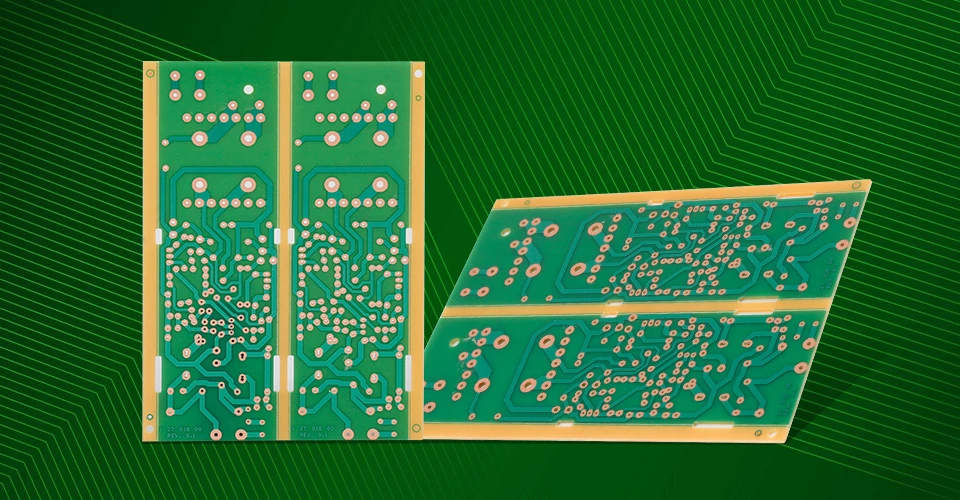
CEM3 PCB is a composite epoxy laminate material composed of a non-woven glass fiber core combined with woven glass cloth layers. This structure delivers a balance between mechanical strength, electrical insulation, and affordability. CEM3 is most commonly used in double-sided PCB designs, making it a popular alternative to FR-4 in cost-sensitive industrial applications.
Key material characteristics of CEM3 PCB include:
Stable mechanical performance for industrial assembly
Good electrical insulation properties
Smooth surface suitable for soldering and SMT processes
Lower material and processing costs compared to FR-4
These features make CEM3 PCB particularly attractive for industrial customers seeking reliable performance without unnecessary material expense.
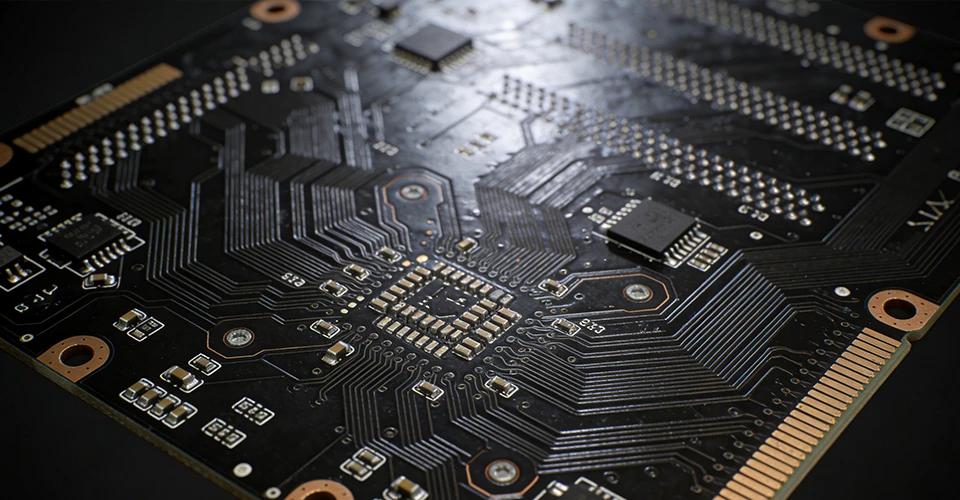
Thermal performance is a growing concern in industrial electronics, especially in power-dense designs. Standard CEM3 PCB materials provide adequate heat resistance for moderate-power applications. However, when additional heat dissipation is required, High Thermal Conductivity CEM-3 materials offer a practical upgrade.
By incorporating thermally conductive fillers into the epoxy resin system, High Thermal Conductivity CEM-3 improves heat transfer efficiency, reduces localized hotspots, and enhances long-term component reliability. This makes it suitable for:
LED driver boards
Power control modules
Industrial power supply units
Compared with metal core PCBs, high thermal conductivity CEM-3 delivers better cost control while still improving thermal performance, making it an excellent middle-ground solution.
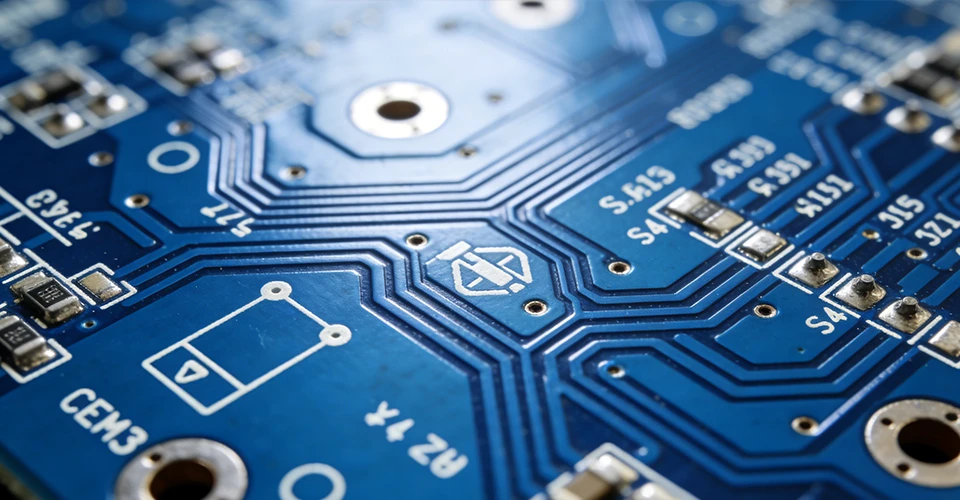
Thermal cycling is unavoidable in industrial environments. Repeated heating and cooling can cause expansion and contraction, leading to solder joint stress and material fatigue. This is where low CTE CEM3 plays a crucial role.
CTE (Coefficient of Thermal Expansion) measures how much a material expands with temperature changes. low CTE CEM3 materials are engineered to reduce dimensional variation, improving:
Solder joint reliability
Mechanical stability
Resistance to thermal fatigue
For industrial electronics exposed to temperature fluctuations—such as outdoor equipment or factory automation systems—low CTE CEM3 significantly enhances long-term reliability.
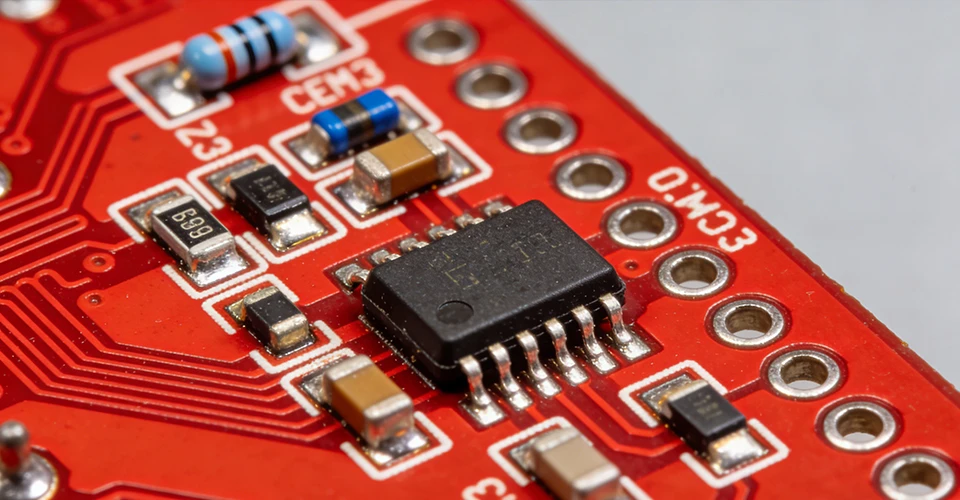
Industrial PCB assemblies often require secure mechanical mounting. This makes precision machining features such as Countersink Holes in CEM3 PCB and Counterbore holes in CEM3 PCB essential.
Countersink holes allow flat-head screws to sit flush with the PCB surface. This improves:
Assembly compactness
Mechanical stability
Safety in enclosed systems
Counterbore holes create recessed cylindrical cavities for bolts or spacers. They are commonly used when:
Strong mechanical fixation is required
PCB alignment must be precise
Additional clearance is needed for fasteners
Producing countersink and counterbore holes in CEM3 PCB requires controlled drilling parameters to avoid fiber breakout, resin smearing, or delamination. An experienced manufacturer ensures machining precision while preserving material integrity.
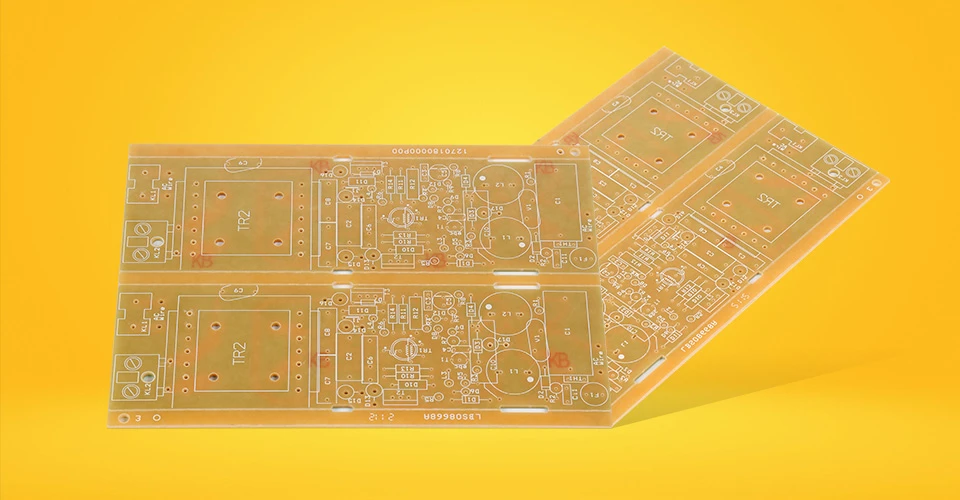
Thanks to its balanced performance and cost efficiency, CEM3 PCB is widely used across industrial and commercial electronics, including:
Industrial control and automation boards
Power distribution and relay boards
Consumer industrial electronics
Lighting control systems
Embedded control modules
These applications benefit from CEM3’s manufacturability, stable electrical performance, and compatibility with both through-hole and SMT assembly processes.
Selecting a qualified CEM3 PCB manufacturer is critical for ensuring consistent quality and on-time delivery. A reliable manufacturing partner should offer:
Strict quality control and inspection processes
Support for High Thermal Conductivity CEM-3 and low CTE CEM3 materials
Advanced machining for countersink and counterbore holes
Engineering support from prototype to mass production
Working with an experienced manufacturer helps industrial customers minimize risk, control cost, and improve overall product reliability.

CEM3 PCB offers a strong balance between cost and performance. It provides reliable electrical insulation, stable mechanical strength, and compatibility with industrial assembly processes. Compared with higher-grade laminates, CEM3 PCB helps manufacturers reduce production costs while maintaining consistent quality.
High Thermal Conductivity CEM-3 is recommended when heat dissipation becomes a concern, such as in power electronics or LED driver applications. It improves thermal management without the high cost of metal core PCBs, making it ideal for cost-sensitive industrial designs.
low CTE CEM3 reduces dimensional expansion during thermal cycling, which helps prevent solder joint cracking and mechanical stress. This is especially important in industrial environments with frequent temperature changes, ensuring long-term reliability.
Yes. Countersink Holes in CEM3 PCB allow screws to sit flush with the board surface, improving mechanical stability and reducing space requirements. Proper machining ensures clean edges and maintains the structural integrity of the CEM3 PCB.
Counterbore holes in CEM3 PCB create a flat-bottom recess for fasteners, while Countersink Holes in CEM3 PCB create an angled recess for flush mounting screws. Both features enhance mechanical fixation and are commonly used in industrial electronics requiring robust mounting solutions.
Related Articles
PCB Manufacturer: Transition from Prototype to Mass Production | ApolloPCB
Top PCB Manufacturers Near You | High-Quality PCB & PCBA Solutions
Manufacturing PCB: The Professional Guide to Industrial-Grade Fabrication and Sourcing
Reliable PCB Manufacturer in China | High-Quality PCB & PCBA Solutions
Reliable PCB Manufacturer for Global Electronics Production
CEM3-09HT Thermal Conductive PCB: Dual Advantages of High-Temp Resilience and Heat Dissipation
Countersink Holes in CEM3 PCB: Ensuring Structural Integrity and Assembly Precision
KB7150T High TG CEM3 Circuit Board: Reliable Performance for High-Temperature Electronics
HA30 CEM3 Thermal Conductivity Specs: Guiding Heat Management in Mid-Tier Electronics
LED Light CEM3 Circuit Board: Key Attributes and Applications in Modern Lighting Systems
Low CTE CEM3 Material for High Stability: Ensuring Precision in Dynamic Operational Environments
ST210G CEM3 Thermal Performance: Optimizing Heat Management for High-Power Electronic Devices
Thermal CEM3: Balancing Heat Management and Practicality in Electronics Substrates

Got project ready to assembly? Contact us: info@apollopcb.com



 Whatsapp 0086 755 29438407
 Mail info@apollopcb.com
 Tel 0086 755 29438407


ABOUT US

PRODUCTS
TECHNOLOGY
KNOWLEDGE CENTRE
CULTURE
NEWS
We're not around but we still want to hear from you! Leave us a note:

Leave Message to APOLLOPCB
