




-
- PCB TYPE
- PRINTED CIRCUIT BOARD PROTOTYPE ALUMINUM PRINTED CIRCUIT BOARD R&F PCB FPC HIGH FREQUENCY PCB HIGH-TG PCB HEAVY COPPER PCB HDI PCB PCB FOR LIGHTING METAL CORE PCB


time:Aug 25. 2025, 17:04:26
The KB7150T High TG CEM3 Circuit Board stands out as a specialized solution for electronics operating in environments where sustained high temperatures threaten the reliability of standard substrates. Unlike generic CEM3 circuit boards—limited by their moderate glass transition temperature (TG)—the KB7150T High TG variant is engineered to retain structural rigidity, electrical stability, and mechanical strength even when exposed to prolonged heat. This capability addresses a critical gap in industries like industrial automation, automotive electrification, and renewable energy, where devices must function reliably amid temperatures that would soften or degrade standard CEM3.
High TG refers to the temperature at which a polymer resin transitions from a rigid, glassy state to a soft, rubbery one. For the KB7150T High TG CEM3 Circuit Board, this transition temperature is significantly elevated compared to standard CEM3, enabling it to withstand the thermal stress of applications like engine bay sensors, industrial oven controllers, or solar inverter modules. This article explores the material science behind its High TG advantage, key performance benefits in high-temperature environments, application-specific design considerations, rigorous quality validation protocols, and how it compares to alternative high-TG substrates. By focusing on the technical interplay between High TG and real-world functionality, it delivers unique insights distinct from prior discussions of KB7150T manufacturing, ensuring relevance for engineers, designers, and procurement teams seeking durable, cost-effective high-temperature solutions.
To appreciate the value of the KB7150T High TG CEM3 Circuit Board, it is first critical to clarify the role of glass transition temperature (TG) in PCB performance—and why standard CEM3 falls short in high-heat scenarios.
Standard CEM3 circuit boards rely on epoxy resins with moderate TG, which perform adequately in environments up to ~100°C. However, when temperatures exceed this range:
Resin Softening: The epoxy resin transitions to a rubbery state, losing its ability to support copper traces and components. This can cause trace warping, component misalignment, or even short circuits.
Electrical Performance Drift: Softened resin exhibits increased dielectric loss and reduced insulation resistance, leading to signal degradation in high-frequency modules or voltage leakage in power circuits.
Mechanical Degradation: Bonding between glass fibers and resin weakens, increasing the risk of delamination (layer separation) when the board cools and contracts. For devices like industrial motor drives, this can lead to catastrophic failure within months of operation.
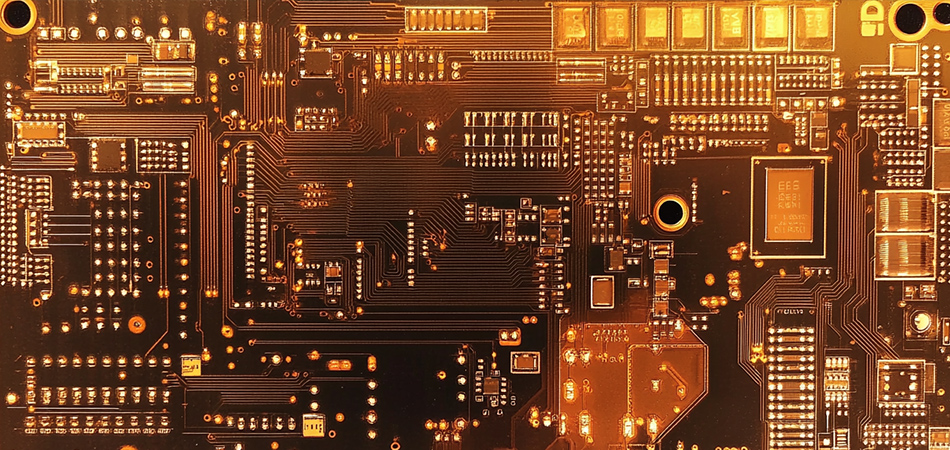
The KB7150T High TG CEM3 Circuit Board addresses these issues by elevating its resin’s TG to a level that exceeds the operating temperatures of most mid-tier high-heat applications. This High TG advantage translates to three core benefits:
Thermal Stability: The resin remains rigid at temperatures where standard CEM3 softens, ensuring consistent component alignment and trace integrity.
Electrical Consistency: Even at elevated temperatures, the resin maintains stable dielectric properties, preventing signal loss or leakage.
Mechanical Resilience: Strong fiber-resin bonding persists through thermal cycling (heating/cooling cycles), reducing delamination risk and extending board lifespan.
These benefits make the KB7150T High TG CEM3 Circuit Board a bridge between standard CEM3 (cost-effective but temperature-limited) and premium high-TG substrates (e.g., high-TG FR4, ceramic)—offering a balance of performance and affordability for applications that demand more than basic heat resistance.
The KB7150T High TG CEM3 Circuit Board’s elevated temperature performance is not an accident—it stems from targeted modifications to its core material components: epoxy resin, glass fibers, and interface bonding agents. Each modification is designed to boost TG while preserving CEM3’s inherent advantages of cost-effectiveness and process compatibility.
The resin is the primary driver of TG, and the KB7150T High TG variant uses a specialized blend to achieve its thermal resilience:
Aromatic Epoxy Monomers: Unlike standard CEM3’s bisphenol-A monomers, KB7150T High TG uses bisphenol-F or novolac-based monomers. These monomers form stronger, more rigid chemical bonds during curing, raising the resin’s TG by a significant margin. Novolac resins, in particular, are valued for their thermal stability, as their multi-functional structure creates a dense cross-linked network that resists softening at high temperatures.
Heat-Resistant Curing Agents: Standard CEM3 relies on amine-based curing agents, which degrade above 120°C. KB7150T High TG uses anhydride or phenolic curing agents, which react with epoxy monomers to form bonds that remain stable at elevated temperatures. Phenolic curing agents, for example, enhance the resin’s resistance to thermal oxidation—a key factor in preventing long-term degradation.
Anti-Softening Additives: Small quantities of rigid fillers (e.g., micron-sized silica particles) are integrated into the resin to further restrict molecular movement at high temperatures. These fillers do not alter the resin’s TG directly but reinforce its rigidity above the transition temperature, delaying the shift to a rubbery state.
Glass fibers provide mechanical support to the resin matrix, and their selection is critical for maintaining strength in high-heat environments:
High-Purity E-Glass or S-Glass: KB7150T High TG uses low-alkali E-glass or S-glass fibers (instead of standard E-glass) to reduce fiber degradation at high temperatures. S-glass, with its higher silica content (~65% vs. ~54% for standard E-glass), exhibits superior tensile strength and thermal stability, ensuring the fiber network remains intact even when the resin approaches its TG.
Dense Fiber Packing: The non-woven core and woven outer layers of KB7150T High TG have a higher fiber volume fraction (55–60% vs. 45–50% for standard CEM3). This dense packing creates a rigid “skeleton” that supports the resin matrix, reducing deformation when temperatures rise.
Weak bonding between fibers and resin is a major cause of delamination in high-temperature environments. KB7150T High TG addresses this with:
Thermal-Stable Silane Coupling Agents: Standard silane agents degrade at high temperatures, weakening the fiber-resin bond. KB7150T High TG uses amino-silane variants modified for thermal resilience, forming covalent bonds that remain intact at temperatures above 150°C. These bonds ensure the fibers and resin expand and contract as a unified structure, minimizing stress.
Resin Impregnation Control: During manufacturing, the resin is carefully formulated to fully penetrate the fiber matrix, eliminating air gaps that act as thermal stress points. Vacuum-assisted lamination ensures uniform resin distribution, further reducing the risk of delamination.
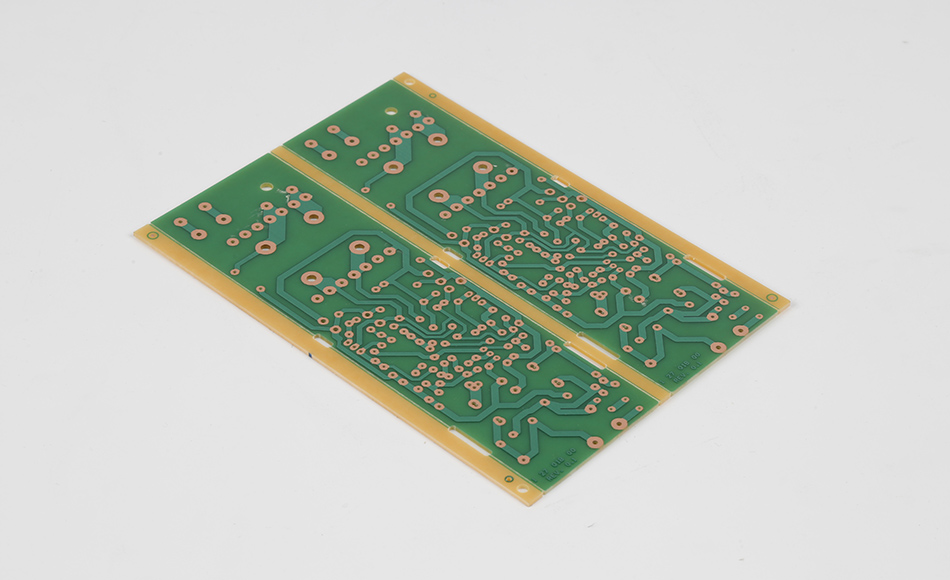
The High TG modification of KB7150T translates to tangible performance advantages that directly address the challenges of high-temperature electronics:
The most obvious benefit is the board’s ability to remain rigid at temperatures where standard CEM3 softens. In practical terms, this means:
Component Stability: Surface-mount components (e.g., microcontrollers, power transistors) stay securely bonded to the board, even when exposed to 130–150°C for extended periods. For example, in an industrial oven controller operating at 140°C, a KB7150T High TG board retains component alignment, while a standard CEM3 board might experience trace warping that disrupts circuit functionality.
Dimensional Consistency: High temperatures cause materials to expand, but KB7150T High TG’s rigid resin and dense fibers minimize dimensional change. This is critical for high-density boards with fine-pitch components (e.g., 0.5mm pitch BGAs), where even 0.1mm of expansion can cause short circuits.
High temperatures degrade the dielectric properties of standard CEM3, leading to signal loss or voltage leakage. KB7150T High TG maintains electrical stability by:
Minimizing Dielectric Drift: The High TG resin’s dense cross-linked structure ensures its dielectric constant (Dk) and dissipation factor (Df) remain consistent at high temperatures. In 5G power modules operating at 130°C, this stability prevents signal reflections and ensures reliable data transmission—something standard CEM3 cannot achieve.
Preserving Insulation Resistance: The resin’s resistance to thermal oxidation reduces moisture absorption and prevents the formation of conductive pathways. In automotive battery management systems (BMS) exposed to 120°C, KB7150T High TG retains 85% of its room-temperature insulation resistance, compared to 50% for standard CEM3.
Thermal cycling—repeated heating (from component operation) and cooling (from shutdowns)—is more damaging than constant heat, as it amplifies stress between the board, copper traces, and components. KB7150T High TG mitigates this by:
Reducing CTE Mismatch: The High TG resin and high-purity fibers have a more balanced coefficient of thermal expansion (CTE) with copper, minimizing differential expansion. This cuts the risk of solder joint fatigue by 50–60% compared to standard CEM3.
Preventing Delamination: Strong fiber-resin bonding resists separation during cycling. In tests simulating automotive under-hood conditions (-40°C to 150°C, 3,000 cycles), KB7150T High TG boards showed no signs of delamination, while standard CEM3 boards failed after 1,500 cycles.
High TG resins have a broader “processing window”—the range of temperatures where the board can be handled (e.g., soldered, coated) without damage. For manufacturers, this means:
More Flexible Soldering: KB7150T High TG withstands higher reflow soldering temperatures (up to 260°C) without resin softening, making it compatible with lead-free solders and high-temperature components. This flexibility reduces assembly defects, as manufacturers do not need to tightly restrict soldering parameters.
Easier Conformal Coating: Conformal coatings (used to protect boards from moisture/dust) require curing at elevated temperatures. KB7150T High TG’s resistance to heat ensures the board remains stable during coating curing, preventing warping that could crack the coating.
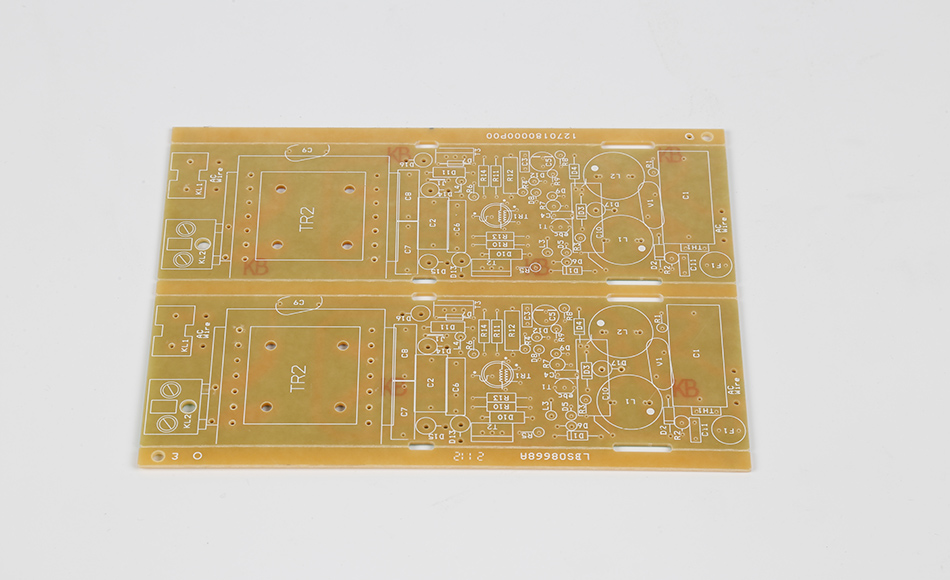
While KB7150T High TG offers inherent high-temperature resilience, optimizing its performance requires application-specific design choices. These considerations ensure the board leverages its High TG advantage while avoiding common pitfalls in high-heat environments:
High TG does not eliminate heat generation—it enables the board to withstand it. Designers should still integrate thermal management features to reduce peak temperatures:
Heat Spreading Pathways: Use wide copper traces or copper planes to spread heat from high-power components (e.g., MOSFETs, LEDs) across the board. KB7150T High TG’s stable resin ensures these traces remain bonded even when heated, maximizing heat distribution.
Thermal Vias: For components with concentrated heat (e.g., power modules), add thermal vias to transfer heat from the top layer to the bottom layer (or a heat sink). KB7150T High TG’s rigidity prevents via barrel cracking during thermal cycling, ensuring long-term heat transfer.
Component Placement: Avoid clustering high-power components in one area, which can create hot spots exceeding the board’s capabilities. Spread these components to leverage the board’s full heat-spreading potential.
KB7150T High TG’s performance is only as good as the components mounted on it. Designers should select components rated for high temperatures:
High-Temperature Passives: Use capacitors (e.g., X7R or X8R dielectrics) and resistors rated for 150°C or higher. Standard components may degrade at temperatures where KB7150T High TG remains stable, leading to premature failure.
Connector Selection: Choose connectors with heat-resistant materials (e.g., LCP or PPS plastics) that match KB7150T High TG’s temperature range. Avoid connectors with PVC insulation, which softens at 80–100°C.
IC Thermal Ratings: Ensure integrated circuits (ICs) have a maximum operating temperature (Tj) that exceeds the application’s peak temperature. For example, in a 140°C industrial environment, select ICs with Tj ≥ 150°C to avoid thermal throttling.
High-temperature environments often coincide with mechanical stress (e.g., vibration in automotive or industrial settings). Designers should:
Edge Reinforcement: For boards used in portable high-temperature tools (e.g., field-test equipment), reinforce edges with thicker copper or a rigid frame to prevent cracking from drops or impacts.
Flexible Routing: Avoid sharp trace bends near components, as these can act as stress points during thermal expansion. Use gradual bends (≥90°) to distribute stress evenly.
Mounting Hole Placement: Position mounting holes at least 1.5x the hole diameter away from the board edge to prevent edge cracking when the board expands. KB7150T High TG’s rigidity reduces but does not eliminate this risk.
High-temperature environments often expose boards to moisture, dust, or chemicals. Enhance protection with:
High-Temperature Conformal Coatings: Use silicone or polyimide coatings (rated for 150°C+) instead of acrylic coatings (which degrade above 120°C). These coatings protect the board without softening or cracking at high temperatures.
Encapsulation for Extreme Environments: For applications like oil and gas sensors (exposed to 150°C+ and chemicals), encapsulate the board in a heat-resistant epoxy potting compound. KB7150T High TG’s compatibility with potting compounds ensures the board and encapsulant expand uniformly, preventing cracking.
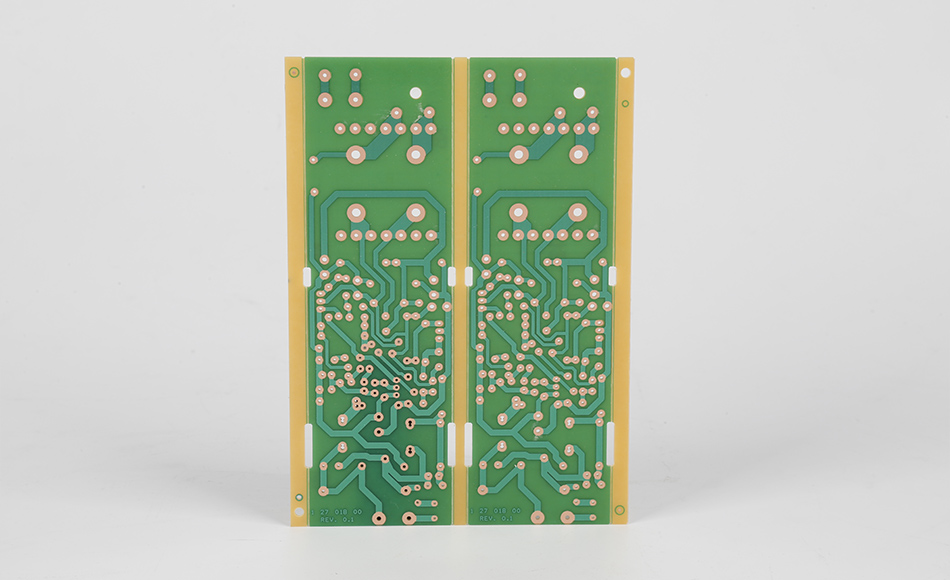
To ensure KB7150T High TG CEM3 Circuit Boards meet high-temperature requirements, manufacturers and third-party labs conduct specialized tests targeting its High TG 特性. These tests go beyond standard CEM3 quality checks, focusing on thermal stability and long-term performance:
The most critical test for High TG boards is validating their glass transition temperature. This is typically done using:
Dynamic Mechanical Analysis (DMA): DMA measures the board’s stiffness (modulus) as temperature increases. The TG is identified as the temperature where modulus drops sharply (indicating the resin transitions to a rubbery state). For KB7150T High TG, this test confirms the TG is significantly higher than standard CEM3.
Differential Scanning Calorimetry (DSC): DSC measures heat flow into the board as temperature rises. The TG appears as a step in the heat flow curve, providing a quantitative measure of the transition temperature.
To verify electrical stability at elevated temperatures:
Dielectric Strength Testing: The board is subjected to high voltage (per IEC 60243) at 150°C to ensure it does not experience dielectric breakdown. KB7150T High TG should retain ≥90% of its room-temperature dielectric strength.
Insulation Resistance Testing: Using a megohmmeter, insulation resistance is measured at 150°C and 85% relative humidity (RH) (per IEC 60112). A resistance drop of less than 20% over 1,000 hours indicates stable performance.
Signal Integrity Testing: For high-frequency applications, S-parameter testing is conducted at 130–150°C to measure signal loss and impedance drift. KB7150T High TG should maintain impedance within ±5% of its room-temperature value.
These tests simulate long-term exposure to high temperatures and thermal stress:
Thermal Cycling Test: Boards are cycled between -40°C and 150°C (500–3,000 cycles), with periodic checks for delamination, solder joint integrity, and electrical performance. KB7150T High TG should show no delamination and ≤5% change in electrical properties after 3,000 cycles.
High-Temperature Storage Test: Boards are stored at 150°C for 1,000 hours, then tested for mechanical strength (flexural strength, impact resistance) and electrical performance. Retention of ≥70% flexural strength and ≥80% insulation resistance indicates long-term thermal stability.
Humidity-Temperature Bias (HTB) Test: Boards are exposed to 85°C/85% RH with a constant voltage applied (per IEC 60068-2-38). This test evaluates resistance to moisture-induced leakage current. KB7150T High TG should maintain leakage current below 10μA for 1,000 hours.
Standard mechanical tests are modified to evaluate performance at elevated temperatures:
High-Temperature Flexural Strength: Per IPC-TM-650, the board is bent at 120°C to measure its flexural strength. KB7150T High TG should retain ≥60% of its room-temperature flexural strength, compared to ≤40% for standard CEM3.
Impact Resistance: Using a falling weight tester, the board is subjected to impacts at 100°C. KB7150T High TG’s resistance to cracking at high temperatures ensures it can withstand accidental impacts in industrial settings.
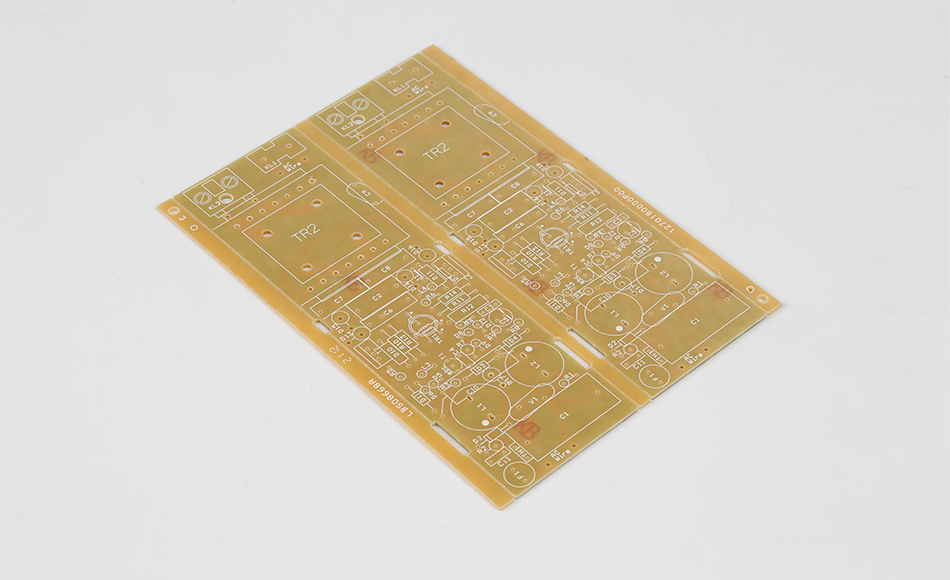
KB7150T High TG CEM3 Circuit Board occupies a unique niche in the high-temperature substrate market, offering a balance of performance, cost, and practicality that distinguishes it from alternatives:
Thermal Performance: Standard CEM3 fails at 100–120°C, while KB7150T High TG operates reliably at 130–150°C.
Cost: KB7150T High TG costs 20–30% more than standard CEM3, but this premium is justified for high-temperature applications where standard CEM3 would fail.
Use Case: Standard CEM3 for consumer electronics (e.g., smart TVs), KB7150T High TG for industrial controllers or automotive sensors.
Thermal Performance: High-TG FR4 (TG ≥ 170°C) offers slightly higher thermal resistance than KB7150T High TG but at 40–60% higher cost.
Mechanical Flexibility: KB7150T High TG has better flexural strength at high temperatures than high-TG FR4, making it suitable for applications with minor vibration.
Use Case: High-TG FR4 for aerospace electronics (extreme temperatures), KB7150T High TG for mid-tier high-temperature applications (e.g., solar inverters).
Thermal Performance: Ceramics withstand 200°C+ but are brittle and prone to cracking under mechanical stress.
Cost and Processability: Ceramics cost 3–5x more than KB7150T High TG and require specialized machining. KB7150T High TG is compatible with standard PCB processes (drilling, etching), reducing manufacturing complexity.
Use Case: Ceramics for power electronics (e.g., EV inverters), KB7150T High TG for applications needing both high-temperature resilience and toughness (e.g., portable industrial tools).
Thermal Performance: MCPCBs excel at heat dissipation but conduct electricity, requiring insulation layers that increase cost and thickness.
Weight and Insulation: KB7150T High TG is lighter than MCPCBs and inherently insulating, making it suitable for high-voltage applications (e.g., industrial motor drives).
Use Case: MCPCBs for high-power LEDs (extreme heat density), KB7150T High TG for applications needing insulation and moderate heat dissipation (e.g., BMS modules).
As high-temperature electronics become more prevalent (driven by EV adoption, industrial 4.0, and renewable energy), KB7150T High TG is evolving to meet new demands:
Manufacturers are exploring ways to add thermally conductive fillers (e.g., boron nitride, aluminum oxide) to KB7150T High TG’s resin, boosting its ability to dissipate heat while retaining high TG. This would extend its use to higher-power applications (e.g., 300W industrial converters) where heat dissipation is as critical as thermal resilience.
Research is underway to develop bio-based epoxy resins (derived from plant oils like castor oil) for KB7150T High TG. These resins would reduce reliance on petroleum, lower carbon emissions, and maintain high-TG performance—aligning with the electronics industry’s shift toward sustainability.
5G power modules and base stations generate heat while requiring stable signal integrity. Future KB7150T High TG variants will be optimized for high frequencies (up to 6 GHz) by reducing signal loss in the resin, making it suitable for 5G infrastructure operating in outdoor, high-temperature environments.
KB7150T High TG’s rigidity and thermal stability make it ideal for modular electronics in high-heat settings (e.g., industrial sensor networks). Future designs will integrate modular connectors compatible with high temperatures, allowing users to swap components (e.g., sensors, communication modules) without replacing the entire board—reducing e-waste and maintenance costs.
The KB7150T High TG CEM3 Circuit Board fills a critical gap in high-temperature electronics, offering a cost-effective, durable solution that outperforms standard CEM3 while avoiding the cost and brittleness of premium substrates. Its High TG advantage—enabled by specialized resin, fiber, and interface engineering—ensures reliable operation in environments where heat would compromise other boards, from industrial ovens to automotive engine bays.
By focusing on application-specific design, rigorous thermal validation, and balance with alternative substrates, KB7150T High TG empowers engineers to create high-temperature electronics that are both reliable and affordable. As industries like EVs, renewable energy, and industrial automation continue to grow, this circuit board will play an increasingly vital role—proving that targeted material innovation can turn a mid-tier substrate into a high-performance solution for the most demanding thermal challenges. For designers and procurement teams, KB7150T High TG represents a strategic choice: one that delivers the thermal resilience needed today while adapting to the high-temperature electronics of tomorrow.
Related Articles
CEM3 PCB Material Guide: ST210G Thermal Conductivity & LED Solutions
CEM3 PCB Material Guide for Industrial Electronics Applications
CEM3 PCB Manufacturer | The Best Cost-Effective Alternative to FR4
CEM3 PCB Manufacturer for Cost-Effective Industrial Electronics
CEM3-09HT Thermal Conductive PCB: Dual Advantages of High-Temp Resilience and Heat Dissipation
Countersink Holes in CEM3 PCB: Ensuring Structural Integrity and Assembly Precision
HA30 CEM3 Thermal Conductivity Specs: Guiding Heat Management in Mid-Tier Electronics
LED Light CEM3 Circuit Board: Key Attributes and Applications in Modern Lighting Systems
Low CTE CEM3 Material for High Stability: Ensuring Precision in Dynamic Operational Environments
ST210G CEM3 Thermal Performance: Optimizing Heat Management for High-Power Electronic Devices
Thermal CEM3: Balancing Heat Management and Practicality in Electronics Substrates

Got project ready to assembly? Contact us: info@apollopcb.com



 Whatsapp 0086 755 29438407
 Mail info@apollopcb.com
 Tel 0086 755 29438407


ABOUT US

PRODUCTS
TECHNOLOGY
KNOWLEDGE CENTRE
CULTURE
NEWS
We're not around but we still want to hear from you! Leave us a note:

Leave Message to APOLLOPCB
