




-
- PCB TYPE
- PRINTED CIRCUIT BOARD PROTOTYPE ALUMINUM PRINTED CIRCUIT BOARD R&F PCB FPC HIGH FREQUENCY PCB HIGH-TG PCB HEAVY COPPER PCB HDI PCB PCB FOR LIGHTING METAL CORE PCB


time:Aug 22. 2025, 14:05:46
Low CTE CEM3 Material for High Stability has emerged as a cornerstone in electronics design, where maintaining dimensional integrity under varying temperatures is critical to performance. Unlike standard CEM3, which undergoes noticeable expansion and contraction with thermal changes, low CTE variants are engineered to resist such dimensional shifts, providing a stable platform for components that demand precision alignment. This stability is not merely a matter of durability; it directly impacts the functionality of devices ranging from high-frequency communication systems to precision measurement tools, where even micrometer-level shifts can disrupt signal integrity or measurement accuracy. This article explores how low CTE CEM3 material achieves high stability, its unique mechanisms for resisting thermal stress, applications in precision-critical industries, and advancements that further enhance its performance.
Stability in electronics refers to a material’s ability to maintain its physical and electrical properties across environmental fluctuations, with temperature being the most impactful variable. Low CTE CEM3 material addresses this by minimizing the dimensional changes that cause instability:
The coefficient of thermal expansion (CTE) measures how much a material expands or contracts per degree temperature change. Low CTE CEM3 material typically exhibits a CTE 50–70% lower than standard CEM3, meaning it changes size minimally even when temperatures swing by 100°C or more. This consistency ensures that components soldered to the PCB—such as resistors, capacitors, or integrated circuits—remain in their intended positions, preserving electrical connections and mechanical alignment. In high-density PCBs with components spaced just 0.3mm apart, this stability prevents short circuits caused by shifting parts.
Thermal expansion doesn’t just affect physical alignment; it can also alter the electrical properties of the PCB. As standard CEM3 expands, copper traces stretch, increasing their resistance and signal delay. Low CTE CEM3 material’s minimal expansion keeps copper traces stable, maintaining consistent impedance and signal integrity. This is critical in high-frequency applications like 5G transceivers, where signal delays or reflections can degrade communication quality.
Repeated temperature cycles cause cumulative stress in PCBs, a phenomenon known as thermal fatigue. Standard CEM3’s higher CTE leads to more frequent and severe stress, weakening solder joints and fiber-resin bonds over time. Low CTE CEM3 material reduces this stress by aligning its expansion rate with that of components and copper, extending the time between failures. In devices like medical imaging equipment, which operate continuously and undergo minimal downtime, this fatigue resistance is essential for reliable performance.
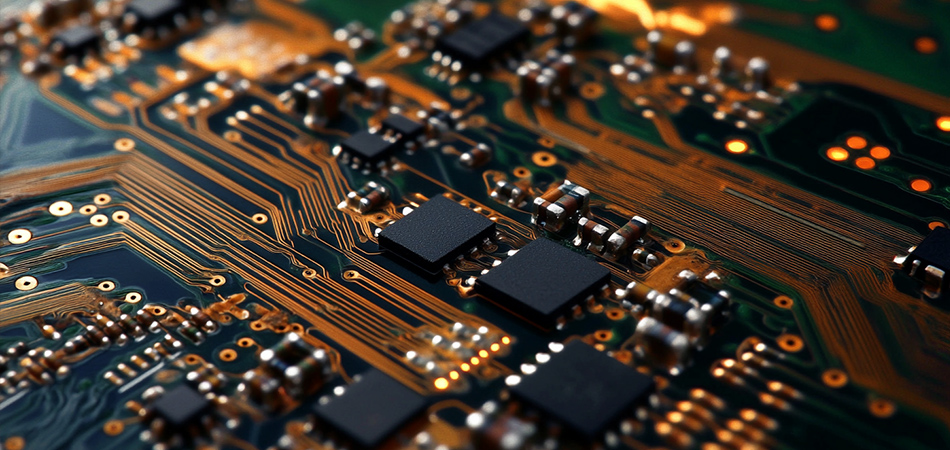
The high stability of low CTE CEM3 material stems from a combination of material selection, structural design, and manufacturing precision, each working to minimize thermal expansion:
The glass fibers in low CTE CEM3 are carefully chosen for their low intrinsic CTE and high modulus (stiffness). Quartz fibers, for example, have a near-zero CTE and resist deformation even at high temperatures, acting as a rigid framework within the material. These fibers are distributed evenly throughout the non-woven core and woven outer layers, creating a network that restricts the epoxy resin’s natural tendency to expand when heated. The fiber volume fraction is also optimized—typically 50–60% of the material’s total volume—to maximize this restraining effect without compromising flexibility.
The epoxy resin in low CTE CEM3 is formulated to reduce its expansion and enhance its bond with fibers. This involves:
Incorporating Inorganic Fillers: Fine particles of materials like fused silica or boron nitride—both with very low CTEs—are mixed into the resin. These fillers occupy space, limiting the resin’s ability to expand, and create a more rigid matrix. Fused silica, in particular, has a CTE of ~0.5 ppm/°C, significantly lowering the resin’s overall expansion.
Cross-Link Optimization: The resin’s molecular structure is modified to form a highly cross-linked network, which resists expansion by limiting molecular movement. This is achieved by adjusting the ratio of epoxy monomers to curing agents, ensuring a dense, stable structure that retains its shape under heat.
Even with low-CTE fibers and resin, poor bonding between the two can undermine stability. Low CTE CEM3 material uses advanced coupling agents—such as organosilanes—to create chemical bonds between fibers and resin. These agents form a bridge at the interface, ensuring that the fibers and resin expand and contract as a single unit rather than independently. This eliminates “micro-gaps” that form between poorly bonded fibers and resin in standard CEM3, which act as stress concentrators and reduce stability.
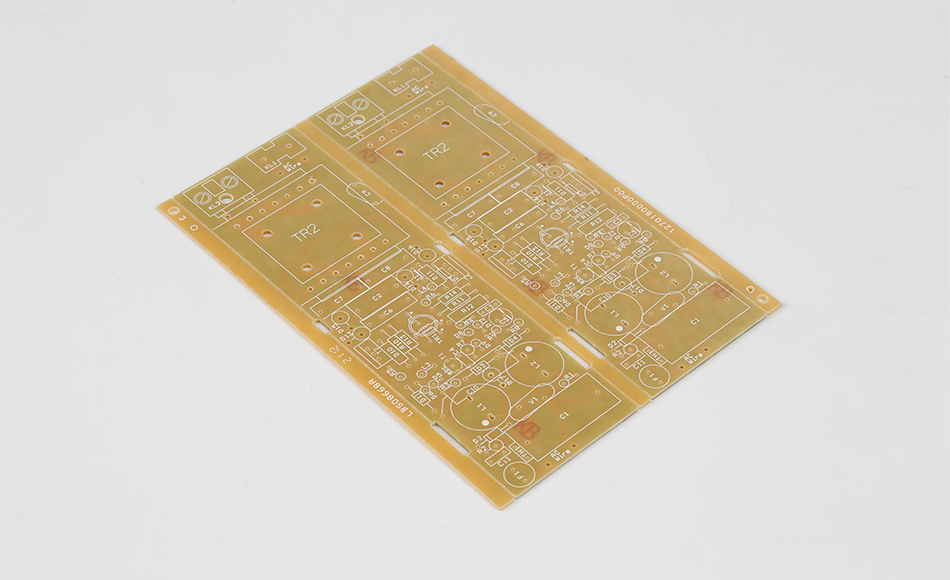
Producing low CTE CEM3 material with consistent high stability requires precise control over every manufacturing step, from material preparation to final curing:
To ensure uniform stability across the PCB, fibers must be evenly distributed and aligned to resist expansion in all directions. Automated layup systems arrange woven fibers in both warp and weft orientations, creating a balanced structure that minimizes directional differences in CTE. For the non-woven core, air-laid processes are used to disperse fibers randomly, preventing localized weaknesses where expansion could concentrate. This uniform fiber distribution ensures that no area of the PCB is more prone to expansion than others, maintaining overall stability.
The resin’s cross-link density—critical for low expansion—is determined by the curing process. Low CTE CEM3 undergoes a multi-stage curing cycle:
Pre-Cure: Heating to 100–120°C for 60 minutes to initiate cross-linking without excessive resin flow.
Main Cure: Ramping to 170–180°C for 2–3 hours to complete cross-linking, ensuring a dense molecular network.
Slow Cooling: Reducing temperature by 5°C per minute to avoid thermal shock, which can create internal stresses that compromise stability.
This controlled process ensures the resin reaches its maximum possible stiffness, minimizing post-manufacturing expansion.
After lamination, low CTE CEM3 material undergoes a post-cure at 200°C for 4–6 hours. This step relieves residual stresses from manufacturing and further stabilizes the fiber-resin network, ensuring the CTE remains consistent over the material’s lifespan. Without post-curing, the CTE can drift by 10–15% during the first year of use, reducing stability in critical applications. Post-curing also improves the resin’s resistance to moisture absorption, which can increase CTE and degrade stability in humid environments.
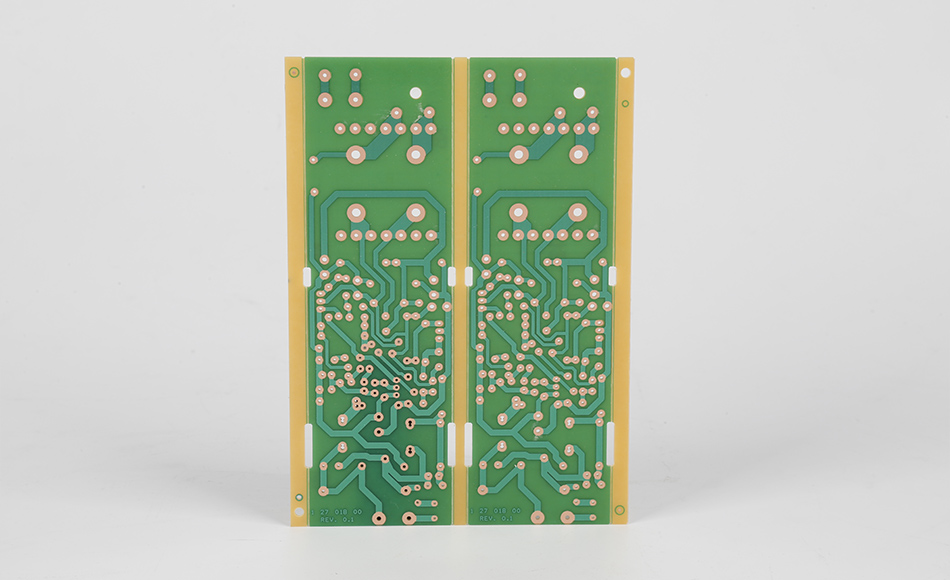
Low CTE CEM3 material is indispensable in applications where even minor dimensional changes can lead to catastrophic failures or performance degradation:
Coordinate Measuring Machines (CMMs): These devices rely on PCBs to process sensor data with micrometer-level accuracy. Low CTE CEM3 ensures the PCB doesn’t expand or contract with room temperature changes, preventing measurement errors.
Optical Metrology Tools: In laser-based measurement systems, PCB stability maintains the alignment of optical components, ensuring consistent beam paths and measurement precision.
Flight Control Systems: Aircraft autopilots and navigation systems use low CTE CEM3 PCBs to maintain signal integrity in extreme temperature swings (-55°C to 85°C). Stability ensures critical sensors and processors communicate reliably, even at high altitudes.
Satellite Electronics: Satellites experience extreme thermal cycling as they pass between sunlight and shadow. Low CTE CEM3 material resists expansion, preventing damage to delicate components like solar panel controllers and communication transceivers.
5G Base Stations: These systems operate at frequencies up to 30 GHz, where signal integrity depends on stable trace dimensions. Low CTE CEM3 maintains trace impedance, reducing signal loss and ensuring reliable data transmission.
Radar Systems: Military and weather radar rely on precise antenna alignment, which is preserved by low CTE CEM3 PCBs. Stability prevents frequency drift and ensures accurate target detection.
MRI Machines: The high magnetic fields and heat generated in MRI systems can cause standard PCBs to expand, disrupting sensor calibration. Low CTE CEM3 maintains stability, ensuring accurate imaging.
Robotic Surgery Systems: These devices require precise movement control, which depends on stable PCB performance. Low CTE CEM3 prevents signal delays caused by thermal expansion, ensuring surgical tools move with sub-millimeter accuracy.
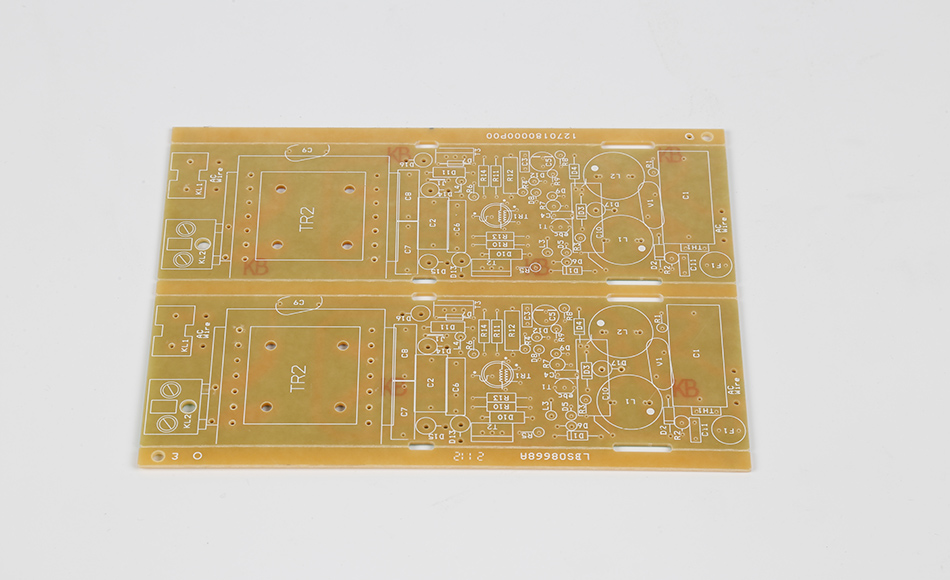
Low CTE CEM3 material offers a unique balance of stability, cost, and practicality compared to other high-stability substrates:
Standard CEM3 lacks the stability required for precision applications, with CTE values 2–3x higher. In thermal cycling tests, standard CEM3 PCBs exhibit 0.3–0.5% dimensional change, compared to less than 0.1% for low CTE CEM3. For devices like 5G transceivers, this difference translates to signal loss of up to 30% in standard CEM3, versus less than 5% in low CTE variants.
Low-CTE FR4 (e.g., with quartz fibers) offers similar stability but at a 40–60% higher cost. For mid-range applications like industrial sensors, low CTE CEM3 provides comparable stability at a lower price, making it more accessible for high-volume production.
Ceramics (e.g., alumina) have ultra-low CTEs but are brittle and difficult to machine, limiting their use to small, simple PCBs. Low CTE CEM3 material, by contrast, is flexible enough for complex, multi-layer designs while maintaining sufficient stability for most precision applications.
MCPCBs have low CTEs but conduct electricity, requiring additional insulation layers that increase complexity and cost. Low CTE CEM3 is inherently insulating, simplifying design in high-voltage applications like radar systems.
Ongoing research is focused on enhancing the stability of low CTE CEM3 material further, expanding its applicability to even more demanding environments:
Combining nano-scale fillers (e.g., carbon nanotubes) with micro-scale fillers (e.g., silica) creates a hierarchical structure that reduces CTE across a wider temperature range. Nanotubes, with their high aspect ratio, reinforce the resin at the molecular level, while micro-fillers provide macro-scale stability. Early tests show this approach could reduce CTE by an additional 20–25% compared to current low CTE CEM3.
New resin additives are being developed to reduce moisture absorption, which can increase CTE and degrade stability in humid environments. These additives create a hydrophobic barrier around fibers and fillers, preventing water ingress. In humidity tests (85% RH at 85°C), these formulations maintain stable CTE for 1,000+ hours, compared to 500 hours for standard low CTE CEM3.
Researchers are exploring “smart” low CTE CEM3 materials that adjust their expansion rate in response to temperature changes. This could involve incorporating shape-memory polymers into the resin, which contract when heated to counteract natural expansion. While still in development, such materials could achieve near-zero CTE across extreme temperature ranges.
Low CTE CEM3 Material for High Stability is a critical innovation for electronics requiring precision and reliability in dynamic environments. By minimizing thermal expansion through advanced fiber reinforcement, resin modification, and precise manufacturing, it ensures dimensional and electrical stability that standard materials cannot match. Its applications span precision measurement, aerospace, high-frequency communication, and medical devices—industries where stability directly impacts performance, safety, and cost-effectiveness.
As technology advances, the demand for higher stability will only grow, driven by smaller components, higher frequencies, and harsher operating conditions. Low CTE CEM3 material is well-positioned to meet this demand, offering a practical, cost-effective alternative to more expensive specialty substrates. For engineers and manufacturers, it represents a foundation for innovation, enabling the next generation of precise, reliable electronics that perform consistently—no matter the environment.
Related Articles
CEM3 PCB Material Guide: ST210G Thermal Conductivity & LED Solutions
CEM3 PCB Material Guide for Industrial Electronics Applications
CEM3 PCB Manufacturer | The Best Cost-Effective Alternative to FR4
CEM3 PCB Manufacturer for Cost-Effective Industrial Electronics
CEM3-09HT Thermal Conductive PCB: Dual Advantages of High-Temp Resilience and Heat Dissipation
Countersink Holes in CEM3 PCB: Ensuring Structural Integrity and Assembly Precision
KB7150T High TG CEM3 Circuit Board: Reliable Performance for High-Temperature Electronics
HA30 CEM3 Thermal Conductivity Specs: Guiding Heat Management in Mid-Tier Electronics
LED Light CEM3 Circuit Board: Key Attributes and Applications in Modern Lighting Systems
ST210G CEM3 Thermal Performance: Optimizing Heat Management for High-Power Electronic Devices
Thermal CEM3: Balancing Heat Management and Practicality in Electronics Substrates

Got project ready to assembly? Contact us: info@apollopcb.com



 Whatsapp 0086 755 29438407
 Mail info@apollopcb.com
 Tel 0086 755 29438407


ABOUT US

PRODUCTS
TECHNOLOGY
KNOWLEDGE CENTRE
CULTURE
NEWS
We're not around but we still want to hear from you! Leave us a note:

Leave Message to APOLLOPCB
